B-26 Dust Filters

Ad: This forum contains affiliate links to products on Amazon and eBay. More information in Terms and rules

MIflyer

Captain
8,203
17,986
May 30, 2011
Cape Canaveral
I have read of the Typhoon being fitted with dust filters after they were deployed to rough airstrips in France after Operation Overlord.

But I just read of the USAAF B-26 being fitted with dust filters when they were deployed to their first airstrips in France. They are described a "power robbing" which was not appreciated when they got to their reworked Luftwaffe fighter field 5000 ft Perforated Steel Plate airstrip. 5000 ft was barely adequate for a loaded B-26 to take off, and the PSP also created more drag on the wheels. I can't see any difference in the engine cowlings so I presume the filters were inside the carb air intakes mounted on the cowls.

I have not heard of P-47's deployed to France having filters added, and I guess that the turbosupercharger tended to filter out the dust.
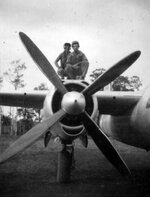
 
I can't tell you much about the B-26's dust filters, but I can tell you about the cowlings.

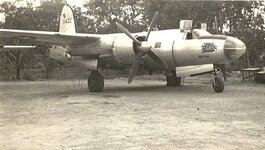
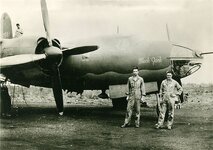
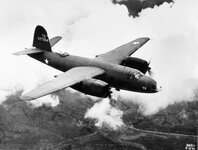
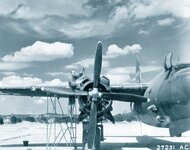
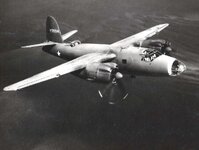
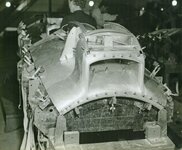
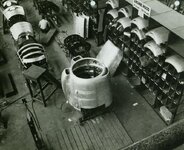
The B-26 cowling split into 5 panels*, the 2 upper panels containing the carburetor air intake ducts as you said. The original panels (parts R-263171 & 72) had small rounded ducts that faired smoothly into the cowling. They were replaced relatively early in production by parts R-312211 & 12, which had much taller squared-off ducts to accommodate long rectangular dust filters for desert operations. There was an access door just above the intakes for installing or removing the dust filters.

*Number and configuration of panels changed depending on the model.

These new cowling panels were fitted to all RAF Marauder Is (B-26As) and USAAF B-26Bs sent to the MTO. One Martin manual for the short-wing B-26B refers to them as "Desert Cowlings, 4 pieces" and lists them under ferry load only, with weights and moments that imply that the plan at some point was to carry them in the aft bomb bay during ferry flights instead of installed on the engines. Pinning down when aircraft started leaving the assembly line with the new panels is tricky, with Martin drawing R-257110 claiming B-26B 41-17879 while page 993 of the B-26 case history says the following:
"30 September 1942 - Major Change - MCR 149 - Installation of cowling carburetor air cleaner. First production airplane B-26B, Serial No. 41-17629 accepted this date. This was not installed in all subsequent airplanes, but was continuous from 41-17897 and on. Installed in 1st B-26C."
I recall some older sources claiming the change happened as part of the B-26B-3 block, but cannot find those. I expect that 41-17897 is a typo of 41-17879 or vice-versa. Some B-26Cs were fitted with the old cowling, but I've found no sources about when the switch happened at Omaha (yet). The presence of either cowling is not an identification feature by itself, as several B-26-MAs, B-26As and early B-26B-MAs were retrofitted with the late style cowlings, while the early style cowlings were fitted to both XB-26Es and to the prototype for the B-26F, as well as to some JM-1s. The two sets of cowlings were completely interchangeable, though the pieces themselves were handed.

Flight Test Engineering Branch Memorandum Report No. Eng-47-1754-A of 19 June 1944 using B-26F-1 42-96231 found that when compared to the larger late-style cowlings the early type resulted in 6 MPH higher airspeed at 1850 BHP 2700 RPM, 3.5 MPH higher at 1410 BHP 2400 RPM and made no difference at 1150 BHP. It also states there is no difference at the cruising speeds. This report used to be on ww2aircraftperformance.org but I think that website is down now? Other configurations were tested, including ditching the package guns.

As for the dust filters themselves, the B-26B-35-MA block description on AirCorpsLibrary dated 15 June 1943 states:
"M.C.R. 149A - Carburetor air filter units which were formerly shipped as loose equipment were installed in the cowling."
The first aircraft in that block is 41-31973. Installation and removal of the dust filters was not very difficult so it would make sense to me that aircraft operating out of the UK removed (or never installed) the dust filters, and then had them (re)fitted when operational conditions demanded it. I have seen these called air filters, sand filters or dust filters.

The original air intakes:
1751836538550.jpeg1751836551381.jpeg1751836601937.jpeg1751836621968.jpeg

The larger air intakes:
1751837218669.jpeg1751836754299.jpeg1751837253043.jpeg
Note on 1st photo the inboard dust filter access door has been removed and is resting in front of the intake.
Note on 3rd photo that the rear of the cowling has the same shape on both types of cowling (late/large type shown).

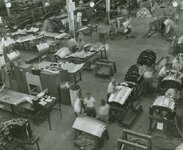
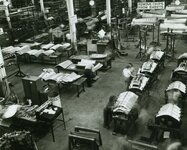
Assembly line photos:
1751837283726.jpeg1751837357558.jpeg1751837308706.jpeg1751837321558.jpeg
Note both types of cowling being produced at the same time on the right side of the first two photos.

Photos from Martin B-26 Marauder in USAAF and USN service

Edit 21-07-2025: Added link to the B-26F report on ww2aircraftperformance now that the site is back up!
 
Last edited:

Users who are viewing this thread

Back