The true story, that they are still trying to keep secret, is the British made a mistake with the order. Someone put 170,000 instead of 17,000. By the time the mistake was realised Packard were involved, so designs like the Lancaster, Mosquito and P-51 were ordered to soak up excess Merlin production. I read it somewhere on the net, so its true.I'm pretty sure we all know this and the myth of the 'mericans showing the British how mass production works has been debunk numerous times but alas the rumour still persists.

Navigation
Install the app
How to install the app on iOS
Follow along with the video below to see how to install our site as a web app on your home screen.
Note: This feature may not be available in some browsers.
More options
You are using an out of date browser. It may not display this or other websites correctly.
You should upgrade or use an alternative browser.
You should upgrade or use an alternative browser.
British escort fighter--what might it have been like? (1 Viewer)
- Thread starter BarnOwlLover
- Start date
More options
Who Replied?Shortround6
Lieutenant General
Of course it is true that Packard showed the British how to do it.
The British were using Garden Gnomes to hand fit the pistons and since the Gnomes couldn't reach the shelves where the pistons were kept they had to use ladders. Gnomes carrying heavy pistons up and down ladders was not a good situation and after many falls and injuries RR was facing a Gnome shortage. Packard stepped in showed RR how to install ramps to replace the ladders and another Merlin crisis was averted.
Stay tuned for true stories of how Packard saved RR.
The British were using Garden Gnomes to hand fit the pistons and since the Gnomes couldn't reach the shelves where the pistons were kept they had to use ladders. Gnomes carrying heavy pistons up and down ladders was not a good situation and after many falls and injuries RR was facing a Gnome shortage. Packard stepped in showed RR how to install ramps to replace the ladders and another Merlin crisis was averted.
Stay tuned for true stories of how Packard saved RR.
And the British sausage, don't forget the sausage, we lost an empire but retained our traditional sausage.Stay tuned for true stories of how Packard saved RR.
Last edited:
wuzak
Captain
Meanwhile, Packard built 55,000 production engineered Merlins with gaskets in 4 years
What gaskets?
wuzak
Captain
Of course it is true that Packard showed the British how to do it.
The British were using Garden Gnomes to hand fit the pistons and since the Gnomes couldn't reach the shelves where the pistons were kept they had to use ladders. Gnomes carrying heavy pistons up and down ladders was not a good situation and after many falls and injuries RR was facing a Gnome shortage. Packard stepped in showed RR how to install ramps to replace the ladders and another Merlin crisis was averted.
Stay tuned for true stories of how Packard saved RR.
You are wrong.
The British struggled to build a few hand-built engines during the day. But when the workers went to bed the elves came out and pumped out thousands.

GrauGeist
Generalfeldmarschall zur Luftschiff Abteilung
I heard that there was a shoe shortage in Britain during the War years - this might be the cause...You are wrong.
The British struggled to build a few hand-built engines during the day. But when the workers went to bed the elves came out and pumped out thousands.
special ed
1st Lieutenant
- 7,092
- May 13, 2018
Is there any secret video of the garden gnomes by day and the elves by night? Has anyone searched you tube? Maybe in the category of "faces" or "model color".

33k in the air
Staff Sergeant
- 1,356
- Jan 31, 2021
The Merlin engine gnomes' business plan:
Step 1: Build Merlin engines
Step 2: ?
Step 3: Profit
Step 1: Build Merlin engines
Step 2: ?
Step 3: Profit
Come on now, didn't you know RR were using bubble gum to seal their engines, it was packard that introduced them to gaskets.What gaskets?

Pat, did you actually read what he said?....No they weren't, all they could do was put up resistance stopping total air superiority by the enemy, nothing more.
He mentions their role as FIGHTER BOMBERS, not as air superiority fighters. So your quote is a big overstatement and out of context. When it came to victory in Burma, their influence was significant
pacificeagles.net/hawker-hurricane/
"Hurricanes saw extended service in India and Burma, beginning with the incursion of the Japanese carrier force into the Indian Ocean. Here they were likewise inadequate as front-line fighters but proved effective when converted to fighter-bombers – known as 'Hurribombers' in this configuration. Many were supplied to the Indian Air Force which scored its one and only air-to-air victory with one. They remained in service right up until the end of the war."
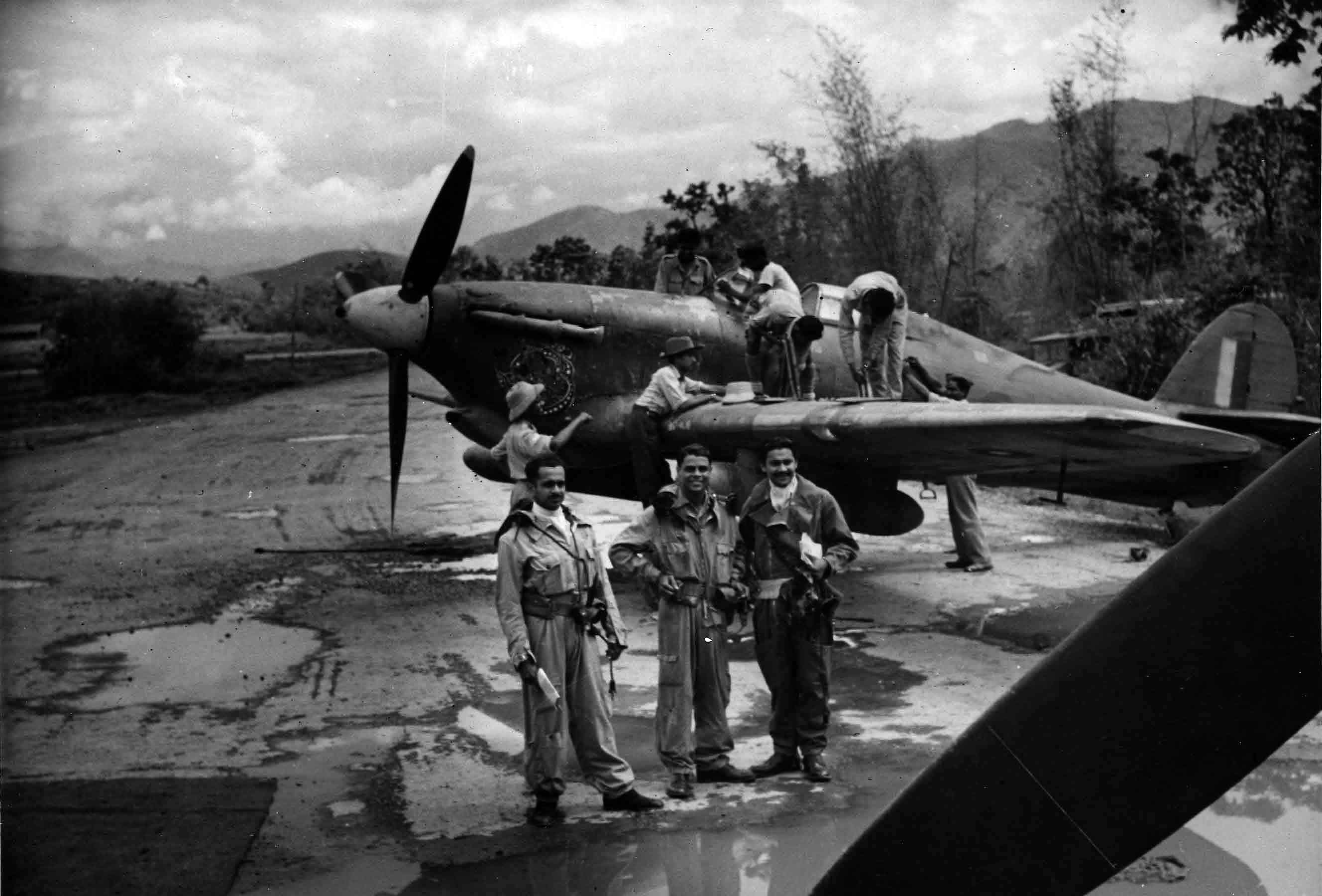
The greatest aircraft of the IAF, part 2: Hawker Hurricane by K S Nair
Credit: IAF The Hawker Hurricane was, quite simply, the numerically most significant aircraft type flown on operations by the Indian Air Force (IAF) during the Second World War. Eight of the nine I…
 hushkit.net
"The Hurricane, for all its production and operational history, never quite measured up to the Spitfire in mythology; but in difficult environments such as North Africa and the China-Burma-India theatre, it proved to be more robust and able to withstand extreme heat, dust and cold, than most other aircraft of its class. Its older materials and construction methods meant that it was easy and and simple to repair in the field. The wide-set main undercarriage legs made it easy to land and stable to taxi even on rough fields. It was flown in Yugoslavia, South Africa and the Sudan even before the Battle of Britain, demonstrating its ability to perform in extremely varied environments. Burma and India were in fact the last theatre in which Hurricanes were used in significant numbers. The Hurricane served in virtually all Indian Air Force combat roles with distinction – fighter, bomber, ground-attack, reconnaissance, and army co-operation among them. Something like twenty of the two dozen-odd DFCs received by IAF personnel, including to such icons as later Marshal of the IAF Arjan Singh, went to Hurricane pilots. Because of its robustness and simplicity it was also used for numerous other applications – combined operations, despatch delivery, meteorological reconnaissance, radar calibration. It was also used in India for roles for which it was never intended – including anti-malarial and crop-protection spraying. It should be remembered as an IAF classic."
33k in the air
Staff Sergeant
- 1,356
- Jan 31, 2021
Come on now, didn't you know RR were using bubble gum to seal their engines, it was packard that introduced them to gaskets.
"I have come here to chew bubble gum and build Merlin engines. And I'm all out of bubble gum."

Between that and it's lack of armor and self sealing fuel tanks, it wouldn't have lasted long in Europe.
This is a myth. There's no evidence to say the Zero "wouldn't have lasted long" in Europe. Let's not forget that Bf 109s and Spitfires and Hurricanes were flying around Europe without self-sealing tanks and armour plating throughout 1940. Until that experience, no-one had armour plating and self-sealing tanks installed on the production line and besides, the Japanese added these things to the Zero following combat experience, just like everyone else, so that really doesn't apply at all.
Let's not forget that all Horikoshi's subsequent designs had these things.
GrauGeist
Generalfeldmarschall zur Luftschiff Abteilung
It would have been interesting to see how the Fw190 fared against the A6M in a low-down turning fight.
There were plans to use French Gnomes from Rhone, but they ended in May 1940Is there any secret video of the garden gnomes by day and the elves by night? Has anyone searched you tube? Maybe in the category of "faces" or "model color".
It would have been interesting to see how the Fw190 fared against the A6M in a low-down turning fight.
It would be interesting alright; the Zero was king at low-speed manoeuvrablity throughout its career, whereas the Fw 190 could easily beat it in the vertical plane because of its superior climb and dive speed. The A-model was also faster in a straight line than the early A6M by a wide margin.
The Zero would be flying with the Germans, though, wouldn't it?
- Thread starter
- #136

BarnOwlLover
Staff Sergeant
Back to a British long range single seat fighter with something I pulled out of...well, you can guess where...
Let's say that de Havilland wanted to design a single seat, single engine fighter (they did the Hornet, but that was twin-engine and the Vampire, but that was a jet) around a Merlin 60 series engine. If you were Ronald Bishop (DH's chief designer at the time), would you go for an all metal or mostly metal structure similar to the Vampire, or a mixed structure like the Hornet to profit off of the experience with the Mosquito?
As I sort of asked in a different thread, would there be any gains in terms of weight or fuel capacity with a all or mostly metal structure (the Hornet's wing was largely metal to free up space for fuel without sacrificing strength)? And if you go with a wooden composite monocoque similar to the Mosquito/Hornet (and front of the Vampire and Venom), could a Meredith radiator be incorporated into the design (since it'd probably be hard to run leading edge radiators on a single seat/single engine fighter's wings)?
Let's say that de Havilland wanted to design a single seat, single engine fighter (they did the Hornet, but that was twin-engine and the Vampire, but that was a jet) around a Merlin 60 series engine. If you were Ronald Bishop (DH's chief designer at the time), would you go for an all metal or mostly metal structure similar to the Vampire, or a mixed structure like the Hornet to profit off of the experience with the Mosquito?
As I sort of asked in a different thread, would there be any gains in terms of weight or fuel capacity with a all or mostly metal structure (the Hornet's wing was largely metal to free up space for fuel without sacrificing strength)? And if you go with a wooden composite monocoque similar to the Mosquito/Hornet (and front of the Vampire and Venom), could a Meredith radiator be incorporated into the design (since it'd probably be hard to run leading edge radiators on a single seat/single engine fighter's wings)?
Throughout 1940?This is a myth. There's no evidence to say the Zero "wouldn't have lasted long" in Europe. Let's not forget that Bf 109s and Spitfires and Hurricanes were flying around Europe without self-sealing tanks and armour plating throughout 1940. Until that experience, no-one had armour plating and self-sealing tanks installed on the production line and besides, the Japanese added these things to the Zero following combat experience, just like everyone else, so that really doesn't apply at all.
Let's not forget that all Horikoshi's subsequent designs had these things.
As I understand it, the urgent need to fit bullet-proof windscreens, self sealing tanks and armour had been recognised during The Battle of France, and there was a rolling programme to retro-fit these as quickly as possible. How quickly I don;t know. I do know the Hurricane seemed particularly vulnerable because of that tank between the engine and cockpit. But in fairness, despite their own combat experience over China, the Japanese had no such programme did they? - and the Zero didn't even have its first operational combat until 13 September 1940. 15th of September is Battle Of Britain day - and marks the effective end of massed daylight raids as the Germans passed their efforts over to night time bombing.
Its an interesting 'what if'.
The Japanese certainly didn't face radar coordinated interception for much of the early part of the war in the Pacific, did they? And the Hurricanes and Spitfires over the UK would also have other significant advantages they didn't have in the east:
#1 Not being fitted with the Vokes filters which robbed them of performance
#2 Being able to be vectored to interception with height advantage. With the Zero having a Vne of only 370mph and RAF pilots being specifically briefed to ignore escorts and destroy bombers, I suspect in that context, RAF pilots may have learned much more quickly not to dogfight a zero?
#3 Much of the combat taking place at much higher altitude than in the PTO
I think most of that indicates that it would not have been anymore effective opposition than the 109s and 110s.
The nightmare scenario might more believably have been if they'd been used in the Mediterranean the following year. That really might have been the final nail in the coffin for the Royal Navy
Throughout 1940?
Yes, you might be misreading what I have posted, NO ONE was building aircraft with self-sealing tanks and armour plating on the production line, these things were being retro-fitted as a result of combat experience, is the point I'm making, so it still applies as the Japanese did the same.
Its an interesting 'what if'.
Albeit a highly implausible one which most people approach with the wrong criteria.
The Japanese certainly didn't face radar coordinated interception for much of the early part of the war in the Pacific, did they? And the Hurricanes and Spitfires over the UK would also have other significant advantages they didn't have in the east:
#1 Not being fitted with the Vokes filters which robbed them of performance
#2 Being able to be vectored to interception with height advantage. With the Zero having a Vne of only 370mph and RAF pilots being specifically briefed to ignore escorts and destroy bombers, I suspect in that context, RAF pilots may have learned much more quickly not to dogfight a zero?
#3 Much of the combat taking place at much higher altitude than in the PTO
I think most of that indicates that it would not have been anymore effective opposition than the 109s and 110s.
The nightmare scenario might more believably have been if they'd been used in the Mediterranean the following year. That really might have been the final nail in the coffin for the Royal Navy
It doesn't matter what the Japanese faced or didn't face in the PTO, they would have had to adapt to conditions as they presented themselves to them. They did this in the Pacific, why would they not in the ETO or MTO? Just presuming they'd do no good because the conditions were different is like saying that the US 8th AF would do no good in Europe because it entered the war with a policy of flying long range bombing sorties without fighter escort. This was its initial policy, it didn't work, so they changed it and sought a long-range fighter escort. Every military force has to adapt to prevailing conditions on the battlefield; just assuming they couldn't do it because they fought in a different theatre with different conditions is highly ignorant of the Japanese fighting ability and of the basics of strategy and tactics in warfare. D'you honestly think they would not have learned ANY lessons within a different combat scenario? C'mon, give them a chance here.
Shortround6
Lieutenant General
There may be a little confusion here. The P-51 radiator was a Meredith radiator but not all Meredith radiators were shaped like the Mustang.could a Meredith radiator be incorporated into the design (since it'd probably be hard to run leading edge radiators on a single seat/single engine fighter's wings)?
In Fact the wing radiators in the Mosquito were supposed to Meredith radiators, so were the radiators on the Spitfire and possibly on the Hurricane.
And a bunch of other aircraft.
A Meredith radiator is simply a radiator system in which an attempt is made harness some of the heat from the radiator to heat the cooling air and use the heated air to provide thrust.
It turns out it was a lot harder to do in practice than the mathematical formula indicated. A simple formula for air flow in (mass and velocity) , heat rise from the radiator increasing the velocity and airflow out (same mass but higher velocity=thrust) doesn't actually tell you how to get the airflow to behave. Cut down on boundary layers, eddies/turbulence, loss of velocity through the radiator matrix and the proper converging duct on the outlet end. You also have to get the proper heat transfer from the radiator to the cooling air.
If you use too much air at a high speed the air won't pick up enough heat (energy) to increase the air speed. The engine may be cooled but you will have a high drag radiator.
It took quite a while to actually get the details right.
Actually that's not correct, they didn't have armour protection during the Battle of France but they all received pilot armour, either off the production line or in retrofit kits before the BoB based on lessons learnt from that battle, we had a very good thread on this subject. Sir Hugh Dowding made sure his pilots were protected and front line Luftwaffe squadrons demanded it fitted to their aircraft.Let's not forget that Bf 109s and Spitfires and Hurricanes were flying around Europe without self-sealing tanks and armour plating throughout 1940.
Users who are viewing this thread
Total: 2 (members: 0, guests: 2)

