Apart from using US-spec prop spline, different carb and IIRC different type of supercharger drive (Wright-designed instead of Farman licence), rest was pretty much the same.
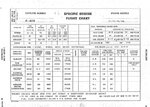
For altitude power (in this case, say, 13000 ft and above), Merlin XX and 45 have had about same power, probably in single digits percantage. Merlin 46 have had a bigger impeller (10.85" vs. 10.25 in), and it was making a bit more power above ~20000 ft, and a bit less under ~18000 ft than Merlin 45. The Mk.46 sacrificed a lot of power under 10000 ft, and was not produced in great numbers.
Merlin 45M (M means here that impeller was cut down to 9.50" diameter) went the opposite way - it sacrificed hi-alt power to gain low-alt power.
As one can see 1-speed S/Ced engines means compromises to be made; the variable-speed, as well as 2- and 3-speed S/Ced egines are more flexible in altitude-power regard.
Spit V have had a high critical altitude, low-drag wing and pointy nose, however the small details kept it from being top fighter from mid-1941 on.
Interesting. I'd been given to understand that the Spitfire V had a considerably higher combat ceiling / critical altitude. At any rate, I would expect the Spit V to have very good acceleration as it had a power to mass ratio of around .20 to .23 depending, which is excellent for any aircraft in the war. Better, generally speaking than the Bf 109 or MC 202 types operating at the same time, better than the P-40 and the other British fighters, and certainly better than any Japanese fighter operating in 1941-43. So it may have had a better combat speed than the top speed figure implies.
I don't agree that there was such a choice - as-produced, the P-40E was exclusively a 6-HMG overweight fighter, while P-40B was a fighter of reasonable weight. P-40L and N started as improved types from the get go, the N reverted to full fuel & gun laod pretty quick.
It's actually a bit more complex than that. Light vs. heavy, or you might say fighter vs. fighter bomber variations of the P-40 were being done in the field as far back as Java, the Philippines and Darwin in early 1942, when they first started taking guns, ammunition and fuel out and other things to lighten the aircraft so they could climb better during interceptions. P-40s were overloaded with full fuel, six guns with full ammunition, sway bars and an external tank. This gives a climb rate of about 2,000 feet per minute or less. With four guns, half fuel, 200 rounds per gun, and a few other things taken out (apparently some oil cooler armor which is repeatedly mentioned though this still gets debated) and higher boost it could be up to 3,000 fpm or more.
The P-40D / Kittyhawk I was originally a four gun model, the US didn't use any but some 560 went to the RAF. Some had 6 guns but some had 4. The F models were stripped by US mechanics down to four guns, with several other things stripped out. This was then copied by Curtiss with the L, which came standard with four guns, 200 rounds per gun and the forward wing fuel tank removed. Both types would be given six guns if they were using them more for fighter bomber missions. This also sometimes depended on the unit. For example 325th FG which flew mostly escort missions for a long time was using four guns, whereas 324th was always using six guns. When 325th started doing more FB missions they added the extra guns and ammunition in.
The very early P-40N-5-CU through N-10-CU were 'interceptor' versions with 4 guns and several other things stripped out - including some like removing the starter which were unpopular changes. These were the 378 mph version. Then there were later versions (N-15-CU through N-35-CU) with a lower rated engine and much heavier configuration which were intended as fighter bombers (this was basically the only mission for the P-40N in British use as the Kittyhawk IV for example). Fully loaded these had a top speed of ~ 340 mph. In the CBI and Pacific however there was still a need for faster and higher flying (CBI over the Himalayas) or climbing (New Guinea / Solomons) versions so the field stripping started again, and Curtiss responded with other fast four gun versions with the higher rated engine (N-40-CU). These were fast like the N-5 and N-10.
The M was intended for export as a fighter bomber (most went to the British). The K was kind of it's own niche with the high-rated (1,500+ hp) low altitude Allison V-1710-73 and it was pretty fast even with six guns.
However all of those changes could be and were done in the field. If they were facing a lot of air to air combat with fighters or needed to scramble to intercept raids it was routine to take 2 guns out and then other things.
P-51A was produced in very small numbers (310 total?), so an accurate assesment is hard to make IMO.
Well by my understanding there were 150 NA-91 / P-51 (no letter) / Mustang IA, around 700 NA-99 / P-51A / Mustang II, and 500 A-36 "Apache" dive bombers from what I understand, so that is around 1,350 produced. The Mustang IA and II was in somewhat wide use by the British who liked them as recon / day intruder planes, but were also flown by some US units mostly in the CBI where it was hoped to be a kind of savior. They had a poor combat record in air to air combat, only one Ace for example out of all of those aircraft. We had a long discussion about it on here and it turned out the problem was small ailerons, which were improved in the P-51B onward.
Early P-39s the AAF used were not that good, especially once past 13000 ft. The P-39 that went beyond 380 mph was too late to matter - USAAF needed range, and P-39 was not up to the task. However they came in just in time for Soviets, that will need more than a year to produce indigenous fighter that can beat the P-39N/Q.
Some of those later model P-39s were around in the Med and though initially (after a couple of bad maulings) consigned to coastal patrol, later were used rather widely as fighter-bombers in Italy under fairly hairy circumstances. Which I think they did reasonably well but they never seemed to find a niche as fighters except in Russia.