
Clayton Magnet
Staff Sergeant
- 914
- Feb 16, 2013
.38 S&W is very different than .38 S&W SpecialInterestingly, the RAF's primary revolver, the Enfield No. 2 was also a .38.

Follow along with the video below to see how to install our site as a web app on your home screen.
Note: This feature may not be available in some browsers.
Ad: This forum contains affiliate links to products on Amazon and eBay. More information in Terms and rules
.38 S&W is very different than .38 S&W SpecialInterestingly, the RAF's primary revolver, the Enfield No. 2 was also a .38.

Same goes for swords, I suppose.One answer to the question "why revolvers?": they don't jam in extreme circumstances and/or conditions.

 pre98.com
Chambered during WW2 in British service by :.38 S&W is very different than .38 S&W Special
Going by memory, A6M pilots had a location to the left of their seat, on the lower part of the cockpit's sidewall.Same goes for swords, I suppose.
JAPANESE WW2 ARMY PILOT’S SWORD - Pre98 Antiques
SPECTACULAR & RARE JAPANESE WW2 ARMY PILOT’S SWORD, SHORT REGULATION LENGTH FOR PILOTS AND TANK OFFICERS, WITH BELT & HANGER!
Of course I'd end up sitting on mine. Somehow this pilot can secure a full size katana in his cockpit.
View attachment 874876


Informative plus agreement equals winner.Going by memory, A6M pilots had a location to the left of their seat, on the lower part of the cockpit's sidewall.
I'm not sure about IJA fighters or other IJN types.
BTW, adding a Katana to an A6M model build would be a great touch.
RAF regiment's greatest achievement was spotting a Ju88G Nightfighter that landed by mistake and interning the crew.One should note that armourers manuals covering small arms are used both for aircrew and ground staff in operational areas.
One impetus for the RAF Regiment's role was for RAF units to be able to defend themselves from the enemy on the ground. Simply arming squadron staff etc. was not good enough. It needed to have trained and specific light infantry on site. Of course the RAF Regiment's role was also manning anti aircraft positions and providing forward observers etc. with light armour. The Regiment's armourers would get the matching army manuals but the normal squadron armourers would get the RAF manuals covering the small arms available to arm the normal squadron staff where necessary.
Despite my personal army experience of standing guard against a potential automatic weapon armed and bomb laden terrorist threat with my trusty pick axe helve, wartime RAF airman routinely stood guard with small arms and provided a reserve guard armed also with normal small arms and all airmen had received some minor small arms skills in their basic training, but were not anywhere near trained infantry skills.
I cannot answer for other nations but for the British all members of all the armed forces are, when push comes to shove*, infantry. Privates to Generals, seamen to Admirals, airmen to Air Marshals, without exceptions, as the circumstances dictated.
My point is that small arms and small arm skills were routine parts of RAF resources and aircrew small arms were simply one very minor part of that and the small arms drawn from the armouries were those that happened to be issued to the unit.
I have, in the past, spoken with RAF aircrew who flew over Germany and their view was that a sidearm was a heavy inconvenience and obstruction in the cramped aeroplane, a nuisance administratively, á danger to each other and the aeroplane and, if they bailed out or crashed, was going to make it less likely to be taken prisoner rather than shot as a threat. They could think of few situations that were not going to be made worse by having and using a pistol rather than not. The principal effect would be to have expensively air transported useful pistols to the enemy for their use. Doubtless in other theatres and situation there are some arguments in favour of carrying an aircrew pistol.
Я сдаюсь. Если вы будете меня допрашивать, вам понадобятся услуги компетентного специалиста по аудиопечати.
*for trivia lovers the phrase comes from pike formations meeting in battle.
A German pilot was flying a Ju88 nightfighter from Paris to Berlin, misread his compass by 180 degrees, landed at an RAF base, pulled into a revetment, got out, and waited for the crew bus. The crew bus arrived and the two men started comparing their uniforms and noted some odd discrepancies.RAF regiment's greatest achievement was spotting a Ju88G Nightfighter that landed by mistake and interning the crew.
RAF regiment's greatest achievement was spotting a Ju88G Nightfighter that landed by mistake and interning the crew.
The tech haul reduced bomber losses from 10% to 1% in 1944. The heroes of the RAF regiment got no gongs as it was ultra secret
There is much misinformation and conflation of events in these posts.A German pilot was flying a Ju88 nightfighter from Paris to Berlin, misread his compass by 180 degrees, landed at an RAF base, pulled into a revetment, got out, and waited for the crew bus. The crew bus arrived and the two men started comparing their uniforms and noted some odd discrepancies.
There was a late model Ju88 nightfighter that showed up in Scotland one night. The exact circumstances are unclear, but the RAF gave the pilot a ride back to Germany that night, so it probably was a planned event, as well as an exchange of funds.


 www.rafregimentheritagecentre.co.uk
 www.rafregimentheritagecentre.co.uk
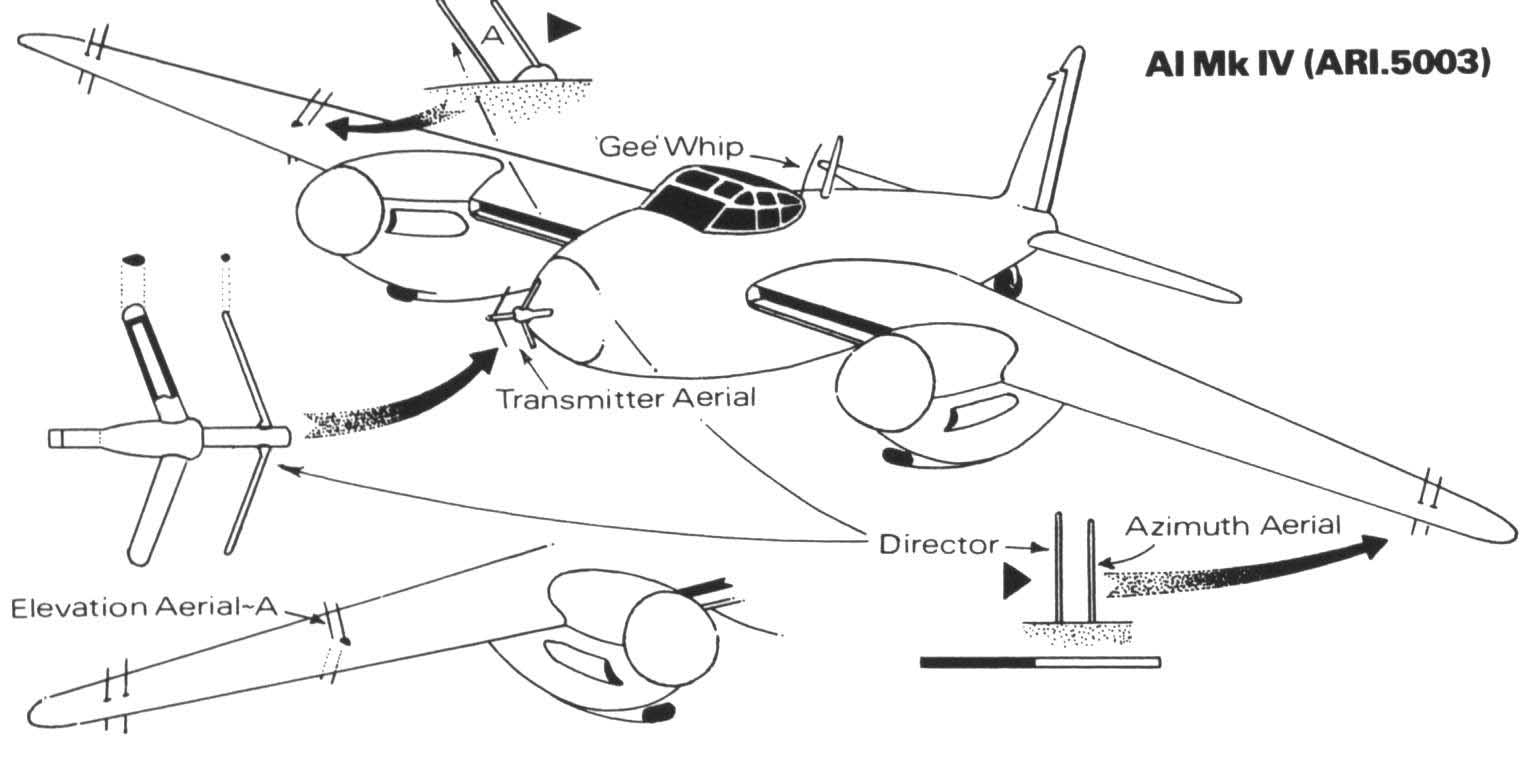
Operations using RAF Beaufighter night fighters to home on Luftwaffe Lichenstein AI radars began in June 1943 using the Serrate device with operators being trained to recognise the signals as a result of access to the Ju 88R-1 delivered to Dyce a month earlier. 141 squadron was the initial user with Beaufighter VI. It used these through to Feb 1944, augmented by Mosquito NF.II from Oct 1943. Until Dec 1943 it was based at Wittering before moving to West Raynham for the rest of the war.Sorry I assumed the July landing would be RAF regiment and did not realise they were on the continent.
They took the Ju88G up and it could detect emissions from 100 miles of a Lancaster. This is in R.V.Jones' book.
The big culprit was tail warning radar Monica. They deleted that and switched off IFF over the continent.
Sneakily they fitted Monica to the Mosquito night fighter, which used it's incredible speed to get behind the much slower German night fighters.
 tailendcharlietedchurch.wordpress.com
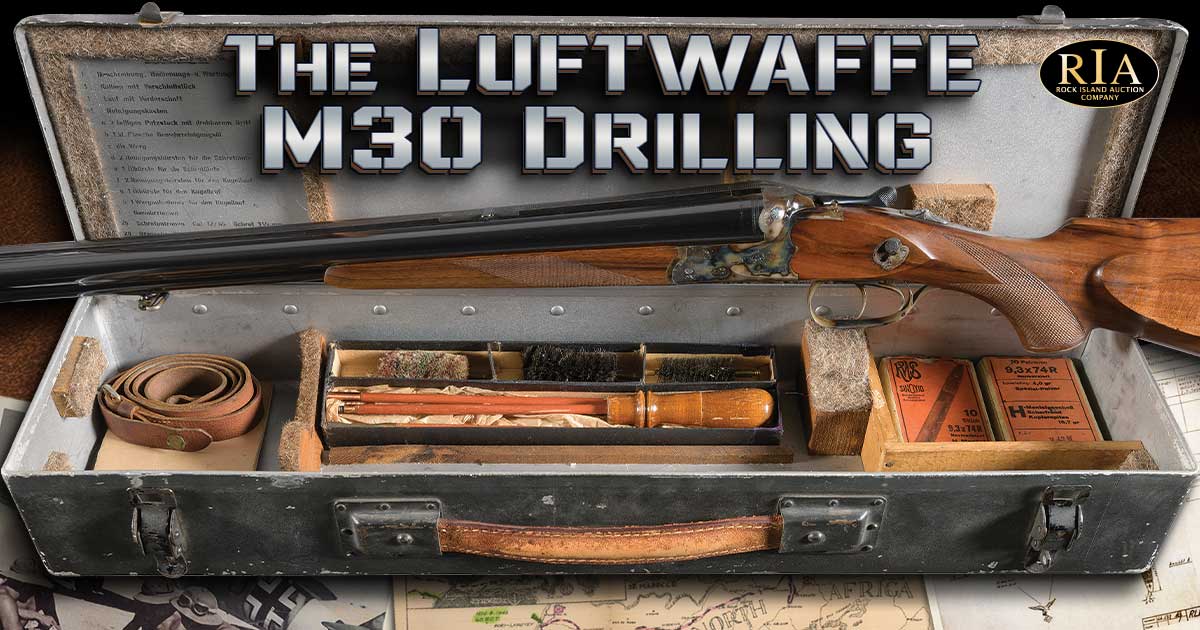
This is probably the most elegant aircrew survival weapon ever issued.I remember reading a magazine article, back in the 1970s, about a Sauer drilling (double barrel shotgun with a rifle barrel underneath it) in 16x16x9.3x62, which was in a nice leather fitted case, and it was an ISSUED ITEM for Stukas in North Africa, apparently Goering thought the Stuka pilots might be forced down and need to defend themselves against wild animals and such. I thought that it was pretty extravagant of the Luftwaffe, even early in the war, to issue such expensive firearms.

 www.rockislandauction.com


