Allison V-1710 Exhibit Engine Pre-Oiler setup.

Ad: This forum contains affiliate links to products on Amazon and eBay. More information in Terms and rules

Mr.ModelT

Recruit
6
5
Oct 22, 2025
Hello All!

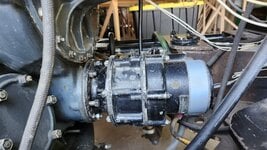
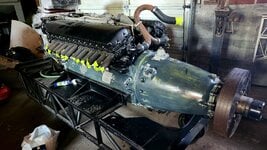
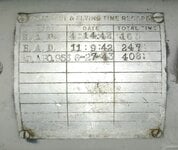
New to the forum. I have an Allison V-1710-33 (C15) that was present at Pearl Harbor and does have wartime flight hours. in 1944 It became a teaching and Demo engine at my high school for the next 50 years, running every semester. it was put into a new wheeled running stand in the mid 1990s and last ran 2001 or 2002.

20241115_082612.jpg
received_158219580324576.jpeg


With the School's blessing, I am now the engine's new caretaker. My plan is to get the engine running again as a static Demo unit again. I have a laundry list of things to go through, check, test and add to the cart, including a large Radiator and a cooling system.

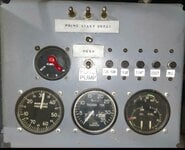
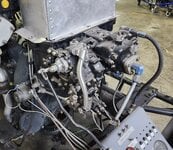
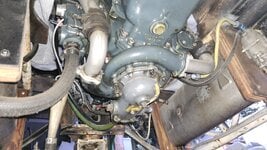
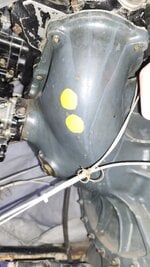
One thing I want to add is an engine Pre-oiling system to flood the bearings and the rest of the oiling system before I even roll the engine over. I know that I cannot push oil through the engine gear-driven pump as I had originally figured:

20251021_140505.jpg


is there a check or pressure port somewhere on the engine I can tap into to connect the Electric pump?

Thanks in advance!
~ Mr.Model T
 

Attachments

  • 20251005_185245.jpg
    20251005_185245.jpg
    1.3 MB · Views: 18
  • 20251005_185228.jpg
    20251005_185228.jpg
    758.8 KB · Views: 24
  • 20250614_152854.jpg
    20250614_152854.jpg
    1.3 MB · Views: 19
  • 20250607_153817.jpg
    20250607_153817.jpg
    1.3 MB · Views: 20
  • Screenshot_20241120_152054_Gallery.jpg
    Screenshot_20241120_152054_Gallery.jpg
    1.2 MB · Views: 18
  • 20241115_083344.jpg
    20241115_083344.jpg
    899.9 KB · Views: 23
  • 20241115_082909.jpg
    20241115_082909.jpg
    508.1 KB · Views: 21
Now that is a magnificent relic! I'm assuming it's from a P-40. People who can actually help you will be by soon.
Great stuff!
Rob,

Yes it is! It's one of the 624 V-1710-33s that were built by Allison and delivered to the US Army Air Corps in 1940. I also believe that it is one of the 299 selected and shipped to Curtiss-Wright for installation in a P-40 airframe. It was also one of the 105 aircraft assigned to Hawaii between January-April of 1941....and a good possibility it was one of the 27 survivors that were still airworthy that fateful sunday morning. I'm of course still researching to locate its airframe, but it was one of the 105 and did see flight time, in the same group as 41-13297

Curtiss_P-40B_41-13297_4.jpg


Sometime in 1944 it made it's way to my High School and served the Aviation program for 55years. I can't wait to learn more about its history and hear it run again!
 
Welcome Mr.ModelT Mr.ModelT and congratulations on your project. I am jealous as I never got to work on any long nose Allison's.

I am PMing you 3 Allison manuals for both the early and later engines and suggest that you follow the details in the later manual (Pages 41 on) plus pre-oil by the method you are suggesting using a separate oil source and the plug below the Cuno filter IF that is unchanged from the earlier engines. The engine was extensively redesigned when they changed to the E/F series engines so this is quite possible. Checking the valve train is critical and I would suggest you look for valve springs that have become permanently compressed. If you need to you can change them without major disassembly of the engine.

We used to preoil using hot SAE 30 oil as it will penetrate better and drain it out as per the manual. We also hand turned the engine, not starter turned the engine, once about a gallon of oil came out the drain and kept hand turning and oiling for another four or five minutes.

GregP GregP has far more recent practice on Allison engines than I have and he has also worked on the C15/-33 series engines so I expect he will expand on my info and correct if necessary with more modern practices.
 
Last edited:
Welcome Mr.ModelT Mr.ModelT and congratulations on your project. I am jealous as I never got to work on any long nose Allison's.

I am PMing you 3 Allison manuals for both the early and later engines and suggest that you follow the details in the later manual (Pages 41 on) plus pre-oil by the method you are suggesting using a separate oil source and the plug below the Cuno filter IF that is unchanged from the earlier engines. The engine was extensively redesigned when they changed to the E/F series engines so this is quite possible. Checking the valve train is critical and I would suggest you look for valve springs that have become permanently compressed. If you need to you can change them without major disassembly of the engine.

We used to preoil using hot SAE 30 oil as it will penetrate better and drain it out as per the manual. We also hand turned the engine, not starter turned the engine, once about a gallon of oil came out the drain and kept hand turning and oiling for another four or five minutes.

GregP GregP has far more recent practice on Allison engines than I have and he has also worked on the C15/-33 series engines so I expect he will expand on my info and correct if necessary with more modern practices.
Thanks for the welcome and the documents!

I have started to amass a decent collection of Allison literature. It is primarily E and F series material, but i was incredibly lucky to come across a nearly mint early printing copy of the C15 series Operator and Overhaul manual from March, 1940.

20250911_141650.jpg


20250911_141700.jpg


20250911_141801.jpg


I also have an original 1941 copy of the Small Operator book as well as the Overhaul Tool Drawing Book. Dan Whitney (who has been a delightful help with information and encouragement) sent me his restored, searchable copy of the C15 Ops and Overhaul book which will help greatly. I have read through the Pre-oiling procedures a few times and agree hand-pulling the engine through would be best, but I like the idea of having an electric Pre-oiling pump to force oil throughout the engine under pressure so that one can simply flood everything with oil and make sure it went everywhere, while pulling it through by hand. I want to pull the sump cover and watch it ooze out of every bearing.

Good point on the valve springs. I absolutely will check that, but i doubt they will be an issue. I plan to pull the covers anyway to inapect and oil, so i will check them.

I do know there are some major changes between the C-series engines and the later E/F-series. I don't have any good photos of the Cuno Filter housing in my folder, but next time I am in the shop I will take some and look it over. Is it up underneath on the Cuno filter body, or in the block below it? It may be used for the oil pressure guage line. This is all I have for now...

Screenshot_20251023_005919_Gallery.jpg


20251005_185245.jpg


So hot SAE30w for hand pre-oiling, got it. Speaking of oil, what oil should I run as the main engine oil? There is conflicting information out there and no real clear answer.

Look forward to Gary's input and everyone else's as well! Want to do this right.

~ Mr.ModelT.
 
Last edited:
Hi,
Got to say, if that engine has the WW2 history as described, it really is a National treasure.
There are whole load of questions here. The engine surely owes its survival to the school and the care of the teachers involved. However, I think its importance as a Historic survivor
may have outgrown its place as a school relic.
Large aero-engines like this really deserve skilled care and attention. Notwithstanding the obvious good intentions of the owner-operators, I suspect that enthusiastic modification
and ad-hoc operation of the engine is not going to help preserve this important item.
Ground-running large aero engines for simple display is possible but requires a properly designed stand for safe operation. Also, such large engines have considerable safety
considerations that may preclude the further progress to actual running of the engine.
As a general observation, ground running display engines are time-expired engines that are relatively cheap. However, the whole process of operating such an engine in a safe and
appropriate way is an expensive operation.
Maybe, it is time for the school to re-visit this situation? This Historic engine surely has considerable value and I would suggest that it might be better to secure its future survival with a major museum? If the school really wants a ground running aero engine for display, a suitable less historic engine could be obtained and the process of setting-up a display rig and
support protocol might be achievable?

Eng
 
Hi,
Got to say, if that engine has the WW2 history as described, it really is a National treasure.
There are whole load of questions here. The engine surely owes its survival to the school and the care of the teachers involved. However, I think its importance as a Historic survivor
may have outgrown its place as a school relic.
Large aero-engines like this really deserve skilled care and attention. Notwithstanding the obvious good intentions of the owner-operators, I suspect that enthusiastic modification
and ad-hoc operation of the engine is not going to help preserve this important item.
Ground-running large aero engines for simple display is possible but requires a properly designed stand for safe operation. Also, such large engines have considerable safety
considerations that may preclude the further progress to actual running of the engine.
As a general observation, ground running display engines are time-expired engines that are relatively cheap. However, the whole process of operating such an engine in a safe and
appropriate way is an expensive operation.
Maybe, it is time for the school to re-visit this situation? This Historic engine surely has considerable value and I would suggest that it might be better to secure its future survival with a major museum? If the school really wants a ground running aero engine for display, a suitable less historic engine could be obtained and the process of setting-up a display rig and
support protocol might be achievable?

Eng
Hi Eng!

Thanks for the thoughtful reply. To clarify a little, the School's Aviation program no longer owns and operates this engine, as the program was shuttered 6 years ago and the Allison and several other engines were placed into warm, dry protected storage. The school no longer had a place or the desire to do anything with it. Since I have a family connection to this engine and as Alumni (and I was the only one that showed interest) l, it passed on to me. I now own this engine.

The stand/cart this engine sits in was built for it in the early-1990s and has run in it many times. There are things that it needs to be run more safely, I agree and those will be done this winter.

My goal is to preserve the engine, but I would like to hear it run a few times. What happens after that....I don't know yet. Once we find it's full history and value, it may go to a proper museum home. As you said, this engine is potentially a National Treasure and possibly the only surviving Pearl Harbor engine that exists. It all needs to be done right.

~ Mr.ModelT
 
Hi Eng!

Thanks for the thoughtful reply. To clarify a little, the School's Aviation program no longer owns and operates this engine, as the program was shuttered 6 years ago and the Allison and several other engines were placed into warm, dry protected storage. The school no longer had a place or the desire to do anything with it. Since I have a family connection to this engine and as Alumni (and I was the only one that showed interest) l, it passed on to me. I now own this engine.

The stand/cart this engine sits in was built for it in the early-1990s and has run in it many times. There are things that it needs to be run more safely, I agree and those will be done this winter.

My goal is to preserve the engine, but I would like to hear it run a few times. What happens after that....I don't know yet. Once we find it's full history and value, it may go to a proper museum home. As you said, this engine is potentially a National Treasure and possibly the only surviving Pearl Harbor engine that exists. It all needs to be done right.

~ Mr.ModelT

Hi,
Congratulations on being the owner of this engine. Serendipity may have given you a gift, but I fear it may be at risk.
Obviously, the operation and care of this engine has not conformed to the original requirements. Nonetheless, it has survived but, there are considerable issues with your proposed
actions.
The engine will not have been preserved in the full manner of the engine manuals and the long storage is many times greater than the design envisaged. Aero engines like this
that are considered for return to flying are fully overhauled to check for all the possible deterioration, contamination and damage that they may have suffered. The solidification and waxing of oils, blockage of oilways by debris and the drying-out of seals and diaphragms is likely in engines with this type of history. Some long-stored engines in private non-certified
operation do get put back into operation with minor inspection but, that sort of "maintenance" is insufficient for the V-1710 with its complex oil circuits and systems, not to mention the 25,000rpm Supercharger. Also the Bendix pressure carb should have specific and detailed care. To be honest, there is no point in expressing concern that oil can get to the main bearings when there are many small oilways, strainers and pressure valves that need checking and cleaning and can only be done by complete overhaul. The implications of putting a long-stored engine into use with just an "oil change and a look at the tappets" are that lubrication in parts of the engine will fail, regardless of how much fresh oil you try to prime it with. One of the common problems is that long dried-out sludge gets disturbed and flows about inside the engine, wrecking it. Another factor is gummed piston rings unable to move in their lands.
Finally, this is not to discourage anybody from restoring an old engine. However, large complex piston aero-engines require extensive and expensive work to return them to operation
after being out of use, also in this case, making modifications and deviating from good aero-engine maintenance practice on a complex and Historic item. If it is indeed the last complete aero-engine from Pearl Harbour, it is surely better to organise its future survival, rather than risk it by seeing if you can start it.
Cheers
Eng
 
Hello All!

New to the forum. I have an Allison V-1710-33 (C15) that was present at Pearl Harbor and does have wartime flight hours. in 1944 It became a teaching and Demo engine at my high school for the next 50 years, running every semester. it was put into a new wheeled running stand in the mid 1990s and last ran 2001 or 2002.

View attachment 852842 View attachment 852846

With the School's blessing, I am now the engine's new caretaker. My plan is to get the engine running again as a static Demo unit again. I have a laundry list of things to go through, check, test and add to the cart, including a large Radiator and a cooling system.

One thing I want to add is an engine Pre-oiling system to flood the bearings and the rest of the oiling system before I even roll the engine over. I know that I cannot push oil through the engine gear-driven pump as I had originally figured:

View attachment 852845

is there a check or pressure port somewhere on the engine I can tap into to connect the Electric pump?

Thanks in advance!
~ Mr.Model T
Clayton,
Good idea to have a pre-oiler on a seldom run engine. I built a ground runner V-1710-F and its a kick! Anyway, you can connect your oiler to the Oil Pressure connection downstream of the Cuno. It's 1/8" NPT, but will provide adequate flow if you're not in to much of a hurry. Another thing to do is check all of the valve clearances. Note the handbook says to set the Intakes at 0.010 inches, but this was later changed to 0.015" to eliminate a serious backfiring problem on the V-1710.
Cheers,
Dan
 

Users who are viewing this thread

Back