Getting back to the title of the thread.
Alternative light and anti-tank guns, 1935-45
We have the problem of a 10 year time span with several 'technologies' showing up just about in the middle.
First use/issue of shaped charge was in fall of 1940 in the west (?) and a few showed up with the German forces in France. Neither was really that good.
Tungsten Carbide as opposed to Tungsten steel pretty much showed up after the Battle for France
except for The German and Polish AT rifles and the German 37mm AT gun?
By 1941 the Germans were stuffing Tungsten Carbide is just about everything and had derailed the main AT gun train with the taper bore nonsense.
Trying to combine a light AT gun with a light infantry support gun is very difficult specification to fill.
Germans show this with the IG 18 which weighed about 400-440kg and could fire a 7.5cm shell holding 570g of HE and smoke charge to make observation easier. A later round changed the HE content to 670g of 1 90/10% mix of TNT and aluminum (bigger flash?), There was also a smoke round with blue smoke for target marking and they did issue one or more HEAT rounds (when?).
Now the Germans had the 3.7cm Pak that weighed around 430kg (different wheels?) and it's HE shell held about 25g of HE, some sources claim there was a later HE round that didn not have a tracer that held 40g. Better than firing AP shot for infantry support but one can see why they wanted two guns. Germans also started issuing the two small taper bore guns.
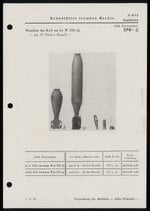
The 28/20mm PZB 41 which was commendably light at about 230kg and could poke a hole in rather thick piece of steel, 52mm at 30 degrees at 500 meters and a lit more close in. Trouble was it was a small hole.
Penetrator was 10.9mm in diameter.
There was the HE round as shown but it only held 5g of HE. Germans made about a 1/2 million of the HE rounds for what may have been near total waste of time/effort.
The Gun was expensive to make, and the barrel wore out quickly. Wearing out the barrel shooting such small HE loads doesn't sound like a good idea. In any case they made just under 2800 of the guns.
Germans followed this up with the 4.2cm Pak 41 which was a taper bored barrel on a 37mm AT gun carriage. Weight was 560-642kg (sources differ) for a rather impressive penetration. 53mm to 60mm at 1000 meters depending on angle, sources only agree occasionally on what happened closer. Problems were much the same. There was an HE round but since it is listed as weighing about 280g and it was far from being a 'mine' shell it is unlikely to be as effective as the normal 37mm AT gun. Around 310-315 built?
The German 50mm AT gun is 990kgWe have been over it before.
The Czech 47mm may have potential, it offers 52mm at 1000 meters at 0 degrees? and 69mm at 500 meters? it is listed at 590kg although that is with horse traction wheels and weight may go up with better wheels/tires. It does offer an HE shell with around 165 g of HE (depends on exact type/method of filling. As usually with under 75 (70?) mm guns smoke is not on the menu.
What weight are people willing to deal with?
What armor penetration are they looking for?
At what distance and that includes both penetration and distance. German IG 18 fired it's early HEAT round at 260ms making it a very short range preposition.
What kind/s of other capabilities are being looked for? How much HE and/or smoke/cannister etc.
The extreme AT guns like the German taper bores have an awful lot of negatives even if a country has Tungsten Carbide.