drgondog,
I was simply quoting verbatim from the book. And I was wondering if the use of the variable incidence tailplane (VIT) in such a manner was SOP or not. As for the abrupt stall of the 190, the report I posted from in the 'Germany'44' thread mentioned that in a tight turn to the left near stall speed, the a/c exhibited a tendency to reverse aileron control and then stall without warning. No mention was made of utilizing the VIT in the turning test. The use of the VIT probably just exacerbated the problem.
Here's something that is probably not relevant, but it is interesting...
This is from an interview with Kurt Tank concerning the effects of modifying the 190 prototype to accept the BMW 801.
"Although the extra 50 hp was useful, we found that the extra 160 kg of engine weight plus the additional structure to carry it, and the weight of the armor and the additional equipment the Luftwaffe now wanted, had increased [the fighter's] all-up weight by about a quarter. The wing loading rose from 1.6 kg/m2 [38lb/sq,ft.] of the first prototype to 1.9 kg/m2 [46 lb/sq.ft.], and the turning performance deteriorated accordingly. To restore the aircraft's previously pleasant handling characteristics, we enlarged the wing by extending each tip by just over 50 cm [20"] and reducing the amount of taper so that the outer sections were somewhat wider. In this way, we increased the wing area by just over 3.5 m2 [35 sq.ft.] and lowered the wing loading to a more reasonable 1.5 kg/m2 [35.8 lb/sq.ft.]"
It is EXTREMELY relevant - you found a jewel. This explains why the Fw 190 did not undergo an entire wing re-design. What they did was increase the span (and aspect ratio) and increase the tip/chord ratio to improve induced drag characteristics... what they didn't do is maintain the same twist ratio on the extension - resulting in the unanticipated bending problems combined with torsion at the tip - thereby losing tip control in a High G turn -
causing all the trauma Soren and I have been duking it out on.. Great Catch!
He goes on to say that the wing remained unchanged in all the low-medium alt. models of the 190. (The metric wing loading numbers look to me like a mis-transcription... )I don't have anything else on the VIT 'problem' (I think the 'problem' was pilot-induced...)
KK89,
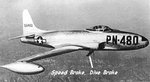
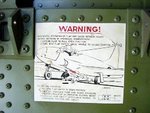
Lockheed's attempt to solve the compressibility problem by modifying the tail-plane only made it worse...In the compressibility zone, the lift generated by the tail-plane overcame that of the wing, and pulling back on the stick (if you had the strength) only increased the uploading on the tail...and steepened the dive. The compressibility-induced turbulence generated by the wing often tore off the tail. It was by installing small dive-flaps under the wing to increase lift (without increasing the AoA), that the problem was solved.
JL



 It did seem that it might have some possible relevance to the point of contention, altho' with my rudimentary knowledge of aerodynamics, I wasn't sure. I should also mention that Tank said that the tail surfaces were also increased in proportion to the enlarged wing.