Info about Gaudianis P-51D-25

Ad: This forum contains affiliate links to products on Amazon and eBay. More information in Terms and rules

Jerrybandit67

Airman 1st Class
108
25
Mar 11, 2024
On 6 august 1945 a P-51D 44- 72661 was shot down by a zero over Kashiwa airfield and was captured in good condition by japanese forces

wich japanese unit were fighting on that area and date?
 

Attachments

  • the-only-photo-of-japans-obscure-p-51d-25-v0-XNiHs1mKAZJR2_KGSU0053euyHZyWRrtFeZT3Gboz2g.jpg
    the-only-photo-of-japans-obscure-p-51d-25-v0-XNiHs1mKAZJR2_KGSU0053euyHZyWRrtFeZT3Gboz2g.jpg
    1.4 MB · Views: 10
I think you should focus your search on the following units operating in the Kashiwa/Tokyo area on August 6, 1945:

70th Air Regiment: The main IJAAF interceptor unit based directly at Kashiwa Airfield, flying Nakajima Ki-84s.
18th Air Regiment: Also stationed at Kashiwa at the time, flying Kawasaki Ki-100s.
302nd Naval Air Group: Based at nearby Atsugi. If the attacker was a confirmed Navy "Zero" (A6M) or "Jack" (J2M), this is the most likely unit involved in the interception.

Searching for these unit diaries/pilot logs should give you the Japanese side of the engagement. But I believe it's more likely that it was AAA gunfire that made the engine stop and he had to belly land in the rice field. It's a well-known loss; the plane was named "Mary One" and the unit was strafing airfields after they finished their escort sortie. Some sources suggest this.

 
Last edited:
USAAF Missing Air Crew Report (MACR) 14838.
This document covers the loss of P-51D 44-72661 "Mary One" (HQ Sqdn, 21st FG), piloted by Capt. Vincent A. Gaudiani Jr., who became a POW after a forced landing just south of Kashiwa Airfield at 10:45 AM on August 6, 1945.

(Princeton University WordPress Service):
"The incident occurred after the completion of the escort mission, when the fighters were expected to strafe ground targets (airstrips, factories, railways) before returning — lightened of both fuel and munitions — to the airstrip at Iwo. Antiaircraft fire was the primary threat to the Mustangs in this late phase of the conflict. Skilled Japanese pilots were scarce by August of 1945, and the Japanese command was conserving its remaining aviation abilities for defense against a full allied invasion, already understood as likely imminent. In the course of a strafing raid on the Kashiwa Airfield, north of Tokyo proper, Gaudiani's engine received a piercing shot and began losing coolant. Recognizing that the engine would overheat within minutes, Gaudiani made a (soft) crash-landing, bellying the plane into wet agricultural land east of the Tobu-Noda railway line. There is a report filed by Lieutenant John Combs, flying in Gaudiani's wing, who witnessed the incident"

 
USAAF Missing Air Crew Report (MACR) 14838.
This document covers the loss of P-51D 44-72661 "Mary One" (HQ Sqdn, 21st FG), piloted by Capt. Vincent A. Gaudiani Jr., who became a POW after a forced landing just south of Kashiwa Airfield at 10:45 AM on August 6, 1945.

(Princeton University WordPress Service):
"The incident occurred after the completion of the escort mission, when the fighters were expected to strafe ground targets (airstrips, factories, railways) before returning — lightened of both fuel and munitions — to the airstrip at Iwo. Antiaircraft fire was the primary threat to the Mustangs in this late phase of the conflict. Skilled Japanese pilots were scarce by August of 1945, and the Japanese command was conserving its remaining aviation abilities for defense against a full allied invasion, already understood as likely imminent. In the course of a strafing raid on the Kashiwa Airfield, north of Tokyo proper, Gaudiani's engine received a piercing shot and began losing coolant. Recognizing that the engine would overheat within minutes, Gaudiani made a (soft) crash-landing, bellying the plane into wet agricultural land east of the Tobu-Noda railway line. There is a report filed by Lieutenant John Combs, flying in Gaudiani's wing, who witnessed the incident"
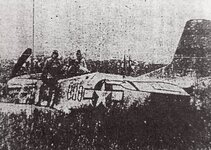
aaah
 
Gaudiani was shot down by A6Ms from 302 Kokutai. The A6Ms engaged B-29s and their P-51 escorts but likely rather shaken, the Japanese never submitted any victory claims even though they did actually down Gaudiani

昭和20年8月6日

「訓練飛行/厚木基地」
飛行訓練の彗星1機が離陸直後、発動機が停止、基地外の畑に墜落。
操縦 板垣周一中尉
偵察 服部 宏一飛曹
【被害】

損失:彗星1機[不時着大破]
搭乗員負傷:2名
【負傷者】

板垣周一 中尉 (海兵73期) 彗星 操縦 彗星隊飛行隊士
服部 宏 一飛曹 (甲飛12期) 彗星 偵察


同日

0830~

{米第21爆撃兵団のB‐29爆撃機4機、第7戦闘兵団のP‐51戦闘機120機が、関東地区に来襲}


F13%2Fa5%2FXA%2Fj%2Fo00290040p_1520742194173_wk9j9.jpg

『第三〇二海軍航空隊 (20)』

第三〇二海軍航空隊 (20) 昭和20年8月1~2日「川崎上空B‐29夜間邀撃」銀河、彩雲夜戦が発進。三菱石油・川崎製油所が主目標。銀河は房総半島沖まで追撃、…
ameblo.jp
ameblo.jp


The first part talks about a training flight with a D4Y that resulted in a crash landing. The battle with the B-29s and P-51s is mentioned as happening at 0830 hours. Unfortunately the only information about the battle noted was the time and location with the number of A6Ms being involved not known.
 

Users who are viewing this thread

Back