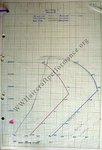
ANd pretty much useless if trying to escort the British bombers of 1941 as proposed in Post #293. The Wellingtons and Hampdens and whatever else the British could scrape up for a daylight escorted bombing offensive are NOT going to be cruising around at 5000-9000ft where their 'escorts' engine work best but they are fat ripe targets for AA guns.
Split-S to a lower altitude for the escorts just leaves the bombers open to attack by the German interceptors.
The higher power limits can be quite useful in some situations, just not this one.
I don't agree - if you look at the actual battlefield record, it was fairly normal for P-40s to escort bombers or fighter bombers at regular medium bombers cruising altitudes 10, 15, 20k feet whatever (also keep in mind medium bombers often flew at 'medium' altitude since many medium bomber types didn't always perform that well very high), whether or not the fighters were over their own performance ceiling (which ranged from 12-16k for earlier model Allison engined P-40s, 20k for Merlin) and do their best at that altitude, but dive down below if they got in trouble with intercepting fighters. This was true both in the Med and in the Pacific.
This reality actually contributed to the official divergence between "close escort" and "free range escort" type policies later in the war, on both sides.
Though in theory this would leave the bombers alone and vulnerable in practice it seemed that the attacking and escorting fighters would often get into mixed up affrays while the bombers went on their way (sometimes fleeing at high speed and a shallow dive). It didn't take the bombers very long to get out of sight nor did it take Bf 109s very long in combat to run low on fuel and not be able to chase them. Zeroes of course (and to a lesser extent, Ki 43s) had much more endurance but they had less of a speed margin to chase fleeing bombers. An A-20 running flat out wasn't much slower than a Zero.
Mission profiles and performance envelopes often do not hinge on sticking to the optimal conditions of a planned mission but also quite often devolve to how could they handle worse case scenarios, which in combat with as formidable an enemy as the Luftwaffe or IJN were all too routine an occurrance. An escort fighter that could survive missions at a high rate was an escort fighter that could continue to be used.
Vulnerability is of course an issue. You did need fast enough bombers. One could in fact imagine a scenario with merlin engined P-40s escorting Allison Engined P-51 dive bombers.
The practical difference between an early Spitfire and a early P-40 was not the difference Between and Allison C-15 and a Merlin III but the fact that the P-40 weighed 1000-1200lb more than the Spitfire. A Bf 109F-1/2 went about 6000lbs in interceptor mode (no bombs or drop tank) and that was part if it's success at altitude, the supercharger wasn't all that great, the engine just wasn't trying haul around anywhere near as much wight.
It was a little bit of both, actually. The Merlin XX certainly did improve the higher altitude performance of the P-40F/L, just as the steadily improving high altitude performance of both Merlin and DB engines helped Spitfires and Bf 109s perform higher and higher.
By contrast, the early Zero which was quite light of course actually had relatively poor altitude performance, A6M2 wasn't so great about 18k from what I have read.
S