I should have equivocated on that a bit - yes obviously the aircraft engine companies did their R&D but not always at - or even remotely near a pace that was in sync with the needs of the pilots using these aircraft. Allison in particular was (I wold say) literally criminally negligent in this regard, in fact later in the war they were caught selling defective engine in some kind of bribery scandal.
A bit melodramatic. I would certainly like to hear more about Allisons sale of defective engines. The Play "All My Sons" by Arthur Miller uses the plot device of defective cylinder heads for P-40s but it was actually inspired by Curtiss Wright delivering defective R-2600s.
Allison was in a strange situation, a lot of people nowadays bitch and moan about how Allison should have done this or that or some other thing to improve the Allison engine (meaning make it more com[ative with the Merlin). They ignore that Allison was a very small engine company for most of the 1930s. They ended 1938 with 530 employees and orders for 43 engines on the books, they had completed 13 engines that year (one was a V-3420 and should count twice?) which roughly doubled any previous years production. The situation in the Spring of 1939 was critical, the company was virtually bankrupt. The USAAC owed Allison over 900,000 dollars for work already done, General Motors which owned Allison, had given the company over 500,000 dollars to keep it afloat and was ready to pull the plug. The Allison bearing division was pulling it's own weight but could not keep the engine division going. And yet today people post about how Allison should have done this or that to make higher performing engines in 1940 or 41? which would have meant research starting in 1938 or 39.
The Big contract in April of 1939 to provide engines for the P-40 saved the company from closing. But since Allison actually had no production facilities (a shop that can make 1-2 engines a month cannot build 100 engines a month) They had to build a new building, equipe it with machine tools, find subcontractor and hire and train a work force. Now at this time the Allison engine division had 25 employees in the "engineering department" and that included two guys who ran the blueprint machine. Some of these engineers were tasked with figuring out how to build the engine in quantity, production engineering, not developing the engine itself.
At the end of 1939 Allison had 786 employees and had delivered about 48 engines. At the end of 1940 they had 4,303 employees and had delivered over 1140 engines. Modern day critics make no allowance for the effort needed to accomplish this and how it may have impacted R&D. They also ignore the lack of actual supercharger knowledge in the US (and in fact the world) at this time. RR sort of stumbled into hiring Stanley Hooker and in fact didn't really know what they wanted him to do when they hired him. Allison was not so lucky. Wright and P & W had only started designing and building their own superchargers in the one to two years before 1939 so there is no pool of supercharger designers to hire from.
While Allisons cash flow problems were "solved" it wasn't an easy thing. Of those 1140 engines delivered in 1940 only 342 went to the USAAC, the rest were French and British Orders. Remember that 900,000 dollars the Army owed Allison? Allison had to forgive the Army that debt in order to get permission to export the engine to Britain and France. Now where was the money to come from to pay for this expanded R&D early program that modern writers seem to want.
The Army was only paying for certain programs or proposals. And in fact during the late 30s and perhaps 1940 Allison at times had to ask the Army what they really wanted as the Army was coming up with all kinds of ideas (like fuel injection) while that staff of 25 was already working on 5-6 other army projects. If the Army isn't paying for projects already being worked on where is desire to hire more staff (who expect to be paid) to work on extra projects?
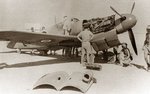
You are also not giving quite enough credit to manufactures field representatives, some of whom were on those Islands and desert air bases instructing those mechanics in field, and gathering information to send back to the factory for quicker changes. Even the Flying Tigers had at least one field representative.
One representative solved a engine control linkage problem in India on P-38s by squeezing in behind the pilot while several flights were made with cowling panels removed for observation. A new linkage set up was devised and manufactured locally and fitted to several squadrons in that theater and other kits were readied to send to squadrons in the Pacific. I don't know how many were fitted as Lockheed had either figured it out or used his initial reports to come up with a factory retrofit linkage kit.
By 1943 Allison had well over 20,000 employees and several General motors plants were acting as subcontractors for parts like crankshafts and connecting rods. All told there were around 1250 companies supplying parts/materials to Allison.
Allison (and other companies) also wound up with training schools to teach army personnel (instructors) how to train other army personnel to be aircraft engine mechanics. Allison ran their first 22 day course starting in April of 1942. A little late for troops leaving for the south Pacific.
I know it goes against American mythology to believe that men in the field didn't know more than the men you designed and built the aircraft and engines to begin with but let's be realistic.