P-51s tricky to fly?

Ad: This forum contains affiliate links to products on Amazon and eBay. More information in Terms and rules

OldGeezer

Airman 1st Class
289
646
Dec 11, 2020
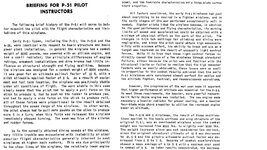
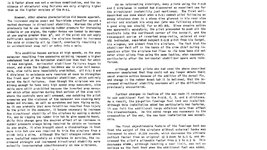
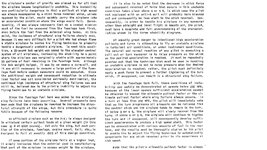
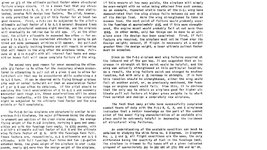
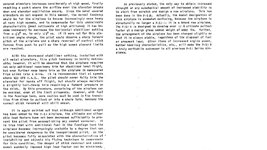
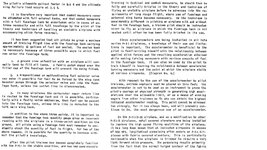
Looking through a manual titled "Briefing for P-51 Pilot Instructors" dated 8 August 1945, I was particularly interested to read the introductory materials relating to the evolution of the P-51 all the way up to the K model, and some surprising (to me) cautionary text about limitations and adverse flight characteristics. I'm not sure if this is the right place to post this but I'm sure the admins will know where to move it, if it needs relocation. Maybe this is all common knowledge anyway but I sure didn't know a lot of it.
 

Attachments

  • Slide1.JPG
    Slide1.JPG
    45.8 KB · Views: 12
  • Slide2.JPG
    Slide2.JPG
    218.9 KB · Views: 12
  • Slide3.JPG
    Slide3.JPG
    226.9 KB · Views: 11
  • Slide4.JPG
    Slide4.JPG
    226.6 KB · Views: 13
  • Slide5.JPG
    Slide5.JPG
    233.7 KB · Views: 10
  • Slide6.JPG
    Slide6.JPG
    181.5 KB · Views: 9
  • Slide11.JPG
    Slide11.JPG
    163 KB · Views: 10
  • Slide10.JPG
    Slide10.JPG
    210.8 KB · Views: 11
  • Slide9.JPG
    Slide9.JPG
    176.1 KB · Views: 10
  • Slide8.JPG
    Slide8.JPG
    161.6 KB · Views: 8
  • Slide7.JPG
    Slide7.JPG
    127.5 KB · Views: 10
The FW190 was the same, one foot over the line on the edge of it's performance envelope and it fell from the sky. There is a good interview with a red tail pilot and he said quite a few pilots went in when fully fueled, he said he flew as straight as a die until the weight burned off.
 
Indeed, for any high-performance aircraft, it is essential to remain within the flight envelope.

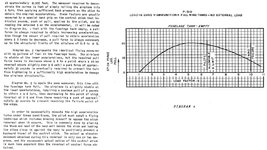
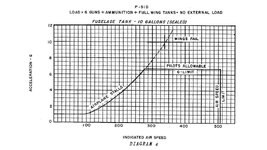
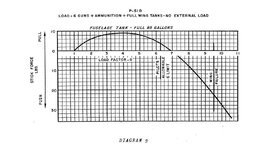
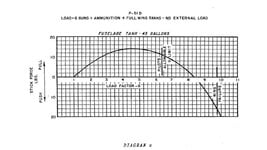
Regarding the P-51, the main problem with the late versions was stick force reversal (see diagrams 1, 2 and 3), a very undesirable characteristic allowing structural failure through light pull....

That said, the first few pages of this document are very enlightening regarding the evolution of the different versions and their flight behavior, an aspect that is often overlooked.
 
The FW190 was the same, one foot over the line on the edge of it's performance envelope and it fell from the sky. There is a good interview with a red tail pilot and he said quite a few pilots went in when fully fueled, he said he flew as straight as a die until the weight burned off.

Depending on the twin fuel tank's consumption balance (usually set to neutral) the 190 did have elevator reversal at speeds below 220 knots (self tightening turn), but it remained quite useable in combat turns if you expected it and flew the turn while pushing on the stick. Unlike the P-51, the fw-190 did not break and certainly had higher absolute strength than the later P-51's 10.5 Gs... The Me-109G with its detachable two bolt wings had 13 Gs so...

That they reinforced the later P-51 wing and got only 1% more strength is pretty sobering as to how overloaded the later P-51 were... Even though they say that in combat 3-5 G was typical, and 6G hardly ever existed (which is true), there are transition states where the stresses briefly go far above these values...

The 190 also had powerful enough ailerons to catch the wing drop, so the tightest multiple 360s were done with flaps at take off, at reduced power, with the stick forward and to the side to catch the wing(!!): This extreme low speed fighting was widely described as by far the 190A's favourite mode of combat, and it competed in this way with Russian fighters with 18 sec turn times... Red fleet TTT no 43 (US translation): "The 8-190 will inevitably offer turning combat at a minimum speed. Such combats have been observed to last quite some time. The 8-190 does not like vertical maneuvers."

I did not know that reversing the trim tab and adding the fin fillet robbed the later P-51 pilots of an emergency escape maneuver, where the rudder would induce some kind of snap roll stall: This is invaluable knowledge, and I thank the OP for providing this: I had never seen this text.
 
Re: the dorsal fin and reverse rudder boost tab: this is from the NAA Weekly Service News from 1 April. NAA must have worked reasonably quickly to design and test the dorsal fin and redesign the rudder tab system:
184.5 DFF FSB 1.jpg

185 DFF FSB 2 4-1-44.jpg

I'll bung this T.O in here, showing how the dorsal fin and reverse rudder boost tab were retro-fitted to P-51Ds:

P-51D Dorsal Fin and Reverse Rudder Boost Tab1.jpg
P-51D Dorsal Fin and Reverse Rudder Boost Tab2.jpg
P-51D Dorsal Fin and Reverse Rudder Boost Tab3.jpg
P-51D Dorsal Fin and Reverse Rudder Boost Tab4.jpg
P-51D Dorsal Fin and Reverse Rudder Boost Tab5.jpg
P-51D Dorsal Fin and Reverse Rudder Boost Tab6.jpg
 
Last edited:
I'll bung this T.O in here, showing how the dorsal fin and reverse rudder boost tab were retro-fitted to P-51Ds:
The T.O. for the P-51B/C was pretty much the same as that for the P-51D. Note how in this T.O. for the P-51D, the illustration used on the second page is of a high back P-51B/C fuselage.

Comparison, first page of the P-51B/C T.O.

P-51B:C Dorsal Fin TO 1st Page.jpg


Also for those paying closer attention, note the number of components on the drawings and in the components lists with a 73- prefix. These indicate that these parts are still to the same original design and specification of the original NA-73 Mustang I as introduced into RAF service in late 1941.

There was a subtle difference in the shape and attachment of the dorsal fin that was attached to late build P-51C and later build P-51D/Ks done at the NAA factories.
 
P-51s today don't really have the characteristics exhibited when flying at aft CG since civilian airplanes today are MUCH lighter than WWII military condition and almost everyone has removed the fuselage tank and installed a second seat to take a friend along when the mood strikes. Of course, not needing a 100-pound old-technology radio helps a lot. I doubt if most civil P-51s today fly very often above 8,800 - 9,000 pounds. Many are a LOT lighter. But we all know they CAN fly heavier if the need arises.

I know of a flying P-51A that would normally come in stock at about 6,200 pounds empty that flies today at 5,000 pounds empty! Losing that amount of weight (19%) definitely helps performance and flying characteristics, not to mention top speed! That particular P-51A circulated around Reno at 356 mph, which is right in the middle of stock P-51D speeds.
 
Last edited:
The T.O. for the P-51B/C was pretty much the same as that for the P-51D. Note how in this T.O. for the P-51D, the illustration used on the second page is of a high back P-51B/C fuselage.

Comparison, first page of the P-51B/C T.O.

View attachment 859543

Also for those paying closer attention, note the number of components on the drawings and in the components lists with a 73- prefix. These indicate that these parts are still to the same original design and specification of the original NA-73 Mustang I as introduced into RAF service in late 1941.

There was a subtle difference in the shape and attachment of the dorsal fin that was attached to late build P-51C and later build P-51D/Ks done at the NAA factories.
Absolutely brilliant!
 
One problem with the P-51D/K series not mentioned in the report was the undercarriage that had been redesigned. For some reason (possibly a minor weight saving measure), NAA dispensed with uplocks, meaning that the undercarriage legs relied purely on hydraulic pressure to keep them retracted. As an unfortunate consequence, several P-51Ds crashed, because one or both of the undercarriage legs were forced out of the bays during dives or high-speed flight. The outcome was that a landing gear uplock installation kit had to be retrofitted.

There's no doubting that the P-51D was still an excellent fighter, but its pilots had to be well trained to get the best out of it, while avoiding the problems caused by the need to turn it into a long-range escort fighter.
 

Attachments

  • P-51D Install Landing Gear Uplock System.pdf
    570.5 KB · Views: 5

Users who are viewing this thread

Back