A few things to remember about B-29 operations from the Marianas in 1944/45, many of which have implications for operations against the central parts of the USSR.
There were 28,329 individual aircraft sorties dispatched in 331 Missions of all types. An average of 86 aircraft per mission. Only 35 Missions exceeded 150 aircraft dispatched (although there were occasions when multiple Missions were flown on the same day/night but against different targets). Only 75 were described as "Urban Area" attacks - the firebomb raids - which tended to involve more aircraft. So few were on the scale of 8th AF Missions.
B-29s were operating out of the Marianas at TOW of up to 137,000lb, well in excess of design, including about 10,000lb of bombs. Flying lower level missions allowed a fuel reduction of only a few thousand pounds and a greater safety margin.
The airfields built in the Marianas generally had multiple parallel runways (2-4) of c8,500 ft long. Very few airfields in Europe had runways that long. Air Ministry Class A airfields had at least one runway of 6,000ft. It was only some of the Emergency Airfields (like Manston, Woodbridge & Carnaby) that had a runway of 9,000ft long. So the US Army engineers have a major job on their hands renovating and expanding European airfields to take the B-29s. The airfields in the Marianas each took about 4 months to construct, even if there was an existing Japanese airfield to base it on. The B-29 was a much heavier aircraft than those operating in Europe and that had an effect on the runway strength required.
Aircraft flew individually to a meeting point, usually some 250 short of Japan, where they met up to proceed to the target. Generally the trip north would be at lower levels or using a stepped climb, increasing altitude as the fuel burned off. Only after the meeting point would the final climb to bombing altitude be made. But if flying against targets deep in the USSR it seems to me that the climb to higher altitudes could not be stretched out, so increasing fuel burn in heavily loaded aircraft on the way out.
Iwo Jima played a hugely important part in B-29 operations but not in the way that might be imagined. Situated about half way between the Marianas & Japan it provided an emergency airfield for the B-29s from the first B-29 landing on 9 March to the end of the war. In all about 2,400 such landings took place. About 82% of those landed for fuel, with the remainder for repairs. Now we don't know how many would have been lost before reaching their home base. But what happens when that translates to operations that for the most part would be flown over enemy territory without the chance of an emergency field?
129 B-29 ditched, crashed in the sea or were abandoned by their crews over the sea. Air sea rescue operations saved 1,429 crewmen. Those ASR operations included aircraft flying from the Marianas & Iwo Jima, surface ships placed along the route and submarines near the Japanese coast, all specifically deployed for that purpose. How much of this is possible with long routes to targets deep in the USSR?
The 15th FG with P-51D moved onto Iwo Jima Airfield No 1 on 6 March 1945, followed by the 21st FG on Airfield No 2 22-24 March and 506th FG on 11 May 1945 on Airfield No 3, all with P-51D. Finally the P-47N equipped 414th FG arrived in July. It was 7 April before the first VLR mission was flown (escorting B-29s the appoximate 750 statute miles / 660 nautical miles to Tokyo). But not many of their operations were B-29 escort. Many more were fighter sweeps over Japan. As escorts they usually picked up the bombers somewhere close to the Japanese coast, allowing fuel saving on the way up.
Reconnaissance. Just how much was known in 1945/46 about where the prime targets actually were? Or is the intention simply to flatten every city in the USSR? This was also a problem with Japan in 1945, hence the development of the F-13 photo recce version of the B-29 (118 conversions made). The USSR had been a closed country for decades. In WW2 the Soviets were deeply suspicious of ousiders & monitored them all closely and restricted their movements.
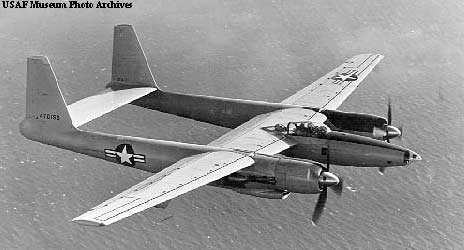
So you are going to need more F-13s to cover the USSR. Or even better pushing development of the Hughes XF-11 (ff 7 July 1946) and / or the Republic XF-12 Rainbow (ff 4 Feb 1946)

en.wikipedia.org
en.wikipedia.org
Also weather recce. As weather patterns normally pass west to east over Europe some information would be available, but the deeper you go the more unreliable it would become. Similar issues arose over the distances to / from Japan. So diversion of B-29 for that purpose became necessary.
Atomic bombs. Production was intended to continue at an increasing rate into 1946. From Groves Memo to the Chiefs of Staff dated 30 July 1945.
. The final components of the first gun type bomb have arrived at Tinian, those of the first implosion type should leave San Francisco by airplane early on 30 July. I see no reason to change our previous readiness predictions on the first three bombs. In September, we should have three or four bombs. One of these will be made from 235 material and will have a smaller effectiveness, about two-thirds that of the test type, but by November, we should be able to bring this up to full power. There should be either four or three bombs in October, one of the lesser size. In November, there should be at least five bombs and the rate will rise to seven in December and increase decidedly in early 1946.
In fact with the end of the war production rates slowed. But there is still only the 393rd BS, 509th CG equipped with 15 Silverplate B-29s available to drop them. Any other units to be formed / converted to dropping them will require time ro train.
Someone suggested using Norway as a base. Fine but remember a few things:-
1. The few airfields that existed were on the western coast and hemmed in by steep mountain ranges to the east.
2. Your journeys to /from targets around the Baltic or in Northern USSR mean flying around neutral Swedish airspace, unless they join on our side. A neutral Sweden can be expected to seek to protect its airspace.
3. Again runway lengths. A quick look at Bodo & Bardufoss in the north (both main Luftwaffe bases) had runways only 4-6,000ft long at the end of WW2.
I've posted earlier about the situation in Iran with the Soviets occupying the northern part of the country.
What is in it for Turkey allowing bases to be built on its territory? They managed to stay out of WW2 despite pressure from both sides at various times.