Questions about Jumo 213E continuous engine RPM (1 Viewer)

Ad: This forum contains affiliate links to products on Amazon and eBay. More information in Terms and rules

rocaf2003

Airman
16
1
Oct 8, 2025
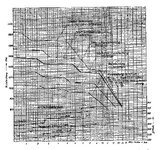
Hi,There!I found a performance chart for the Jumo 213E, which indicates that in maximum continuous power mode, the rpm is 2700 (marked as "Höchstdauerleistung" on the chart, with no time limit). Meanwhile, the rpm for climb and combat power is 3000 (marked as "Sieg- u. Kampfleistung," with a maximum continuous use time of 30 minutes). However, on another website, it states that the rpm for the unlimited nominal mode is 3000. What's going on here? Did the website get the engine data wrong? Any help would be greatly appreciated!
Here's the website:Ta 152 H-1
 

Attachments

  • full (1).png
    full (1).png
    46.2 KB · Views: 34
Hi,There!I found a performance chart for the Jumo 213E, which indicates that in maximum continuous power mode, the rpm is 2700 (marked as "Höchstdauerleistung" on the chart, with no time limit). Meanwhile, the rpm for climb and combat power is 3000 (marked as "Sieg- u. Kampfleistung," with a maximum continuous use time of 30 minutes). However, on another website, it states that the rpm for the unlimited nominal mode is 3000. What's going on here? Did the website get the engine data wrong? Any help would be greatly appreciated!
Here's the website:Ta 152 H-1
For my money, primary source beats the un-sourced secondary (tertiary?) source every day of the week, and twice on Sunday.
 
Now I have come up with a method to calculate the total load on the engine. Its essence is to calculate the total load on the engine when the aircraft is flying at sea level and the engine is operating at sea level at 2700 rpm with unlimited maximum continuous power. This value should be the theoretical upper limit of total load that the engine can handle indefinitely. What is meant by total load? It includes the increase in load on engine components due to a 300 rpm increase in rotational speed, as well as the impact of temperature differences caused by varying fuel consumption on the engine material's load-bearing capacity. For example, when operating at sea level at 2700 rpm with maximum continuous power, the engine runs with higher fuel flow, resulting in a certain temperature, along with the cooling effect from the maximum flight speed of 541 kph achieved at this power setting. The combined effect determines the actual engine temperature and its influence on the material's load-bearing capacity. Similarly, when operating at an altitude of 10,700 meters in climb and combat mode at 3000 rpm, the engine runs with lower fuel flow, resulting in a different temperature, along with the cooling effect from the maximum flight speed of 678 kph achieved at this power setting. The combined effect again determines the actual engine temperature and its influence on the material's load-bearing capacity. However, the additional load increase due to the 300 rpm speed rise must also be taken into account.
 
That will be a serious calculation. Have you got much data on the case, bearing & crank materials? I'd be interested in knowing how you manage the thermal balance / hydrodynamic behaviour of the bearing under load.
 

Users who are viewing this thread

Back