When you build up ANY WWII aero engine from scratch, radial or inline, you "pre-oil" it before first startup. I have first-hand experience with the Allison V-1710.
Basically, we leave the valve covers off and get a propane tank, fill it with oil about 3/4 full, pressurize it, and put oil in from the bottom of the engine. When it starts to leak out in the valve lifter area, it is pre-oiled. Then you can put the valve covers on, bolt the engine into a stand if it isn't aleady, connect everything, and start it for bench run-in. There is a definite procedure for bench run-in. WE always ran ours until the exhause manifolds turned from dark black (oil) to light gray (normal color). When that happens, you have seated the rings and the engine is ready to fly for break-in.
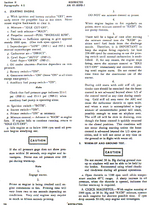
In my experience, most but not all radial engine fighters have a pre-oil pump. When you go to start it up after some time, say several days to a week, you have to run the pre-oil pump for awhile (unsure about duration, it varies from engine to engine). Then, before you try to start it, you have to pull the propeller blades through at least one revolution to see if the bottom cylinders are full of oil. If so, the prop stops because you can't compress oil. If it stops, you have to remove the spark plugs from the bottom cylinders to drain the oil.
Once drained, you can re-install the cowling and start the engine. To start, you leave the mixture at idle cuttoff and run the starter through 3 complete revolutions. For a 4-blade prop, like a Bearcat, that's 12 blades. Once you turn it through 12 blades with the starter, you can put the mixture to full rich and start the engine normally. Some radials need a shot of prime and some don't. The engine will belch and smoke until the accumulated oil in the bottom cylinders has burned off and it will then settle into a normal idle. By that time, it will be warm enough to taxi.