The air-cooled in-line engines much more prominent

Ad: This forum contains affiliate links to products on Amazon and eBay. More information in Terms and rules

A significant impact in the choice of inline or radial, is that its much harder to have a 4-valve head on a radial once its got more than one row (not impossible...but very tricky).
Whereas on an inline you just have to extend the existing cam/s backwards depending on how many cylidners you have. Depressingly
many inline engines didnt bother taking advantage of that and were worse for it (Jumo 222 and also the Wright: Tornado hyper-engine - although
arguably in both those cases, the volumetric efficiency was the least of their problems).
 
With V12 layout, there is no blind alley called 'no center bearing', for engineers to enter and waste 5-10 years.

Not sure why you are calling the center bearing a blind ally? something missing in translation?
The center bearing is what made the two row radial work. It allowed higher rpm or high cylinder pressures or both. Lack of a center bearing is one of the reasons the A-S Tiger didn't work at "high" power and the reason the G-R engines (and the licenced engines/copies ) were limited in power. The G-R K and N were the same displacement as a Hercules. No center bearing means lower rpm and lower boost pressure regardless of the sleeve valves and type of fuel.

The long intake tubing was being dealt with by the time of 1st supercharged in-lines (early 1930s).
No, it wasn't. Allisons and Merlins had trouble with mixture distribution. Not all cylinders got the same amount of fuel/air mixture and not all cylinders got the same mixture at the same time. certain cylinders got different ratio mixtures (richer or leaner) than it's neighbors and power was limited to the what the leanest cylinder/s in the engine could make without detonating. Radials were not perfect (R-3350) but it was easier.

The in-line engine also offers easy way to have 4 valve per cylinder, not present on multi-row radials (and one of reasons why Bristol embraced sleeve valve technology, so another thing where money does not have to be spent)

Here we run into some real questions. Yes you can use 4 valves easier on the inline/V-12.
Should you? 4 valves may present a problem in cooling the cylinder head. The more valves (and valve gear and ports/passages) in the head the more difficult it is to cool the head. That is get the amount of finning you want with clear, direct paths from the hot spots to the fins.

87 oct fuel was best what it gotten (no 130 grade for Italians),

For air cooled engines the problem was that they could not make as much use of high octane fuel as a liquid cooled engine without better cooling.


BMW much improved the basic Hornet design, ie. they increased the finning area,

Yes they did, as did Wright with every generation (model) of the R-1820. Trouble here is that it sometimes took a change in manufacturing techniques to get the increased fin area.
Like going from cast heads to forged, or using ganged slitting saws to cut the fins. If you don't have the production machinery you can't make the design you have on paper.
The Hercules went from under 600 sq in of fin (development) just on the head to well into the 700s during the war. It changed from aluminium to a copper alloy after the war for the high powered post war versions.

What stage of manufacturing expertise do you have when you want the V-12s to replace the two row radials? what is needed and does it exist?
 
Cooling drag of BMW 801D was almost the twice of what Jumo 213A was making, equivalents of 0.786 vs. 0.42 sq ft; engine power was in the ballpark. The drag of fuselage of Fw 190A-8 was also bigger than that of the Fw 190D-9, despite the D-9 having also the 60 cm rear fus
However, with Tank's airfoil and spinner design, the penalty was reduced, particularly when compared to other radial types.
 
Not sure why you are calling the center bearing a blind ally? something missing in translation?

I've said 'no center bearing' blind alley - the path taken by the French and most of Italian designs.


Here we run into some real questions. Yes you can use 4 valves easier on the inline/V-12.
Should you? 4 valves may present a problem in cooling the cylinder head. The more valves (and valve gear and ports/passages) in the head the more difficult it is to cool the head. That is get the amount of finning you want with clear, direct paths from the hot spots to the fins.

If the heads can be cooled well, they yes, go with 4 valves/cylinder.

For air cooled engines the problem was that they could not make as much use of high octane fuel as a liquid cooled engine without better cooling.

Some air cooled engines gained 20% power when 100 oct fuel was used, like the Mercury. Hercules was also allowed for greater boost with 'better' fuel, same with BMW 801D once the valve- and spark-plug related problems were solved.
Some liquid cooled engines barely gained 10% due to hi-oct fuel, like the HS 12Y and it's offsprings (unless they gained 50% extra weight due to strengthening), or the DB 601 series.
So not everything was cut and dry.

Yes they did, as did Wright with every generation (model) of the R-1820. Trouble here is that it sometimes took a change in manufacturing techniques to get the increased fin area.
Like going from cast heads to forged, or using ganged slitting saws to cut the fins. If you don't have the production machinery you can't make the design you have on paper.
The Hercules went from under 600 sq in of fin (development) just on the head to well into the 700s during the war. It changed from aluminium to a copper alloy after the war for the high powered post war versions.

BMW 132 went from 660 HP (Hornet under licence) to 960 HP before the war.

What stage of manufacturing expertise do you have when you want the V-12s to replace the two row radials? what is needed and does it exist?

Not to replace two row radials, but to be made instead of them, and not just V12s.
Most of the stuff already exists.
 
A lot depends on timing.
I've said 'no center bearing' blind alley - the path taken by the French and most of Italian designs.

I am sorry about the confusion, my mistake.
However,

This means relativity early timing. The G-R 14K first ran in 1929. Given the fuel of the time, the metallurgy, and the bearing & lubrication technology it was certainly a viable design.
With no center bearing it was shorter and lighter than a similar engine with a center bearing would be. With fuel limiting boost (cylinder pressure) and metallurgy and bearing/lube technology limiting RPM (at least to some extent) the center bearing engine offered solutions to nearly non-existent problems at the time. The G-R 14K was similar in weight to an R-1820 or perhaps about 100lbs heavier (early R-1820) but offered about 30% more displacement. The slightly smaller cylinders may have allowed a bit higher RPM (R-1820 would not exceed the RPM Of the GR-14K until the G200 model). As better fuel becomes available and higher rpm starts to be used the ability of a center bearing engine to stand up to the strains becomes more important and justifies the weight/length of the crankshaft/crankcase. By 1939 however the "no center bearing" design was toast.
Where in the 10 years does the air cooled V-12 fall?

Some air cooled engines gained 20% power when 100 oct fuel was used, like the Mercury. Hercules was also allowed for greater boost with 'better' fuel, same with BMW 801D once the valve- and spark-plug related problems were solved.

An awful lot depends on the engine. The increase in power for the Mercury may have been in the 10-15% range. The Pegasus was allowed nowhere near the increase in power the Mercury was, despite suing an identical bore and nearly if the 100% identical cylinder head. I have mentioned the increase in head finning alone for the Hercules I don't know what they did to the cylinder barrel), Yes some 87 octane Hercules engines were allowed to use 100 octane at higher powers but the really big jumps required changes to the engine.
BTW the Pegasus itself went through at least 5 different cylinder and cylinder head configurations from about 1930 to 1940. Picture on page 268 of "Aircraft Engines" by A. W. Judge volume I. caption also states that there was a 40% increase in fin area between the 4th and 5th versions. There are quite noticeable changes between the other versions.


Some liquid cooled engines barely gained 10% due to hi-oct fuel, like the HS 12Y and it's offsprings (unless they gained 50% extra weight due to strengthening), or the DB 601 series.
So not everything was cut and dry.

quite true. But the 12Y was also a late 20s engine and had never been intended to operate at the pressures and RPM that later engines were. Using early 1930s air cooled cylinders in the basic engine design and then claiming you can use the higher power per cylinder that later models were operated at using 100 octane fuel isn't quite right.

BMW 132 went from 660 HP (Hornet under licence) to 960 HP before the war.

Ans what were the changes?

Not to replace two row radials, but to be made instead of them, and not just V12s.

translation problem? replace might mean instead of, depends on context. But I understand your meaning to be that in the late 20s/early 30s the engine designers go with the V-12s (or X-16s/X24s of H engines) instead of the two row radial. However there is a trap/dead end there.

As the radials were developed for more power they got a lot more finning. Already mentioned the Pegasus, the R-1820 went from from about 600 sq in of fin area on the head alone (not counting the cylinder barrel) of 600 sq in in 1931 to 1000 sq in in 1934. in 1935 they went to just under 2000 sq in and by 1939 they were at about 2300 sq in , including the barrel they were over 2800 sq in. the depth of the cylinder head fins went from about .75in in 1931 to 1.5in in 1935 to 2.25 in 1939.

If you design a V-12 crankcase to hold 1931 cylinders you won't have enough space to fit 1939 cylinders without cropping the fins. If you allow for extra space between the cylinders to allow for future growth you have a longer, heavier crankshaft and crankcase than needed for the power being made in the early 30s and you have made the torsional vibration problem worse. Without the late 1930s cylinders you won't get the power you are looking for no matter what fuel you put in the tank because you can't cool the cylinders without enough fin area.

Most of the stuff already exists.

In principle yes, in practice no.
 
A lot depends on timing.
...
Where in the 10 years does the air cooled V-12 fall?

1st gen in service by early 1930s, 2nd gen by late 1930s, 3rd gen by end of ww2. WIth 16 and 24 cylinders starting from mid-30s.

quite true. But the 12Y was also a late 20s engine and had never been intended to operate at the pressures and RPM that later engines were. Using early 1930s air cooled cylinders in the basic engine design and then claiming you can use the higher power per cylinder that later models were operated at using 100 octane fuel isn't quite right.

The 1st tests 12Y engines were from 1932.
We can use the cylinders from second half of 1930s on engines that benefit from 100 oct fuel.

Ans what were the changes?

Strengthened crankshaft and it's bearings, increase of finning area of cylinder & head (0.83 sq m on Hornet, for BMW 132A at 1.2 sq m, and for the latest iterations to 1.4 sq m). Fins were thinner, so there was posssible to increse the number of them -> greater area. Use of new lubricant oil, better fuel. CR increased to 6:1. Main weight increase was with versions featuring reduction gear vs. the ones without it.
There was no change in external dimensions of heads.

translation problem? replace might mean instead of, depends on context. But I understand your meaning to be that in the late 20s/early 30s the engine designers go with the V-12s (or X-16s/X24s of H engines) instead of the two row radial. However there is a trap/dead end there.

Yes, here the manufacturers do not make 2-row radials, but air-cooled in-line engines instead.

As the radials were developed for more power they got a lot more finning. Already mentioned the Pegasus, the R-1820 went from from about 600 sq in of fin area on the head alone (not counting the cylinder barrel) of 600 sq in in 1931 to 1000 sq in in 1934. in 1935 they went to just under 2000 sq in and by 1939 they were at about 2300 sq in , including the barrel they were over 2800 sq in. the depth of the cylinder head fins went from about .75in in 1931 to 1.5in in 1935 to 2.25 in 1939.

Thank you.

If you design a V-12 crankcase to hold 1931 cylinders you won't have enough space to fit 1939 cylinders without cropping the fins. If you allow for extra space between the cylinders to allow for future growth you have a longer, heavier crankshaft and crankcase than needed for the power being made in the early 30s and you have made the torsional vibration problem worse. Without the late 1930s cylinders you won't get the power you are looking for no matter what fuel you put in the tank because you can't cool the cylinders without enough fin area.

RR designed, in 15 years, 6 different engine lines (Buzzard, Kestrel, Merlin, Exe, Vulture, Pennine, Eagle 46), plus 4 substantial redesigns of previous engines ('R', Goshawk, Griffon, Peregrine). Plus change in head and block of Merlin. P&W designed 5 different types of multi-row radials, plus 2 off-springgs of the 'main' types. Junkers designed 4 different in-line engines + diesels + jet in 10 years. Bristol designed 4 different 2-row radials in 10 years (that is without the stillborn Hydra and paper-only Orion). Mikulin was not sticking with cylinders from M-17 when going to M-34either ; AM-38 or 42 were far cry from M-34. Even the AM-38 was not just AM-35A with different S/C gearing.

Or, in other words: there is really no need to stick with early 1930s tech in 1943-44-45, even if it makes sense to use it in mid/late 1930s.

In principle yes, in practice no.

In practice there was the R-4360 - granted, not inline, but still rows of tight-packed cylinders each needing the direct air cooling, and RR Pennine of 2700+ HP. That is/was the top-end.

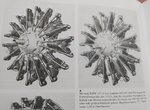
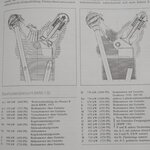
Hornet vs. BMW 132A (note the change of fin density & thickness); cutaway Hornet vs. 132 and overview of the 132 versions:
 

Attachments

  • 132-2.jpg
    132-2.jpg
    425 KB · Views: 68
  • 132-1.jpg
    132-1.jpg
    332.9 KB · Views: 67
RR designed, in 15 years, 6 different engine lines (Buzzard, Kestrel, Merlin, Exe, Vulture, Pennine, Eagle 46), plus 4 substantial redesigns of previous engines ('R', Goshawk, Griffon, Peregrine). Plus change in head and block of Merlin.

Including the Kestrel the time span would have been nearly 20 years. And you listed 7 "lines".

Also the Buzzard was a 6/5 scale version of the Kestrel, which would have reduced the design time somewhat.

Add to those the Crecy and the Eagle XVI, which was an experimental X-16 designed and built at the same time as the Kestrel.

And then there are the jet engine developments in the latter part of that period.
 
Kestrel Goshawk and Peregrine form sort of a family.
The Buzzard and R somewhat less of one with Griffin being a very distant cousin.

Vulture is sort of cousin too, yes the bore spacing was different but the valve gear, pistons (rings and wristpins etc) are pretty close.

Many companies designed a lot of engines, some were not successful.
Wright had at least 5 failures between the late 20s and 1945. Quite possibly a few more.
The H-1640 radial air cooled 12 cylinder Chieftain (6 banks of 2 cylinders each) was one such experiment.

Point with the air cooled inline engines vs a radial is that on the radial the cylinders are like wedges of a pie, if your initial design does not use all the available space for cooling fins later versions of the engine can expand the fins into the space with no adjustments needed to the crankcase (except to make it stronger). On an inline air cooled the engine the cylinders are parallel. extra space between the cylinders/heads means a longer, heavier crankshaft and crankcase than needed. A crankshaft and crankcase sized to fit existing cylinders may not allow room for the needed fin area (longer fins) on later versions of the engine.

A V-12 using the same cylinders is going to be much smaller, perhaps 39% of the frontal area of a 9 cylinder radial, however that ignores cooling. The real question in the early 1930s was what kind of power were you getting for the weight. A 14 Cylinder two row radial might make more power for less weight than a 12 cylinder V-12 using the same cylinders. Heck, one of the W 12 Napier Lions calim to fame was that it was shorter and lighter than an equivalent power V-12.

It was also less trouble to cool the two row radial (with staggered cylinders) than inline air cooled engines,

Wright, it their quest to be the #1 radial engine maker (not saying they made it) actually pretty much threw out the Cyclone design 5 or 6 times and started over even though the basic layout stayed the same, 9 cylinder radial with 2 valves per cylinder, supercharger in the back and propeller in the front.
 

Users who are viewing this thread

Back