How much of a "success" is the V-1650-1 powered Mustang? It still can't fly top cover for the bombers. For that you need performance at 25,000-30,000ft. the single stage Merlin won't provide that, while better than the Allison powered Mustang the V-1160-1 is about 400hp down at 23,500 compared to a V-1650-3 or later Merlin.
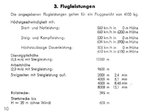
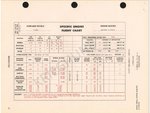
P-51 Was capable of 396 mph at 1150 at 12600 ft (MIL power; static mil power was @ 10800 ft, so the gain via ram effect is 1800 ft)
P-51A was capable to make 408 mph at 1125 HP at 17500 ft (MIL power; static MIL power maximum was @ 14600 ft, so the gain via the ram effect is 3000 ft).
V-1650-1 was offering 1120 HP @ 18500 ft already, no ram (static). Think that we can expect the dynamic (ie. with ram effect) MIL power to be attained at circa 22 000 ft; that should give us about 415 mph there?
Further: P-51A was still doing 395mph at 25000 ft - so I see no problems for 'my' Mustang to attain the same speed some 3-4000 ft higher.
For escort service you need more range, the Early Merlin Mustang is good but but again with the Early engine (which is 150-200lbs lighter + prop weight) putting in a rear fuselage tank gets very iffy.
No need for the fuselage tank here - P-51D with 184 gals in wing tanks + 150 in drop tanks is credited with combat range of 460 miles; P-51D/K are the draggiest heaviest of the breed? The 1650-1 Mustangs would be both lighter and more streamlined, so we can extract another 5% more.
After the Dec of 1942 the V-1650-1 shows no advantage at low altitude compared to the Allison powered planes ( the change to WER) which may have been done sooner by some service squadrons.
For the low altitude attack or photo recon Missions the V-1650-1 version doesn't really have a big advantage over the Allison powered versions.
Unless the RAF properly boost their mounts already in 1942 (we in RAF need something both fast reliable to catch those pesky Fw-190s down low) show the USAAC the way. Even without that, having a plane capable doing 400+ mph from 20-25k, with great combat range, with low price, from beginning of 1943 was not something USAAC was enjoying as an asset. In my eyes that's better than what they were doing with non-Merlin Mustangs in the same time frame.
You are modifying the time line so that the Mustang prototype is given a new engine just before it flies, First flight with Allison was Oct 26th 1940. Three more flights are made in Nov but the SOLE prototype crashes on the 5th flight, it is later repaired. This delays things a bit. Modifying the contracts means the British have to supply the engines for the first few hundred aircraft.
I don't see any problems Brits delivering a hundred of engines in late 1941, but even with waiting for Packard to deliver them I've already moved the 1st combat use from May 1942 to July 1942.
Packard isn't ready. Packard was already high on the priority list, as an example Allison was 800th on the list and in 1941 Allison engines were being rationed to Lockheed, Bell and Curtiss because Allison couldn't build them fast enough (another reason for the P-40F) Without some real evidence there is no reason that a magic wave of the "priority" wand would have changed things much. Which British aircraft don't get their Merlins so that the Mustang project can proceed?
No need for magic - instead of delivering one engine in late 1940/early 1941 (for Curtiss that is), Brits deliver 2 engines - one for Curtiss, another for NAA. NAA mount is found to offer better performance, so the brass wants it. The P-40F founds itself at second place on the priority list for engines produced by Packard, for US.
The P-40 was never intended to be the US premier fighter. It was ALWAYS the second best fighter BUT the low risk fighter that could be built in large numbers while the better fighters were developed and put in production. in 1942 there wee 3854 P-40s built compared to roughly 4740 P-38s, P-39s, P-47s and P-51s (of all kinds) built combined. Counting the Mustang out as a British plane (from the USAAC brass point of view) they were planning on the P-38 and P-47 to take care of the German 400mph fighters.
I'm glad we agree that brass was planning for adversary 400 mph fighters after all. That would mean that none P-40 (-F included) was NOT a viable fighter to combat that threat.
The P-40F served two purposes. It gave the US somewhere to stick the 1/3 of Packard production that was agreed to in the original 9000 engine contract and it offered a useful boost to P-40 performance to help "hold the line" while the P-47 and P-38 got over their initial troubles and got into full production. Please note that while the contract was placed in Sept of 1940 Packard doesn't really hit it's stride until April of 1942 when production tops 500 engines a month, later in the year they go to over 800 a month.
P-51 seems like a vastly better 'place to stick 1/3rd of Packard production' than a P-40 to me (even if that's only 15%) - as cheap as P-40, yet as capable as future P-38 -47. Win-win situation both for people that will fly it and those to pay for it? It would take 1/2 time to build one vs. P-38, 30% less than for a P-47? After all, US is going to fight almost 2 wars from Dec 1941.
First "F"s went to Egypt in July of 1942, six months after production starts, they are in combat in August, 57th fighter group goes into action in Aug 1942. In the summer/fall of 1942 North Africa is where the Western Front is. The P-40s don't have the range to operate over France and Low Countries much better than the existing British aircraft and German fighter opposition is just a few Groupes. With the coming of the NA invasion on Nov 8 1942 NA really became the center of effort in the west. With some convoys sailing in the middle of October this meant that ship loadings and force allocations had been made weeks earlier.
It had to be expected that the P-40s would operate against German aircraft.
The necessity that P-40 will encounter German aircraft does not mean that P-40 is a 'viable counter for LW mounts', but simply that they were available.
As for where the Front line is - the aerial front line was very much between continental Europe an the UK, so that one can be called Western front? Exactly where 1st Mustangs were historically tested in combat, and found to be great planes, but under 15000 ft.