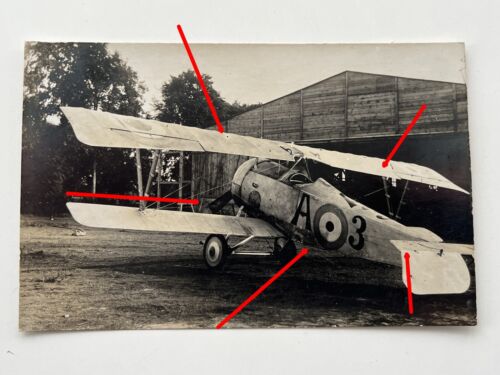
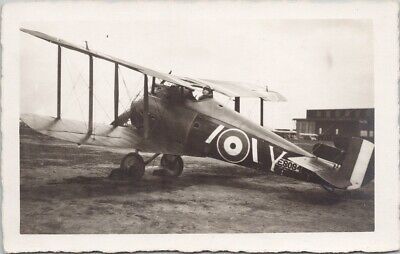
What do you mean "ordinary Snipe", Mike? The guy I interviewed has insight into these things neither you nor I possess. He explained that while the Snipe was manoeuvrable, the stick forces were greater in the Snipe than the Camel, which made it more difficult to coax into manoeuvring. This made a difference for pilots transitioning onto the Camel because of the speed at which it could be thrown into manoeuvres, depending on which direction of course, given gyroscopic forces. Going from the Camel to the Snipe and the stick forces and other factors become noticeable.
Nevertheless, I would be more inclined to believe this guy's account, to be frank. Bear in mind these aircraft are not merely home-built replicas built from commercially available plans. These are as authentic as possible in their recreation, with almost all of them incorporating original engines and components from the period. The only ones not powered by original engines are the Dr I and the Triplane. All the others have Clerget, Le Rhone, Benz, RAF.1a, RAF.4a, Renault, Beardmore, Liberty, Falcon, Bentley BR.II, Oberusel, and so forth powering them. They do not sacrifice original instrumentation or systems for the sake of modernity. Therefore, their flying and handling characteristics are pretty much as they would have been back then.
John Lanham has vast aviation experience as a pilot. He was a former RNZAF A-4 pilot who flew precision aerobatics with the forces before graduating onto airliners, and has flown a wide variety of warbird types, from Harvards, to Spitfires, P-40s, Mustangs and so forth, aside from working with TVAL and having flown all their aircraft at some stage or another. I also spoke with Andy Vincent, current TVAL chief pilot. Both these guys have very useful insights into these aircraft and their operation.
Albatros D II cockpit.
View attachment 750730_ADP1639




 Unless you are the owner.