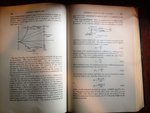
Not to argue with you, Bill, but the abrupt outer vertical line in my textbooks represents Vne, which is 90% of Vd, safe dive speed, beyond which the control surfaces and even flying surfaces will or may experience flutter.
It has zero to do with flutter as primary cause of the Do Not Exceed Q Load - but flutter is influenced by velocity forces to the degree that it introduced both torsion and bending of an aerodynamic structure (elevator, aileron, wing, etc.)to the point where stability of the restoring force is inadequate to prevent the oscillation - which by the way can occur well below a Q limit load. The P-38D, prior to installation of the improved wing fuselage filet experienced significant flutter due to a Combination of Bending and Torsion loads while immersed in the turbulent votices in the wake behind the inner wing. The solution is to stiffen the offending control surface so that the natural frequency is experienced at a higher velocity than V-Ne, or change the mass distribution (like a control horn)
The inner vertical line should be Vno. Operating above Vno and below Vne could cause structural failure if you encounter a 35-knot vertical gust, which is the bottom of the definition of extreme turbulence. This will add to (or subtract from) the flight load and could exceed design ± structure limits.
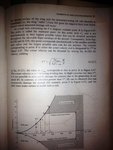
Almost - Vne is the boundary which combines G (positive and negative) loads plus indicial Gust loads for the A to B (positive G), A to E (negative G)points and thence from B to C and E to D points on the V-n diagram. At the far right the vertical limit C to D is the maximum Q which is 1/2*Rho*V^^2.
All of those boundaries in the V-n diagram are LIMIT loads, not Ultimate. A 'rule' of thumb is that the Q load limit is 1.2 to 1.5 max LEVEL speed, but the Definition is Q which obviously varies with altitude and equally obviously is only reached in a dive for conventional (non jet) a/c.
Then again, these are just basic aerodynamics texts. So they merely define and explain the terms and do not launch into excursions of structural statics theory or aerodynamics beyond what is needed for normal design or analysis. I'll take your word for the dynamic pressure, but I think Max Q is much more important for missiles than for WWII fighter aircraft. I could be wrong there.
Greg, Dynamic Pressure Q is the force that tore up the Spit in the dive, and caused structural damage to the Mark IV Mustang at .84M for example, but the Max Q for the Diagram (LIMIT LOAD threshold) for the Mustang was for dynamic pressure resulting from combination of Velocity and density somewhere between .75 and .82
I think the planes I am aware of will flutter destructively, at least in smooth air, before they get to Max Q. Maybe not. The Bell X-1A experienced control surface blanking and/or inertia coupling at Mach 2.44, and still didn't lose it's wings to dynamic pressure or sttructural overload even when it spun out of control supersonically, and Yeager survived it. Of course it was a VERY strong airplane.
Last time I flew RC, we had a little impromptu pylon race with unlimited aerobatic planes and I experienced control surface flutter going faster than I should have ... and lost an aileron. Can't miss that sound! I was lucky to get down and the servo had stripped gears to boot. I was lucky it was a plane with 2 aileron servos ... it was a Jerry's Big Boy. A GREAT aerobatic plane, but not a speedster. Mine was/is overpowered with an old MVVS 77 and a tuned pipe. Prior to that flight I always used the power for vertical maneuvers, not speed. Guess I have to go back to aerobatic flying with it .. after I fix the aileron. I think I'll add some counterbalance weight to it, too, since it DID flutter. If one aileron did, the other surfaces can't have been far behind.