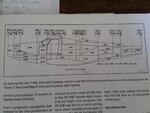
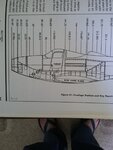
again, nose armor weight and balance/CG issues.
All three guns systems had issues in May of 1942.
Yanking the .30s may not have been good idea. Not all of the 30s are going to crap out at the same time.
Russians noted the 37mm (at least early ones) were unreliable. They got better later.
The "fix" for the .50 cal may have been relatively easy. Wagner says the firing solenoids weren't powerful enough. New (improved) solenoids could be fitted to existing guns. Please note that the recharging of the .50 cal guns was still a manual affair.
View attachment 597205
the .50 gun receivers are coming back into the cockpit. the red flags are attached to the cocking/recharging handles. the cylinders sticking back with the slot are the firing solenoids.
You are rearward projecting. Russians pulled .30 cal guns in late 1942 or in 1943 on later P-39s. How many fixes/modifications to the 37mm and .50 cal guns had been done?
Russians were used to light armament and had often resorted to using less than the designed armament to improve performance.
I don't know what the Russians got for a rate of fire out the .50s in most of their planes. The British were getting under 500rpm out of the .50s in the Airacobra I (P-400 and 212 to Russia)
which is about the only commonly known number.
If the 37 packs it in and you have no wing guns you have about 15 rps of .50 cal, assuming they stay working.
Again reliability of the gun installations in the spring/summer of 1942 may have been lower than at later times. Making the extra .30 cal guns more important.



 The other red handles below are for the drop tank/bomb release, recharging/reloading the 37mm cannon and charging the wing .30s. Charging the .50s was said to be quite a challenge for a 140lb pilot. Fix was for the ground crew to charge them before the flight. Everything was manual, charging the guns, dropping the tanks/bombs, controlling the coolant and oil temperatures etc.