The weight would likely be the 30-cal wing guns and installation kits, plus a little extra. I did notice that the weight saved by changing the 37 mm cannon for a 50-cal was negligible and not worth the engineering effort. Removing the wing guns would not have affected the CG much, either.
The P-39C had a service ceiling of 33,300 feet, already comfortably above 27,000 feet. Right, the South Pacific doc probably meant 27000' combat ceiling (climb 1000fpm)
The P-39D had a service ceiling of 31,100 feet, already comfortably above 27,000 feet.
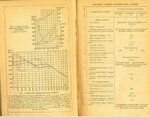
The P-39N had a service ceiling of 35,900 feet, already comfortably above 27,000 feet. 38500', P-39N test attached.
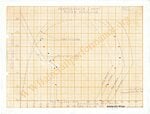
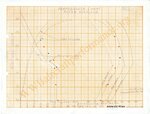
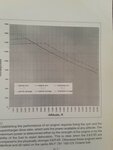
The report cited was about P-39Ks, and I can't find a test report on a P-39K just now. P-39K test chart attached, compared with A6M2 in red. I'm assuming it was as good as a P-39D and not better than a P-39N. I am surmising that the P-39K could, in fact, get to 27,000 feet, but not in time to stop the Japanese raiders with the warning time they had available.
Taking out the wing guns would have made it climb better, but not by all that much. But losing 650 pounds WOULD have made the climb slightly better at the expense of losing firepower. Sounds like what they wanted at the time, but I'm having trouble getting my brain around how a slightly better climb would allow them to get up to the bombers without knowing the warning time they had for the raids. We'd have to know their warning time to see how much climb difference would have resulted in a good outcome. But, it seems that whatever climb improvement they got, it made a difference. See the attached P-39K chart, improving climb to 1000fpm at 27000' would be about a 500fpm increase. Closer to my estimate.
It still would not have made the P-39 dogfight with a Zero at 27,000 feet (or anywhere else, for that matter), but it could give them a firing pass at the bombers. No AAF plane would dogfight with a Zero.
This is an interesting report, but it doesn't have enough meat in it to make an intelligent analysis of what they removed to save 650 pounds or how much change in climb it made. The P-39K had a 1,325 hp Allison instead of a 1,200 hp unit, and removing the wing guns, installation kits, and ammunition was the likely source of most of the weight.
If you look at the P-39N (same engine hp), the rate of climb at 25,000 feet was 1940 fpm. From the data I have ... P-39N HP (-85) was about 100HP more than the P-39K (-63) above critical altitude. P-39K -63 engine had 8.8 supercharger gears, same as the -35 in the P-39D/F/K/l, same HP at 12000' and above. See chart below.
The Allison should have been making about 1,050 hp at 15,000 feet, where it had a climb rate of 3,340 fpm at 7,274 pounds. If we remove 650 pounds, we get 6,624 pounds, where the climb rate SHOULD be about 3,668 fpm, an improvement of 327 fpm or 9.8%. The time to climb to 15,000 feet was 4.15 minutes. Shaving off 9.8% makes it close to 3.75 minutes. If we assume about a 9.8 % gain to 25,000 feet, we go from 8.04 minutes stock to 7.25 minutes when 650 pounds lighter. This is, admittedly, a 1st-order approximation and is likely a bit optimistic. You're comparing the P-39N -85 engine to the P-39K -63 engine which only developed about 100HP less above critical alt. See chart below.
So, logically, a change of somewhere around 45 seconds to 27,000 feet made the difference. That assumes the P-39s were unopposed and could hit the bombers when they got there. Sounds a bit unlikely, but this report would indicate that it was the case. The G4M "Betty" bomber came in at between 18000' and 22000', sometimes slightly higher. 27000' would pose no interception problem.
All I can say is that if a change in climb of 45 seconds made the difference, then maybe removing the wing guns was a good answer. I just have never seen much indication they DID that on a large-scale basis in the USAAC/F in WWII. AAF didn't remove the wing .30s on a large scale basis. All this shows they should have.





 Nice to have test data when you look at specific questions.