cannon-armed aircraft but when they arrived they only ever stayed for a few days at a time, being rapidly returned to 6 MU at Brize Norton for examinations.
Nor were they a great success, combat reports showed the frustrations of pilots who, having lined an enemy aircraft up, found that the guns jammed solid after a few rounds had been fired. The aeroelasticity of the wings made it twist slightly in tight manoeuvres causing the drum to come into contact with the skin and jam.
A stop gap appeared in the form of a mixed-armament Spitfire; P9504 still had four of its original Browning machine guns in the wings. It was found to be a great success and within five days of the trial, R6761, R6770, R6889, R6904 and R6919 were withdrawn from 19 Sqn service and modified. R6770 went to RAE Boscombe Down for modified spars as its guns were still jamming and R6904 went to Eastleigh for modification of its ejector chutes.
Alternative Guns
As long ago as July 1937 the Air Fighting Committee of the Air Ministry was considering a replacement of the .303 machine gun and issued a memo for an ultra high speed gun capable of firing 2,000rpm. The memo called for trials with eight of the guns firing explosive ammo and storage space for 4,800 rounds. Full scale trials took place on 14Dec37 with the Hungarian Gebauer gun and the effect was likened to 'a welder's torch held against a stressed skin aircraft'. The new gun was intended to replace the Brownings five years in the future.
Naturally there were problems, the rate of fire had an attendant barrel wear effect and increased weight. The suggestion was to drop the notion and concentrate on a gun with a higher muzzle velocity, which would provide an increased lethal range but the additional velocity entailed a larger powder charge and cartridge. A compromise in the shape of an armour-piercing .276 round was suggested.
The Air Ministry took out insurance by asking for designs of two new .303 machine guns in March 1938 as Browning replacements, the ultra high-speed and the high muzzle velocity.
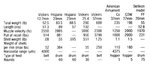
The Madsen gun was also considered, the caliber being either 6.5, 8 or 11.35mm and rate of fire 1,000 and 1,200rpm, for this the recoil spring had to be reinforced. The gun was belt fed and the rounds held together by steel links. A 23mm Madsen was also considered and this too was belt fed with a rate of 400rpm. Hispano also produced a 23mm cannon while Vickers had their .50, a 24.5mm, a 37mm and 40mm cannon. The first had a rate of up to 650rpm, the second 100 and the last two 200.
Another new weapon to come to the Air Ministry's attention was the American Colt .50, examples of which arrived in the UK in June 1940. Drawings were ready the following month and trial installations commenced and by the following August Supermarine were proceeding with a trial installation of 6 x .50cal, plus a second installation of the same