A Curtiss P-40 Pictorial History

Ad: This forum contains affiliate links to products on Amazon and eBay. More information in Terms and rules

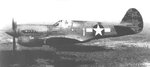
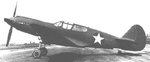
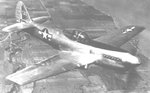
Curtiss' P-40L was essentially a P-40F-5-CU with equipment changes oriented to planned assignments. One hundred went to the UK, curiously as Kittyhawk IIs but some were repossessed for US operations in North Africa. This one was evidently in the 15th AF. In 1944, 53 P-40Ls were converted into two-seat trainers. Lockheed AD-264 via Warren Bodie
 

Attachments
  • pic20.jpg
    pic20.jpg
    34.8 KB · Views: 334
Last edited:
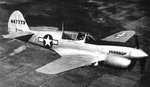
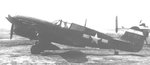
The USAAF release stated that this P-40N-1-CU named Sue had just dropped its 500lb (228Kg) centre-line bomb on a Japanese supply base in Burma and was returning to its 51st FG base in India. About 600 Curtiss P-40Ms were essentially P-40K-20s with a different Allison. Two-thirds of them went to the UK as Kittyhawk IIIs. Early series P-40Ns were long, 'lightweight' models. This N-1 reveals that the rear-view Plexiglas panels were of the old design. Late in the game, Curtiss built no fewer than 6,820 of the various P-40M and N models. The British version was designated Kittyhawk IV. USAAF via Warren Bodie
 

Attachments

  • pic21.jpg
    pic21.jpg
    45.6 KB · Views: 314
Last edited:
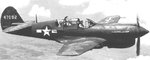
To save weight and labour, definitive P-40N-40-CU models were supposedly the first P-40 types to be delivered sans any camouflage paint schemes when the tides of war swung to the US' favour. Of course, there were many detail changes, but the wings, fuselage, landing gear and empennage were essentially the same as in Berlin's 1934 Hawk H75 design. It was good, but by no means a winner. This one was in the last batch of 50 P-40Ns that left the factory on 30Nov44. Curtiss was able to sell 6,220 of the P-40N models, but nobody can confirm how many of that model ever flew in combat. Curtiss via Warren Bodie
 

Attachments

  • pic22.jpg
    pic22.jpg
    72 KB · Views: 295
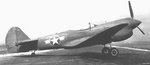
A few P-40Ns were reworked into two-seat formats and then used as transitional trainers. These had not been needed since 1940 but in 1944 there suddenly seemed to be a need. At least a few were equipped with a fixed tricycle landing gear; the front wheel was a tail-wheel on fixed struts. The idea was to train mechanics in the art of taxying so as to prevent accidental nose-overs. USAAF via Warren Bodie
 

Attachments

  • pic23.jpg
    pic23.jpg
    50.8 KB · Views: 401
Last edited:
Walter Tydon had moved into the position of P-40 Project Engineer and he made some serious attempts to redirect the design of this fighter series. In fact, he had been trying to do this for a lengthy period without success. One P-40N became an unofficial XP-40N with a cut-down rear fuselage, a new windshield and a full-view bubble canopy. Thus, the germ of the XP-40Q was created. 3044X via Warren Bodie
 

Attachments

  • pic24.jpg
    pic24.jpg
    38.9 KB · Views: 256
Last edited:
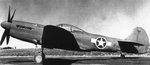
Tydon was evidently allowed to develop two existing P-40Ks and one P-40N-25-CU into XP-40Qs. The support of the Fighter Project Officer, Col Mark Bradley, proved to be very helpful in this late effort. An Allison V-1710 engine with 2-stage supercharger and 4-bladed propeller combined with the XP-40K revamped wing leading-edge radiator and air intake, were important pieces in the 1942 initial conversions. Curtiss 2794 via Warren Bodie
 

Attachments

  • pic25.jpg
    pic25.jpg
    33.8 KB · Views: 277
Last edited:
Tydon related that his XP-40Q model was flying in July 1943 and that is borne out by this picture. Star insignia has bar and red surround; it was used only from the end of June 1943 until 14Aug43. He said that Burdette Wright ruled the roost with an iron hand. Instead of developing and producing the better-performing P-40Q, it was put into theoretical mothballs. Furthermore, Curtiss went on to produce P-40Ms and Ns, a total of 6,820 of them. The big unanswered question is: how many of them ever went into combat and influenced the outcome of the war? Curtiss 7971 via Warren Bodie
 

Attachments

  • pic26.jpg
    pic26.jpg
    55 KB · Views: 272
The same old P-40 airframe in a new guise feature much-improved cowl lines and included two air inlets cut into the wing's leading edge. XP-40Q-2 was painted in white on the camouflaged vertical stabiliser. It was crude-looking; C-W was barely supporting the project. With clipped wingtips, the fighter evidently attained a speed of 422mph (679km/h) at an unfamiliar 20,500ft (6,250m). Curtiss via Warren Bodie
 

Attachments

  • pic27.jpg
    pic27.jpg
    14.5 KB · Views: 241
Last edited:
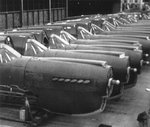
Senator Harry Truman's investigative committee found massive faults within Curtiss Airplane Division of Curtiss-Wright Corp but the company kept on turning out obsolete P-40s in great numbers. Why then, were they not forced to manufacture P-51s, a technologically superior airplane capable of fighting in the ETO and against Japan?
Of course, C-W's incompetent management had failed miserably in trying to manufacture Republic P-47s. They had already spent more than four years trying to build satisfactory SB2C dive bombers that barely matched their old Douglas SBD Dauntless predecessors.
The P-40N-35-CU is typical of the best of what Curtiss could offer, a 1935 airframe totally outclassed by Japan's Nakajima Ki84 Frank, conceived only in 1942. In service tests up to March 1943, Germany's contemporary of the P-40N was the Bf109K that was capable of 452mph (728km/h) at 19,700ft (6,000m); its service ceiling was 41,000ft (12,500m). The contemporary P-40N-35-CU service ceiling was 30,000ft (9,144m) and its max speed was 343mph (552km/h) at 15,000ft (4,572m) - these three aircraft were simultaneously in production in 1944. A Boeing B-29 had a max continuous cruising speed of 342mph (550km/h) at 30,000ft (9,144m)!

It is most likely that the people on the Truman Committee knew little or nothing of such performance figures. They were not qualified to prosecute or even pursue the case. Greed and power were being overpowered by patriotism and sacrifice everywhere in the US except at Curtiss Aeroplane Division. This was our own internal Pearl Harbour. American had its own secret quisling-like society that was so powerful that not even Sen Truman or a tired Roosevelt could stop the steamroller. The evidence was there and it was worse than Brewster's ineptitude by far - and more dangerous.
Fortunately, other forces were powerful too and potent Curtiss-Wright was doomed to disappear with little more than a murmur in post-war days.
 

Attachments

  • pic29.jpg
    pic29.jpg
    127.7 KB · Views: 311
Last edited:
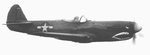
The definitive XP-40Q, AC42-45722 was the best-looking, fastest and highest-flying of all P-40s but it was doomed because it meant that dollars, time and manpower had to be spent on getting many changes cranked into the production lines. Other Curtiss WWII fighters included the failed XP-46 and the second-rate Curtiss-Wright CW-21. Curtiss via Warren Bodie
 

Attachments

  • pic28.jpg
    pic28.jpg
    75.1 KB · Views: 246
Last edited:

Users who are viewing this thread

Back