Air Traffic Control - Bomber Command

Ad: This forum contains affiliate links to products on Amazon and eBay. More information in Terms and rules

WATU

Airman 1st Class
238
148
Sep 1, 2019
I recently read something which had a little about the ATC system that Bomber Command (and the US) developed during WW2 mainly covering East Anglia and Lincolnshire. It was for bombers returning from night operations in Europe where they were unable to land at that home base due to fog or other reasons. It was also for aircraft needing to land as quickly as possible due to damage or casualties. The risk of collisions and confusion was high with tired crews in poor visibility.

Did the system have a name and are there sources on it please?
 
FWIW

I have not run across a specific name for the entire system.

If you have not done so already, it might be worth researching the following for a start:

Landing Control Board
Pundit Lights
Sandra Lights
Drem Lighting Approach System aka Drem Lighting System
Darky System
(I assume you are already aware of the FIDO system)
Flying Control Caravan

Also there is a website dedicated to Air Traffic Control in the UK here: "atchistory". I have not taken the time to go through it in any detail but there is loads of interesting stuff relative to various airfields in the UK, both civil and military, including histories.
 
Last edited:
Two other things to take into account when considering aircraft returning to Britain from raids over occupied Europe.

FIDO - Fog Investigation and Dispersal Operation. Installed at 15 airfields with first operational use in Nov 1943. The system burnt vast quantities of fuel to heat the air and lift the fog.

Emergency Landing Grounds - Carnaby (Yorkshire), Manston (Kent) and Woodbridge (Suffolk) were given enlarged runways (and FIDO) particularly in terms of width, to allow them to accept damaged aircraft without the runways having to be closed each time an aircraft crashed.

As for US daylight operations each bomb group was given its own racetrack patch of sky in which to form up before departing on its raid. I assume it was used in reverse on return from ops.
 
Thanks guys. I have learned a lot more about some of the navigation and landing aids from those pointers.

What I am thinking of is something at a higher level, It was about advising which alternative bases to head for if the home base was, for example, fogged in. It was a management system to decide on an alternative landing sight, communicate with the aircrew and the alternative base so they were alert to the fact that aircraft would be coming in that were unlikely to be familiar with the alternative base approaches. It might have been on a Group or regional basis rather than one global system. The only electronics would be messages from bases saying they are shut to a control. Either the home base or the control notified the incoming aircraft by radio that it would have to divert. Once the diversion was known by the aircraft the navigator would have to plot a route when systems like Darky might come in although some information could have come from the control.

All the tactical lighting and electronic aids would feature but only after the "foreigner" was directed to the alternate base.

Kicking myself that I cannot recall where I read about it.
 
USAAF 8th Air Force bomber wings had their own non directional radio beacon which they used to home in on their airfields. They had ADF equipment that could be tuned to that specific frequency and gave them a indicator that provided a bearing to the station. Now, the US fighters also had a beacon to home in on, but since they had neither ADF equipment nor even LF radio receivers I do not know how they did it. US based fighters almost always had LF radio equipment, either the 190-550 KHZ BC-453 sets as part of the SCR-274-N or the little "Detrola" BC-1206 receivers if they had VHF SCR-522. In the US LF frequencies were used by control towers to issue landing instructions and that since light aircraft usually had nothing more than LF sets, and all aircraft used LF frequencies for the A-N "Adcock" ranges, virtually all control towers had that capability. But for fighters in the ETO it does not appear that equipment was installed.
 
All good stuff but not quite what I am seeking which makes me wonder if I am simply confused. I'll change the question direction a bit.

A bomber, RAF or US, returning at dawn is told by its base it cannot land. What is the procedure for it to be directed to another base? Does its own base simply contact surrounding bases to find one that is clear and pass that onto the aircraft? What, as was likely the case, would happen if a batch of bases in an area were all out of operation? Directing squadrons from, say, six bases to another nearby base that was clear for weather would crowd the skies and create a collision risk. It is not about radio sets, D/F, landing aids, frequencies at least initially, it is about a plot that allows the safe de-direction of incoming aircraft, possibly low on fuel, so a safe landing.. It has to work in real time.
 
it is about a plot that allows the safe de-direction of incoming aircraft, possibly low on fuel, so a safe landing.
Aircraft lost and looking for a place to land could call on a special frequency to ask for help. But if they were not lost and had a fuel shortage it was up to them to find a place. In the book Combat Crew they describe a mission in which they had a number of B-17E's on a mission and were not equipped with the larger fuel capacity of the later models, and I guess that means the "Tokyo Tanks." They stuck with the rest of the group but when they crossed the British coast the pilot broke off, saying he knew where there was a fighter strip not far away. A number of other B-17's followed them, apparently under the assumption they knew a place to land. They all made it into the fighter strip.
 
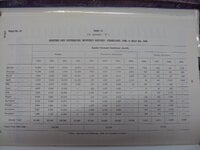
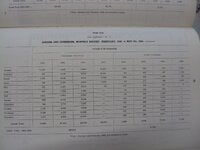
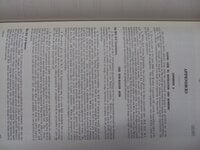
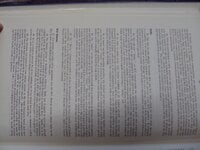
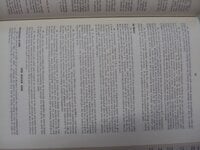
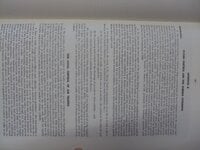
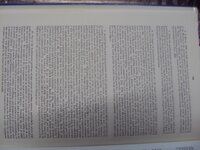
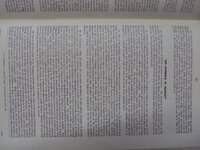
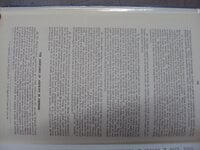
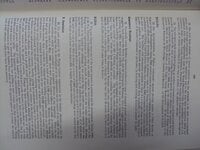
The help/diversion system evolved over time, so the answer depends, the not always in focus photographs are from the Arthur Harris Despatch on War Operations, see the Aircraft Diversions section.

The following bomber losses usually ignores where combat damage caused a fuel loss, W R Chorley, Bomber Command Combat units, losses to fuel starvation.

AircraftBombingDiversionFerryGardeningIntruderPatrolReconnaissanceSearchSpecial DutiesTrainingTotal
Anson I
1​
1​
Battle I
1​
1​
Blenheim IV
9​
1​
10​
Halifax I
3​
3​
Halifax II
11​
1​
12​
Halifax III
7​
1​
8​
Hampden I
50​
7​
2​
1​
60​
Lancaster I
7​
3​
1​
11​
Lancaster II
1​
1​
Lancaster III
12​
1​
1​
14​
Lancaster X
1​
1​
Manchester I
3​
3​
Mosquito XIX
1​
1​
Mosquito XVI
7​
7​
Stirling I
13​
1​
14​
Stirling III
2​
2​
Wellington I
1​
1​
Wellington IA
1​
1​
2​
Wellington IC
12​
12​
Wellington II
2​
2​
Wellington III
4​
1​
5​
Wellington IV
1​
1​
Wellington X
3​
3​
Whitley V
32​
1​
33​
Total
182​
1​
4​
8​
1​
2​
2​
1​
2​
5​
208​

8th Air Force, the B-17 list is complete, the B-24 is not.
AircraftCombatNon CombatUnknownTotal
B-17
65​
2​
67​
B-24
41​
3​
1​
45​
Unknown
1​
1​
Total
107​
5​
1​
113​

The two big loss dates were 6 September 1943 with 22 (all B-17 of which half had Tokyo Tanks) and 31 December 1943 with 10.
 

Attachments

  • DSC07013.JPG
    DSC07013.JPG
    298.1 KB · Views: 16
  • DSC07014.JPG
    DSC07014.JPG
    283.5 KB · Views: 20
  • DSC07015.JPG
    DSC07015.JPG
    396.8 KB · Views: 15
  • DSC07016.JPG
    DSC07016.JPG
    396.5 KB · Views: 16
  • DSC07017.JPG
    DSC07017.JPG
    395.3 KB · Views: 13
  • DSC07019.JPG
    DSC07019.JPG
    437.5 KB · Views: 16
  • DSC07020.JPG
    DSC07020.JPG
    490.3 KB · Views: 15
  • DSC07021.JPG
    DSC07021.JPG
    482.9 KB · Views: 15
  • DSC07022.JPG
    DSC07022.JPG
    442.2 KB · Views: 13
  • DSC07023.JPG
    DSC07023.JPG
    417.5 KB · Views: 16
Brilliant Geoffrey, exactly what I was looking for. Flying Control was the organisation I could not recall the name of. A not insignificant 2,700 staff.

Many thanks for posting. I now recall where I read it. Appendix K in the Grehan/Mace book "Bomber Harris: Sir Arthur Harris' Despatch on War Operations 1942-45"
 
Thinking about your question a bit more and a trawl through the library.

GEE
This was a radio navigation system carried in larger aircraft that allowed the navigator to work out more or less exactly where he was. While the Germans began to jam it over the Continent, it remained effective in British skies. So, as long as it worked, an aircraft could find its way back to base or an alternative airfield based on that and the navigator's maps. Once it found an airfield radio contact could be made.

Regional Control School, Flying Control School from the end of 1941.
This organisation was set up at the request of the Air Ministry by Air Service Training who employed civilian instructors to train about 40 RAF officers per month. An airfield would have two controllers on duty, one to control aircraft on the approach and another aircraft in the circuit.

SBA equipment
Equipment at Regional Control (later Type I) airfields were equipped with a system of boundary lights, an illuminated landing "T", a lit landing strip 1,300 x 400 yards, contact lighting and a Standard Beam Approach Blind Landing System (the latter a development of the interwar Lorenz system). The SBA equipment required a 10 mile approach path free from any other airfield SBA beams with an outer marker at 10 miles, a middle marker at 2 miles and an inner marker at 250 yards from the runway threshold to guide a pilot in to touchdown. The RAF had Blind Approach Training Flights that would go around RAF airfields providing refresher courses in the use of this equipment and to check its accuracy.

Darky
"The idea was that an aircraft lost and in trouble could make a Darky call (Darky - Darky - Darky) which could be heard by the nearest Darky station that would then give assistance". This was extended to 45 and then 50 ROC posts that were linked to particular RAF stations. They maintained a sunset to sunrise watch. This thread has original documents detailing exactly how it worked.

Searchlight assistance (Sandra)
Another means of guiding aircraft home. Surplus searchlights from AA Command were allocated to airfields three at a time (although only two might be manned) to form an equlateral triangle pointing into the sky above the airfield. If only two were available one would be placed at either end of the operational runway on the left hand side. One would point directly upwards and the other would be poited towards it at 45 degrees along the length of the runway.

107 were also allocated to ROC posts where there were large gaps between airfields. These would be pointed in the direction of the nearest airfield.

Air Traffic Control Signals
Each airfield had a signal square next to the control tower that along with flags could be used to pass information to aircraft if visibility was good.

There is some more about this in the book "British Military Airfield Archtecture From Airships to the Jet Age" by Paul Francis published back in 1996

 

Users who are viewing this thread

Back