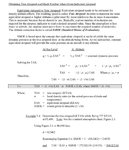
Bf-109G-6 empty weight – approx 6000 lbs (multiple sources)
Bf-109K-6 empty weight – 5161 lbs (similar to the G-10)
Somewhere between the G-6 and K, 800 lbs was lost.
Leer-/ Abluggewichts (empty/takeoff weights) of G-6 through K-4, as per primary German datasheets from the war :
G-6 : 2268 kg / 3100 kg
G-10 : 2318 kg /3297 kg
K-4 : 2346 kg / 3362 kg
Wikipedia

states that the Bf 109G-6 has a range, with drop tank, of 1000 km (621 miles), 528 mile without. My other sources do not support your statement either, for the F (440 miles) or G (450 miles).
Your figures are simply unreliable, again, my figures are based on primary German sources, and are reliable.
Maximum range of the 109F/G/K series was appx 1600 km (slight differences between variants), with a 300 liter droptank; 1000 km without; and economic cruise of ca 410-430 km/h; at maximum speed cruise, which means a rather high travel speed from 580 to as high as 645 km/h (K) yielded ca. 1000 km with a droptank. Now 400mph is a rather high speed, especially for cruising, some fighters in 1944 could hardly even hit it.
The 109K also had the possibility to use it`s rear fuselage tank as a rear aux fuel tank of 115 l capacity, ie. ca 25% greater internal fuel, but that ruled out MW 50 use.
Actually, I got the wrong P-47 for Europe. The M was the one that the Bf 109K could have met. And while the Bf-109K would have been superior below 25k ft, the advantage would have shifted at 25k and above. For example, at 25k ft, the Bf 109K max airspeed is 444 mph, climb rate 2700 ft/min, the M's is 453 mph and 2700-3000 ft/min, at 28k ft, the K can do 441 mph and climb at 2220 ft/min, the M can co 463 mph and climb at 2700 ft/min. It gets worse at 30k ft. where the K does 438 mph and climbs at 1900 ft/min, while the M can make over 460 mph and climb at 2200 ft/min.
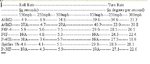
In other words, the differences are not particularly considerable; not even at altitudes where air combat is rather rare to happen, and here we are comparing low-production run stripped, hotrod P-47 sporting only six .50 guns IIRC. It`s a nice and faster aircraft than the rest at altitude, but it`s performance profile is somewhat hard to take advantage of, isn`t it? OTOH, I am not at all convinced of it`s manouveribility at high altitude. The P-47 is a very high wingloading aircraft, and figures I have for early models display the worst turn times of all WW2 fighters I`ve seen.
I am not an armament guy but I suspect there are those that would argue that two 50 cals and a 30 mm does not exhibit better firepower than eight 50 cals. Especially for a fighter.
Depends on what your target is - for heavy bombers, the 30mm armament is more appropriate.
Interceptors are meant against bombers first and foremost.
I disagree with these comments. The first delivery of the Bf 109k was in October, 1944. The first delivery of the P-47N was September, 1944, one month earlier. I could not get a delivery start date for the P-47, but considering that in December, 1944, 130 P-47M were delivered and only 24 "N"s, it is reasonable to assume that delivery of the first P-47Ms was in the September, or before, time frame. This does not justify the statement that the P-47M or N was not a contemporary of the Bf-109K. Maintenance problems appear to be minor from a mechanical standpoints (there were some deaths) since the initial problems occurred in March and the P-47Ms were operational in April. I am sure that the reason that the P-47M was not introduce until early '45, was because the Allies were not as hard pressed to introduce new technology as were the Germans.
It seems to me the facts point to that the 109K was ready for operational service by October 1944, whereas the P-47M`s operational service was delayed by mechanical troubles, serious enough to call for grounding the fleet.
I am sure that the Bf 109K did not go through as rigorous testing as Allied aircraft nor did the pilots go through as intensive checkout as the Allied pilots. It probably took the US four to six months to get a new aircraft, once delivered into the fighting squadron, how long do you think it took the Germans to fly the first operational mission after the Bf 109K was delivered? Probably days.
Depends. The 109K had lenghty development, spanning over a year. When the 109K was introduced, it took a couple of weeks for the units to get them into combat after they`ve received it, but it appears to have coincided with a general rest&refit as the units were pulled from active duties in the period, so it doesn`t tell the full story. Otherwise, they just jumped in the seat and flew it like any other 109 -
after all, it was just another 109, even if the latest, best, shiny and all that.
I am also sure that had the Allies been threatened in early to mid '44 by the Luftwaffe retaking control of the skies over Germany, you would have seen the P-47M and N, and probably P-51H fully operational in the fall of '44.
I am sure that the Germans would have been able to push 'fully operational' the 109K by early 1944, which they have been developing from early 1943, if they would have been in deep **** by that time. BUT wait a minute, they were...
That`s too much of an assumption, as it ignores the simple fact that technical difficulties need time to be overcome, and this time won`t be any shorter if the troops are in a world of **** on the front.
The P-47M (wasn`t it stripped down to catch German jets and buzzbombs, ie. DS situation as above?), and for that matter, the P-80 prototypes were rushed into service, but rushing just doesn`t magically solves technical problems, on the contrary, it aggrevates them.