The "drop" is a rather overused and almost useless way of comparing aircraft guns.
Drop is dependent on time of flight. Whatever distance your projectile covers in 1 second, that is the distance at which it will "drop" 4.78 meters.
Distance covered in 1 second goes increases with altitude as the air gets thinner.
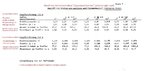
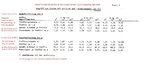
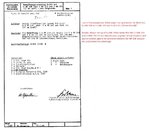
Now as to why it is near useless, fighter guns were not set dead level in the plane. sighting chart for a P-47
Guns were pointed slightly upwards to cross the line of sight and then fall back down to the line of sight.
Now this is good example of one extreme, guns almost 4 feet below the line of sight/sight line and guns with a high velocity/slow velocity decay.
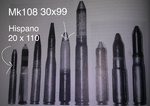
The German 20mm mine shell and the 30mm mine shell are the other extreme but the 30mm is not quite as bad as portrayed in many online accounts as it is seldom compared to the other common German guns/projectiles
A 109 has the guns much closer to the line of sight but then it doesn't really matter if the projectiles go 10-15 inches above the line of sight instead of only 6-9 inches. You can get the downward crossing of the line of sight out to a useful distance. The idea that the poor pilot was having to compute "drop" at combat ranges of 200-500 meters is rubbish. Once the bank goes past 45 degrees then drop may enter into it but trying to figure a few feet of drop compared to how many plane lengths ahead you need to be shooting in minor.
They were trying to compute lead on the moving target and in this short flight times was definite advantage.
However, Flight time for a 30mm HEI 330gram projectile with a MV of 500m/s to 600 meters was 1.66 seconds. The 92gram 20mm mine shell from a MG/FFM took 1.428 seconds. These are at ground level.
AS to Tomo's question;
Since when the API blowback is equivalent of high RoF and low MV anyway?
It all depends on how the gun was set up. You could get decent rate of fire (but not great) and high velocity as the Japanese showed with the Type 99-2.
But API blowback guns are rather sensitive to ammo and especially so if you are trying for light weight.
In order to get the rate of fire up (and the weight down) on the MK 108 they used a light breechblock which meant the breechblock started moving to the rear quickly, more quickly than a heavier a breech block. SO quickly that the base of the cartridge was coming out of the chamber before the projectile left the muzzle and the unsupported sidewall of the case would blow out letting high pressure gas into the action and gun compartment. With a short barrel the projectile cleared the barrel, the gas pressure vented through the open muzzle and no more blown cases.
guns like the Hispano use a combination action. They use a mechanical lock to hold the bolt closed until the projectile reaches a certain point in the barrel at which point the mechanism unlocks and the residual pressure in the chamber/cartridge cases, pushes the breech block back and extracts/ejects the case.
At the cost of some weight/complication this allows for a much lighter breech block/mainspring to be used to get the rate of fire up.
On the MK 108, once they got to a certain point in the design/development they were stuck. They can't make the barrel longer without suffering from the blown out cases, unless they use a heavier breechbock and/or main spring. Heavier breech block means heavier gun and lower rate of fire. Stronger mainspring/buffer might mean slower opening but faster closing, effect on rate of fire is????? however faster closing means more battering on the gun parts and for a gun designed to be built of stampings and lower grade steel that may not be a good option.
As I said, the API method of action is not mutually exclusive from high rate of fire and high MV (look at 20mm Oerlikon guns as used by the Americans and British, ballistic twin to the Hispano but it sure isn't lighter