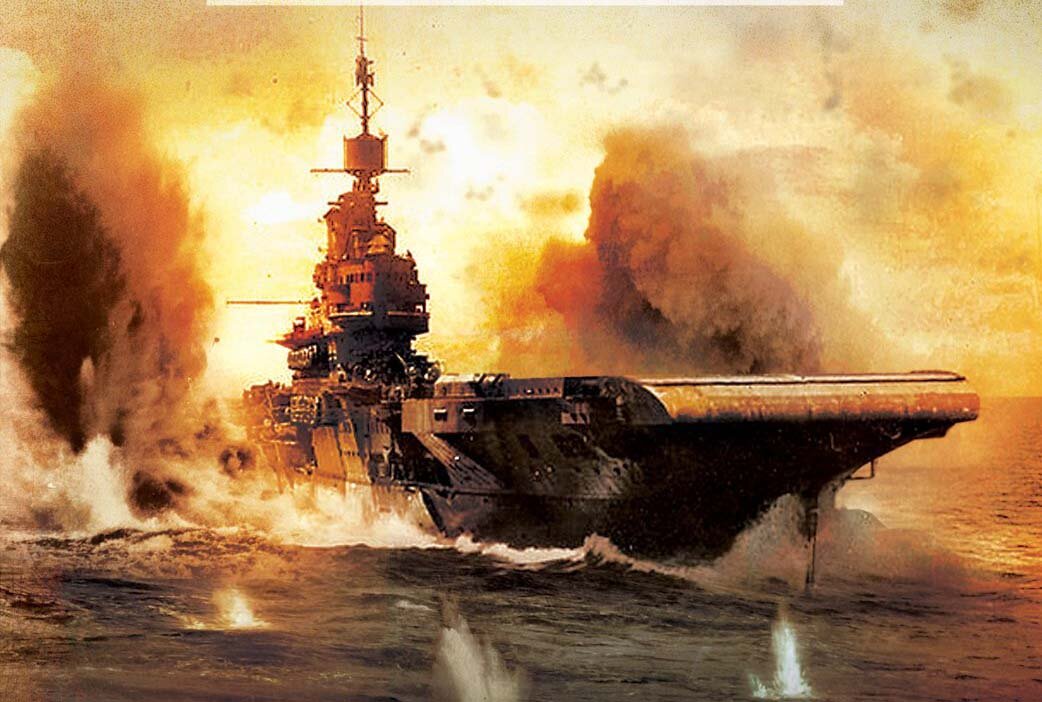
The British also seemed to think this was a issue in the North Atlantic too,

The British have a few problems in the 1930s.
They had single seat fighters , with crappy radios (everybody did) in the early/mid 30s, those Nimrods and Fireflies, but they had short range/little endurance and could not get as far away from the carriers. In peace time you take less chances than in war time= don't fly in bad weather. And the radio beacon didn't exist in the early 30s.
The Skua may have been the first "fighter" with the homing system, welcome correction on this
British may have used two fighter system as suggested, "Leaders" and the actual combat element.
Problem here is the size of the British carriers.
Until you get to the Implacable class the British only had ONE carrier that was
planned to have more than 48 planes, The Ark Royal.
For the US, no carrier after the Langley, was planned for less than 63 aircraft. Even the Ranger and Wasp were supposed to carry 76.
We may or may not be counting spares here?
However the British could not afford to carry very many 'special' aircraft, without cutting into their limited air group.
Planning and reality were often different things and many times the British didn't even have full compliments of aircraft.
4 aircraft seems to be about the minimum for specialty aircraft if you want 1-2 available at all times for several days/weeks at a time due to maintenance and even accidental loss.
I am not saying if the Leader/pathfinder idea is good or bad, just pointing out possible impact on numbers of of "combat" aircraft deployed.