It seems rather commonplace these days to accept without question higher and higher maximum speeds for the various Corsair variants, but if someone even mildly suggests a 400 mph F6F-5 they are called a fool and dismissed accordingly..... but not here of course.

Some of this has to do with the misinterpretation of source data. Unlike the Hellcat, there are many Corsair test reports on the Williams/Stirling website in which the subject aircraft is a highly modified 'one-off', and not representative of aircraft in actual service. For example, the only F4U-1 which attained 400 mph speeds
without water injection was modified with the following: a non-standard higher efficiency F6F propeller, removal of tail hook with faired cut-out, modified cowl flaps, enhanced streamlined tail wheel, removal of catapult hooks, and the shell ejector openings were taped over. Without a tail hook this aircraft could no longer be truly classified as a carrier aircraft. Lastly, many of the Corsairs on the site were tested using Combat power settings, which was not the case concerning the Hellcat. The use of ADI enhanced performance considerably and made an apples-to-apples comparison to planes without it impossible.
In addition to this, there seems to be no F4U-1 variants tested with bomb racks installed, which will make a decent amount of difference in the testing outcome. Marine Corsairs were involved in close air support very early on so they often carried bombs in the performance of their duties. It wasn't until the Hellcat began to displace dedicated shipboard dive-bombers (like the Dauntless) that it began to do 'ground-pounder' work, so up to that point it normally flew in a 'clean' condition. FWIW there are several test reports on the site that give performance figures for the Hellcat with racks installed.
There's also the fact that the F4U is one helluva sexy airplane so it's totally reasonable to accept that it was faster than the portly ole' Hellcat, and it generally was. Problem is that this approach can lead to biased comparisons between the two, which is what we seem to have today. So when people line these two airplanes up side by side, they tend to pull out their 'favorite' performance charts and have at it, but by doing so they sometimes fail to compare them under the same set of real-world parameters. I find the biggest mistakes to be the comparison of variants from different periods of the war and their particular configuration (i.e. racks, water injection, special modifications, etc.).
So what I'm trying to say here is that yes, the Corsair WAS faster than the Hellcat, but by how much depends of a lot of considerations. Unsubstantiated information such as F4U-1Ds flying at 425 mph only leads to distorted calculations however and is something to be weary of when performing any form of genuine comparison between the two airplanes.
There was an ongoing party.
Unlike the Hellcat, there are many Corsair test reports on the Williams/Stirling website in which the subject aircraft is a highly modified 'one-off', and not representative of aircraft in actual service.
Hmm, Exaggerated.
There were no special modified planes used in production inspection trials for F4U-1, FG-1, F3A-1, F4U-4 and flight tests for british Corsairs. It is nonsensical to flight test with special modification configuration in a measurement to performance. I don't think the U.S. Navy wasted time and resources on such meaningless things. only few reports for special purposes used special modified planes, of course standard service conditions should not used for special purposes. and added external test devices with taped weapon holes, configuration used by most Corsairs in test, should not be treated as special modification or highly modified 'one-off' as you said, It's common for other models test reports including the Hellcat. and it had only slight effect on relative performance seems due to navy's correction. just see the below sections for details.
But before that, here is a list of all reports on the F4U page of Williams/Stirling website. only a few reports have been used special modified configuration, not many.
- ACP, SAC and British aircraft cards = official performances
- Detail Specifications = estimated performances except F4U-5's
- Maximum Speed of F4U-1 Airplane #02234 ("Cleaned-Up" Version) on War Emergency Power Ratings = clean-up test, of course standard configuration should not be used.
- Performance Characteristics of F4U-1 No. 02155 = no special modification
- Final Flight Report of Production Inspection Trials (TED No. BIS 2125) on Model F4U-1 Airplane = no special modification
- Final Flight Report of Production Inspection Trials (TED No. BIS 2121) on Model F3A-1 Airplane No. 04691 = no special modification
- Final Flight Report of Production Inspection Trials (TED NO. BIS 2122) on Model FG-1A Airplane No. 14575 = no special modification
- Final Report on Project TED No. BIS 2157 Production Inspection Trials of the Model F4U-4 Airplane =no special modification
- Flight Test of Two Model FG-1 Airplanes No. 14796 (British Corsair Mk IV KD 365) and British Corsair Mk IV KD 502 = no special modification
- Final Flight Report of Evaluation of Maximum Practicable Combat Power Rating for the Model F4U-1 Airplane Model F4U-1 Airplanes No's 55937, 50030 = overboost
test, of course standard configuration should not be used, and Hellcat had similar modified planes in similar test report.
- Evaluation of Maximum Practicable Combat Rating Performance at Carburetor Impact Pressure of 32.8"- TED No. PTR 0415 F4U-1 No. 50030 = same as above report.
- Memorandum Report on F4U-1, No. 02296: Flight Tests = no special modification
- Memo. Report on F4U-1, No. 02296: Flying Characteristics and Design and Maintenance Qualities of F4U-1 = no special modification
- Corsair I JT.118 Handling trials A. & A.E.E. 30 December 1943 = no special modification
- Corsair Mk.II JT.259 Handling trials A. & A.E.E. 1 February 1944 = no special modification
- Corsair F.Mk.II JT.259 Performance trials and position error measurment = no special modification
- Corsair F. Mk.IV KD.227 (Double wasp R2800-8W) Level speed trials with and without water injection = no special modification
- Report on Comparitive Combat Evaluation of Focke-Wulf 190-A/4 Airplane NAS Patuxent River = no special modification
- Evaluation and Comparison Trials of P-51B and F4U-1 Airplanes. NAS Patuxent River = BuNo.17930 as standard but another one was overboosted.
- Flight Test of Water Injection Equipment - TED No. PTR 2105 F4U-1 No. 17930 = It seems main target, but it's corrected for standard plane by navy, see below sections.
and I've used reports of F6F-5 BuNo.58310 and F6F-5 BuNo.72731 for below drag reduction section, on the F6F page, there were only this two reports on the F6F-5.
For example, the only F4U-1 which attained 400 mph speeds without water injection was modified with the following:
Over 400 mph maximum speed without water injection was common for Corsair except early bardcage type.
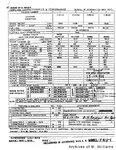
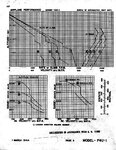
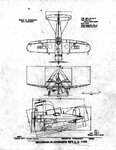 Officially
, F4U-1 showed
407 mph without water injection and also without F6F type propeller(6501A-0). it's propeller blade design was older 6443A-21(3rd ACP pic) and 417 mph with water injection, It's standard performance for raised cabin F4U-1 without land-based configuration, many later F4U-1s were able to use this performance or even better with land-based configuration.
Birdcage Corsair's 395 mph seems from early troublesome supercharger with faulty pressurization.
a non-standard higher efficiency F6F propeller
Blade design 6501A-0 was not factory installed type for F4U-1, but start service with VF-17 in solomon campaign and many F4U-1s have replaced propellers with this new type.
It's not flap
S, only top section of cowl flaps was replaced by a fixed plate completely covering the opening and It's
standard improvement between early birdcage F4U-1 and raised cabin F4U-1. the Corsair that was put into battle without this was even small within the birdcage type.
It is a picture of VMF-215 on Hawaii, so it is at least before May 12. other units have different periods, but also installed within 1943, and standard for raised cabin F4U-1s.
removal of tail hook with faired cut-out
removal of catapult hooks
enhanced streamlined tail wheel
shell ejector openings were taped over
The effect of drag reduction for land-based configuration is not significant. according to Dana Bell, It was about +4 mph with hooks and folding devices removed. case for the F4U-1 BuNo.17930, folding devices remained so just +3 mph(2.4 + 0.6, see below chart) for hooks removed and faired cut-out.
High tail wheel was standard for late F4U-1s, but streamlined wooden block type was not standard. However, after take-off, it seems no way to clear effect than standard high tail wheel to performance, because after tail wheel door closed, only half of the wheel was just exposed.
both Hellcat(F6F-5 BuNo.58310/72731) and Corsair(F4U-1 BuNo.17930) taped over weapons in test, the Corsair's gun blast and shell ejector openings were taped over and the Hellcat's gun barrel openings were sealed/taped and blast tube fairing not installed. in this condition, even the Hellcat's shell ejection chutes opened, It does not seems to be special disadvantageous in terms of drag and performance compared to standard condition for both model. for example, Corsair's drag cofficient for install all six guns was just equivalent to catapult hook, so even at the worst, the effect is only slight as below chart.
Here, drag documents for F4U-1s.
These drag reductions seem to offset the drag of additional external equipment for test. however, since the drag to be reduced is different according to the added drag, the configuration would also differ to corrected for standard condition.
F4U-1 BuNo.17930's report stated several special instrument leads were carried exterrally from the firewall back to the cockpit. these were faired together to the fuselage by means of doped tape, making a half round projection of approximately 3/4" diameter. and F6F-5 BuNo.58310/72731's report also stated an outside air temperature gage of the electrical resistance type was installed for test purposes on the topside of the right wing pannel. there seems to be a slight difference in their additional drag coefficient each.
It's F4U-1 BuNo.17930, the white line is special instrument leads mentioned avobe.
As a result, F4U-1 BuNo.17930 seems appears to have achieved a drag similar to the service condition, as shown in the comparison to be described later, which is also the evaluation of the USN.
And this Navy's evaluation was evident by contrasting the F4U-1's ACP and comparison report with F4U-1, F6F-3 and Fw 190, If F4U-1 BuNo.17930 was specially modified for drag reduction, It should be clearly fast in all situations.
But compared to ACP the offical performance for service condition, the speed of BuNo.17930 was the almost identical except for the high speed high altitude range, and the comparative report explains why.
Because the F4U-1's early propeller blades showed a loss of efficiency at high speed high altitude range.
In conclusion, there was nothing so special for F4U-1 BuNo.17930's drag condition compared to standard due to navy's correction, It just seems equivalent late type land-based configuration raised cabin F4U-1. What I can say for sure is that the lots of the water injected clean wing F4U-1s with new propeller blades and land-based configuration was used in battle, and It's performance was unlikely to differ significantly from the F4U-1 BuNo.17930, basically.
However, the question arises then because the F4U-1D's top speed, which replaced the propeller blade design to 6501A-0, was still 417 mph.
From here on out, it's my guess, BuNo.17930 F4U-1's maximum speed 431 mph was for late type land-based configuration with lean mixture but F4U-1D's was not.
Look at this F6F-5 BuNo.58310 graph, the auto-lean curve showed faster than the auto rich at altitude, the vmax was about 8 mph faster, and the critical altitude increased about 400 ft. The report noted a loss in output from auto-rich due to caburation problems. Due to the similarity of the engine, the Corsair may also consider the possibility of experiencing the similar problem.

Compare the power curves of the F4U-1 BuNo.17930 and F4U-1 BuNo.50030, can see that a similar result is happening, despite the slightly higher manifold pressure caused by the 25 drill water jet, it shows lower altitude performance. on the other hand, it seems that the F4U-1s in early 1944 basically used lean mixture, It was a time when F4U-1's water injection had just begun to be used for battle. In the comparison report with the Fw 190 mentioned above, the F4U-1 also used a lean mixture, but experienced overheating. I guess that more detailed and practical operation restrictions have been applied over combat time increasing, for official performance, it must run for 5 minutes and the cylinder temperature should not exceed 260, as a result, it seems showed the lowered official performance. The F4U-1 BuNo.50030's report contained effort for meet the operation restrictions, However, that is not found in the report of F4U-1 BuNo.17930, perhaps this made the difference.
Back to the F4U-1D, clean wing F4U-1D with new 6501A-0 propeller blades had a top speed of 417 mph at 19,900 ft in official ACP and F4U-1 BuNo.17930 showed 431 mph at 20,300 ft with land based configuration. It shows the difference between critical altitude 400 ft and vmax 14 mph. but F4U-1D was carrier-based configuration, so need to add the drag of carrier-based configuration, references have stated that it was about 4 mph. then vmax difference is reduced to 10 mph and It can be assumed that the F4U-1D is capable of speeding 427 mph at 20,300 feet. hmm, It's similar to the number I saw somewhere. Yes, I also saw the F4U-1D's top speed of 425 mph you mentioned, in several references, It's 8 mph faster than F4U-1D ACP's 417 mph that shows a similar difference with above rich/lean graph. As explained above, if that was the F4U-1D's top speed with lean mixture, it might not be so unusual because It's also 6 mph slower than F4U-1A BuNo.17930 with same propeller, engine and clean wing, 6 mph is a convincing figure for the difference between the carrier-based configuration and the land-based configuration as above documents for drag and reference books. I really want to meet the author of the reference that first used 425 mph.
And it should be remembered that the F6F-5
also had these type of speed record - can be achieved, but unofficial. In the November 1944 TAIC test, the F6F-5 showed 409 mph. compared to F6F-5's SAC, It seems to have been a lean mixture as smiliar to above situation. I used to express the opinion that the F6F-5 was clearly a 400 mph over group aircraft, but it seemed to have little or no impact, like when I cope against biases about the Corsair.
If going to do a comparison, it would be better to distinguish between the official and unofficial performances and make comparison in the same classifications with same configuration. for example, the F6F-5 SAC's depressing official performance, Vmax 330 knots (380 mph), should not be compared to the land-based F4U-1's unofficial performance of 431 mph or the F4U-1D's ambiguous 425 mph. Since the F6F-5's that official performance was for a combat condition with three external pylon/racks installed, it should be compared to the 409 mph of the official performance for F4U-1D's combat condition with three external pylons/rack in ACP, even 417 mph cannot be compared. It's a pure fighter configuration without pylons. One interesting data is the July 1944 ACP of the F6F-5N. smiliar performance reduction I mentioned above for F4U-1s also appear in this document with F6F-5 SAC. despite the radar pod's extra drag, this F6F-5N could accelerated to 340 mph at sea level and had a Vmax of 391 mph at 18,800 feet. I felt slight more familiar with my hypothesis, and I also recalled the possibility that the 1944 ACP for the F6F-5 included a Vmax over 400 mph. have to find it. There was F6F-5N's ACP, so there would be F6F-5's.
------------------------------------------------------------------------------------------------------------------------------------------------------------------------------------------
In addition, It should not be forgotten that maximum speed of the FG-1s and F3A-1s were lower than Vought F4U-1s.
The US service Vought F4U-1's maximum speed was almost identical at the sea level for neutral blower stage with least influence of the supercharger, is follows.
for military power
348 mph for Birdcage F4U-1 BuNo.2155
350 mph for F4U-1 ACP
350 mph for F4U-1 BuNo.17930
for combat power
363 mph for F4U-1 BuNo.49832 (2 minutes accelration time limit)
365 mph for F4U-1 BuNo.17930
364 mph for F4U-1 BuNo.50030
366 mph for F4U-1D ACP (clean wing as F4U-1 configuration)
on the other hand, for FG-1 and F3A-1, for military power
339 mph for F3A-1 BuNo.04691
332 mph for FG-1A BuNo.14575
335 mph for FG-1 BuNo.14769
Although the altitude performance varies depending on the condition of the atmosphere and the supercharger, I think that the performance at sea level can be objectively compared. As a result, Goodyear and Brewster Corsairs were slower more than 10 mph with same power setting. As far as I remember, Brewster had a problem with F3A-1's quality control and occurred accidents and through repackaging some internal components, the FG-1 was only a few inches longer than the F4U-1 and there was also Nash's R-2800 installed for some of these Corsairs. These changes may have affected but I have no specific information for it.