How to sink a USN carrier? (5 Viewers)

Admiral Beez

Major
10,271
11,911
Joined
Oct 21, 2019
Location
Toronto, Canada
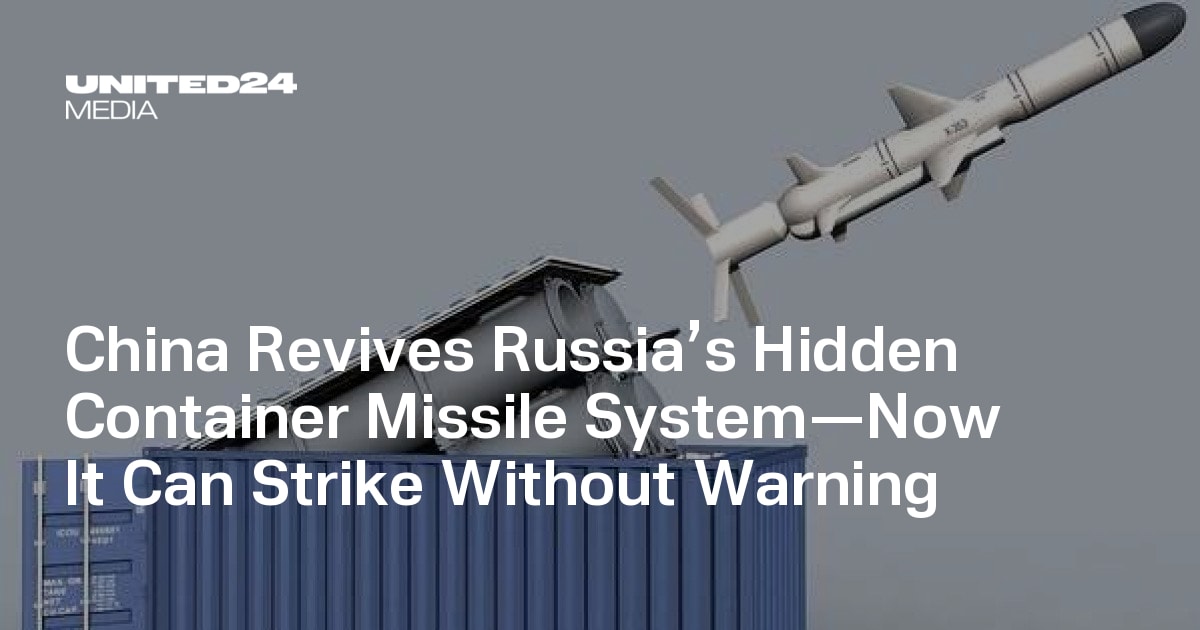
When the Iranian Navy frigate IRIS Dena, operating well outside of the combat zone was torpedoed and sunk by the USS Charlotte, I wondered if Iran could sink or cripple a USN supercarrier along busy international trade routes outside Iranian waters. Since commercial vessels routinely pass near US Carrier Strike Groups, Iran could use disguised container ships for a close-in saturation ambush.

IMG_4213.jpeg


By packing dozens of Noor or Ghadir sea-skimming anti-ship cruise missiles inside standard shipping containers, a merchant vessel could fire a low-angle mass salvo from 20 to 30 miles out. Flying just meters above the waves, these missiles would stay hidden (to shipboard radar) behind the radar horizon until the last moments, slashing the carrier group's reaction time to under two minutes. AWACS would catch on much earlier.


Given the layered defence of a CBG even when outside of combat zones, would our suicidal container ship have a chance? Just one or two hits would cause fires on the carrier. Iran's main goal would be to embarrass the US and incite public ire for the war. But IDK, is this pure fantasy?
 
Last edited:
When the Iranian Navy frigate IRIS Dena, operating well outside of the combat zone was torpedoed and sunk by the USS Charlotte, I wondered if Iran could sink or cripple a USN supercarrier along busy international trade routes outside Iranian waters. Since commercial vessels routinely pass near US Carrier Strike Groups, Iran could use disguised container ships for a close-in saturation ambush.

<<<snip>>>

By packing dozens of Noor or Ghadir sea-skimming anti-ship cruise missiles inside standard shipping containers, a merchant vessel could fire a low-angle mass salvo from 20 to 30 miles out. Flying just meters above the waves, these missiles would stay hidden (to shipboard radar) behind the radar horizon until the last moments, slashing the carrier group's reaction time to under two minutes. AWACS would catch on much earlier.


Given the layered defence of a CBG even when outside of combat zones, would our suicidal container ship have a chance? Just one or two hits would cause fires on the carrier. Iran's main goal would be to embarrass the US and incite public ire for the war. But IDK, is this pure fantasy?

An N+1 saturation attack is possible against any ship. And that flat out can work. And carriers are not out there alone and unafraid. But, with that said....

You said "flying just meters above the water, these missiles would stay hidden (to shipboard radar) behind the radar horizon until the last moments". Lets look at that. I think these "last moments" might be longer than it seems at first glance.

If the carrier is the first to see it, the primary detection radar is going to depend on the specific carrier targeted. But lets take the one in the picture you included, CVN-75, USS Harry S. Truman. It would probably be the AN/SPQ-9B radar mounted on the Aft Lattice Mast. It is specifically designed to detect low flying targets and reject sea clutter. It is also mounted about 175 feet above the waterline (about 35 feet below the air draft of the Aft Lattice Mast). It is optimized for this task.

Sea skimming missiles are "just a few meters" above the sea, but the meaning of a "few meters" is relative.

In the case of the Noor and the Ghadir, based on open source information, this is probably in the range of 20 - 30 meters, or more, above the water. So call it 75'ish feet. Yes, I see some claims of 3 - 5 meters, but the majority of sources that do not quote WIkipedia say more like 30 meters. The Noor and the Ghadir (or Qader) are both based on the Chinese C-802. Per GlobalSecurity.org, and the most detailed description of the missile profile I can find, the Chinese C-802 is quoted as 20-30 meters until terminal approach, when it drops to either 5-7 or 3-5 meters. I suspect this is where the "3 to 5 meter" number comes from for the Ghadir / Noor. It appears that it may not fly that low the entire trip, just for the end-game.

Both the missiles you mention are high sub-sonic cruise, Mach 0.9 or less. Call it 685 MPH, or less, at Sea Level, or 0.19 miles / second, or less. Ranges below are statute miles, not nautical miles.

If the radar antenna is at 175 feet, and the inbound missile is at 75 feet (probably higher, but lets use that), then the radar horizon is about 18.7 miles (radar to horizon distance), the geometric target visibility is about 26.8 miles (line of sight radar height to missile height), and the radar target visibility is about 31 miles (due to refraction). At 0.19 miles / sec the missile goes from max detection range to impact in roughly 163 seconds. This is going to be reduced a bit, the radar system will take a few seconds to detect, acquire, and classify the target, and the Noor has a terminal phase at a higher speed. But it is an easy 2+ minutes to respond to the missile.

If you go with the 3 - 5 meter altitude for the missile (unlikely, but someone will claim it) then the radar horizon is still 18.7 miles, but the geometric target visibility is 21 miles and the radar target visibility is 24.2 miles. Or 127 seconds at max detection range. Even allowing for detection/acquisition/classification time, almost 2 minutes from possible first detection to impact.

And none of this counts the even earlier detection by the picket ships. Carriers don't steam alone, and they probably would not be the closest to the launch vessel. A Burke or a Tico will generally see and respond quicker than the carrier can.

And, don't forget ECM. The AN/SLQ-32 V4, V7, or SEWIP, or whatever is on board, may well detect the missile before the defensive radars can track it, this is pretty common. And if it detects it it can start to jam it. And then there is the Mk 53 NULKA. Soft kills work too baby.

Now, that container ship is not going to live. But, a PBIED host doesn't either.

N +1 still works. Saturate the defense and overwhelm it. The thing is, can it get enough off to achieve saturation before it dies?

T!

 
Last edited:
One wonders how well-maintained the Iranian Navy's submarines are. Both a former SSN sonar person and a former surface ASW person have said well-handled diesel boats are scary: essentially undetectable by passive sonars when on battery.
 
Last edited:
One wonders how well-maintained the Iranian Navy's submarines are. Both a former SSN sonar person and a former surface ASW person have said well-handled diesel boats are scary: essentially undetectable by passive sonars when on battery.

The ones that would scare me are the Kilo's and the Ghadir's. However, most of what I see online indicates the Kilo's are all dead. The Ghadir's are going to be a threat, if any are still alive, in the Persian Gulf would be the Ghadir's. Lay on the bottom and float off to make a missile or torpedo attack on the carrier.

Of course, the sub would not survivie, but that does not mean it is not possible such an attack could occure.

T!
 
And no carrier group is going to be operating without AEW cover, extending the radar horizon out by several hundred miles.

Virtually all the VAW squadrons have upgraded to the latest version of the Hawkeye - the Grumman E-2D Advanced Hawkeye. its AN/APY-9 has a range of about 400 miles and its systems are capable of simultaneously locating and tracking over 3,000 air and surface targets over land and sea. It is also capable of directing missiles launched by other air and sea platforms via datalink thereby increasing the CSG engagement envelope. In recent times the number of aircraft in each VAW squadron has been increased from the standard 4 of Cold War days to 5. More recent E-2D production has included an aerial refuelling capability to increase time on station and is being applied retrospectively to earlier aircraft. So 24/7 cover should be assured.

Warships screening the carrier itself will generally be spaced 10-25 from the carrier itself. Tactical formations today occupy a much greater area of ocean than they did in WW2 as the threat environment changed dramatically with the introduction of atomic weapons and larger ships needing more space to manoeuver.

So the first question is how is this container ship referred to in the OP going to get to within 20-30 miles of the CSG let alone the carrier itself to establish a launch position? Civilian and naval traffic generally trybto avoid each other in these circumstances. It will have been detected and tracked for many hours, its identity established and if necessary an escort dispatched to warn it off. It is the same kind of routine used to warn off Soviet / Russian spy ships that got / get too close.

Ultimately if it persists in its approach and was really considered a threat, it could be sunk, or at least stopped, before it launches its missiles, or at least before it gets significant numbers fired. Or the CSG could run away and put distance between itself and the threat.

Most container ships AIUI do not exceed 24 knots in normal commercial service even if capable of higher speeds. So anything attempting a fast run in is going to attract attention, long before it gets close.

As noted above, diesel subs probably represent a greater threat if any are still operational, particularly in littoral waters where sonars are not so effective. But IIRC the CSGs in the Arabian Sea were pulled back from the Gulf area / Iranian coast earlier this year after an incident that saw a US warship targeted. Needless to saw the US denied a "withdrawal" had taken place but some "patrol repositioning" certainly seems to have occurred.

That is the beauty of a CSG. It can quickly reposition as required to close distance to a target or withdraw to avoid a threat.
 
Now, that container ship is not going to live. But, a PBIED host doesn't either.
So the first question is how is this container ship referred to in the OP going to get to within 20-30 miles of the CSG let alone the carrier itself to establish a launch position?
My thinking is this is a civilian, friendly/neutral flagged vessel passing the CBG in a choke point, where the crew does not know that the top layer of containers are loaded with missiles. Of course the chaps in the port that loaded and placed the containers know, as do whomever aboard is about to launch them.
 

Users who are viewing this thread

Back