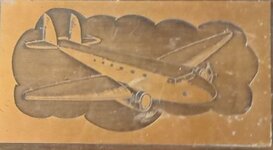
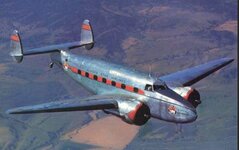
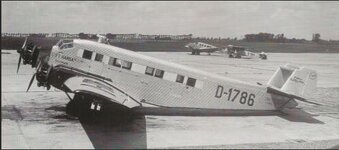
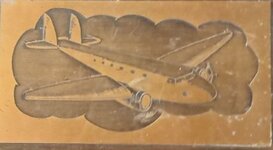
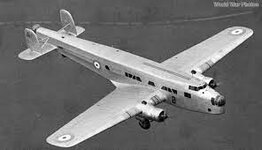
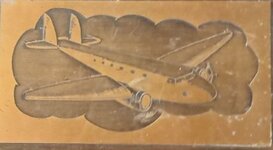
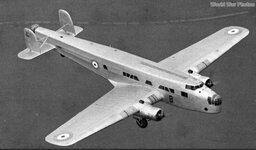
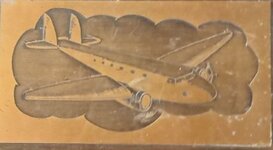
Looks like a stylised Fiat Br 20 Cicogna, which for a brief period was seen as among the most advanced on the world and stripped down versions were used in some races.
From wiki
When, near the end of 1936, the
13° Stormo Bombardamento Terrestre (in
Lonate Pozzolo) was equipped with the "Cicognas" it was probably the most modern bombing unit in the world at that time.
[4] Shortly after entering service with the
Regia Aeronautica, the aircraft became central to the
propaganda campaign lauding Italian engineering. During 1937, a pair of stripped-down BR.20s, designated as the
BR.20A, were custom-built for entry into the prestigious
Istres–
Damascus air race;
[11] these aircraft were able to obtain sixth and seventh place in the race while rivals S.M.79s achieved the first place, the Fiat-built bomber being obviously slower. The BR.20A featured a rounded nose, similar to civil aircraft, while all of the normal military hardware, such as defensive turrets, had been removed. In its place, the internal fuel capacity was increased to 7,700 L (2,034 US gal), bringing the maximum range to 6,200 km (3,850 mi).
[10][23]
A Regia Aeronautica BR.20, 1938
During 1939, a modified long-range BR.20 version, designated as the
BR.20L, named
Santo Francesco under the command of
Maner Lualdi performed a highly publicised non-stop flight from
Rome to
Addis Ababa,
Ethiopia, during which an average speed of 390 km/h (240 mph) was recorded.
[24][25] The modified aircraft carried 5,000 L (1,321 US gal) of fuel which increased its range from 3,000 km (1,864 mi) to 4,500 km (2,800 mi). The BR.20L was also used to test a newly developed
autopilot built by
Microtecnica.
[19]