Is Spitfire really the BEST British fighter???

Wow! :lol:
 
cheddar cheese said:
Stick it on an XP-58 then...thats bigger :D

I'll try to find one to the same scale
 
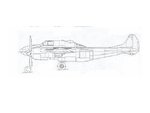
Here ya go, not too sure of the scale, used a NA B-28 nacelle
 

Attachments

  • r2800p58_150.jpg
    r2800p58_150.jpg
    15.5 KB · Views: 601
Yep....Just as I said :lol:
 
FLYBOYJ said:
the lancaster kicks ass said:
i'm still suspect of them figures.........

Its a nice thought though! :roll:

The early design numbers for the P-38 were spot on, these should be pretty close.

The Merlin issue is confusing at best. Even with the records and people involved Bodie shows that the overall aircraft weight might be better or worse. The consensus seemed to be that it would be about as hard as the P-51 conversion was and the results would be great. Esp. if the mixture control was installed too.

The evidence is that the P-38 had the potential to have been the the best fighter of the war (if it wasn't anyway). We do know that it is right there with a few other deserving fighters and that's fair or maybe even better.

wmaxt
 
I think the 38 would have had to have been structurally strengthened for some radials but had it worked she may have been quite a powerful beast. As even said, think of the sound. I also dont think she would have looked that bad.
 
RG_Lunatic/guest

5 minutes was the recommended limit of WEP usage. But pilots often maintained WEP power for 15 minutes or even longer. The 5 minutes was a recommended limit, nothing prevented longer usage. A properly operating P-51 at good speed had no overheating problems at any power level. The 109 on the otherhand, would overheat after one to two minutes at high speeds (and not necessarily even at full power).

I was very surprised about this, very interesting. Do you have any more information or a source I can check?

Also, the Packard Merlin was known to be more robust than the RR Merlin. It was built using superior materials, and production quality was generally higher. This is not a dig at the British, they simply did not have as good of alloys and they were more pressed to maximise production quantities at the cost of a little production quality.

Again, I was very surprised, any further info/source? The lack of materials was one of the main reasons why the germans went for MW-50 and GM-1. General Electric was leading in the field of turbochargers, which could be seen in the P-47.

Regards.
 
DerAdlerIstGelandet said:
I agree, I had not heard of the 109 overheating after 2 min. at top speed. Quite interesting if it is true, but I doubt it.

I've read all the top fighters Including the Mustang had cooling limitations at altitude, high power, extended operations. Remember the air at those altitudes is very thin and has little heat transfer ability. I suspect there was a limit on the Bf-109 especialy with power adders (these tend to exceed the engine block/heads ability to transfer the heat quickly enough) but I doubt the 2min unless it is when using power adders (NOX, water/methanol).

wmaxt
 
Oh I agree with you that they had limations and such not but they would not overheat after 2 min. This is just a myth that I dont believe holds any weight. I may be wrong but I doubt it.
 
In this discussion the maximum cruising speed of the Spitfire, P-51 and Bf-109 was compared. Could someone provide the maximum cruising speed of the later Spitfires and how do they compare to the german counterparts. In this web site I found:


the G-5/-6/-14/AS could maintain 620 kph at 8.4km in cruise (385mph at 27 550 ft ), the G-10 628kph (390mph), the K-4 645 kph (400mph) at the same alttiude. Naturally at full power much higher speeds could be reached at this altitude - 700 kph/435mph in case of the K-4. Datasets for G-10 and K-4 are with the early production, and weaker DB 605 DM engine. Even with this they compare favourably at the same altitude to the all-out level speed of the Spitfire L.F. Mk IX,
631 kph or 392 mph at 8.4km / 27550 ft.

Maximum continous cruise speed of the Spitfire F. Mk. XIV was 380 mph 25 000 ft (611 kph at 7620m), given by AIR 15/741.
http://kurfurst.atw.hu/articles/MW_KvsXIV.htm
 

Users who are viewing this thread

Back
