Luftwaffe in 1936-41 improvements?

Ad: This forum contains affiliate links to products on Amazon and eBay. More information in Terms and rules

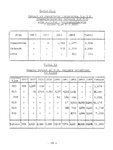
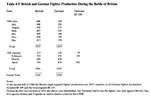
Just to illustrate againstt what the LW was against during and after the BoB, a table from a book about German aircraft production. UK was outproducing Germany 2.5:1 in fighters in second half of 1940. Ratio between Bf 109 and 110 was about 1:1 (!!) - a good recipe to loose the BoB. So I still suggest that Germany does not make 2-engined fighters of any kind, but to focus on 1-engine fighters, predominantly on 109s.
Another table is production total of DB engines, including what was produced in Avia, Fiat and Mafred Weiss. By just not making the 'double engines', it 'frees' almost 17000 (17 thousand) of DB 601/605 'single engines' before 1945 (or ~1500 for our era of interest) - almost enough for each Fw 190.
 

Attachments

  • 194041 prod.jpg
    194041 prod.jpg
    69.7 KB · Views: 85
  • 017.jpg
    017.jpg
    121.5 KB · Views: 82
I must say that you're doing the Bf 110 a grave disservice. It was a rocket ship by most metrics in 1939.

Maybe it could have been a twin seat rather than 3 seat and could have been a little smaller and lighter but it was fast and powerfully armed for its day.

Imagine a Wellington or Blenheim having a Bf 110 chewing on it in broad daylight?

Hindsight then maybe I could agree with you but by standards of 1939 then no.

Bf 110 has to stay coz it's a versatile warplane with plenty of capabilities.

If Britain is building more fighters than Germany then that's not a fault of the Bf 110. Remember Britain was making plenty of garbage too to go with the Spitfires so not only have you got Spitfires and Hurricanes but Battles and Defiants and Rocs and Bothas and Hampdens and Whitleys and Henleys and Whirlwinds and Manchesters.

Endless list of second raters. So if you say how many Spitfires and Hurricanes were made them add this motley collection, you can see the true power of the British Empire and it's military industrial complex.

Hubris is not a military strategy.
 
Looking at the question backwards, what failed and hurt the Luftwaffe by 41-42 period.

The Me210 debacle, the replacement for the Bf110 that was a dud and caused the loss of 6 months of twin fighter production. No specialised night fighter to counter the British night bombing campaign which was starting to be a real worry. the Dornier 215 was actually the preferred early plane as a night fighter but went out of production so the Luftwaffe made do with Bf110. The Me210/410 was not a good design for a night fighter anyhow as its nose could not fit radar well. Make a Me110/210 hybrid with space for radar and enough internal fuel for long patrol, also doubles as heavy attack plane.

The He177 problem plane, dive bombing wrong feature and double DB engine fires, even Goering said the twin DB was an idiotic idea. Make it a 4 engine plane from the start.

Solution 2- Remove Udet and Jeschonneck in 1940 from aircraft procurement & design.
 
I must say that you're doing the Bf 110 a grave disservice. It was a rocket ship by most metrics in 1939.
Maybe it could have been a twin seat rather than 3 seat and could have been a little smaller and lighter but it was fast and powerfully armed for its day.

When compared with what Germany produced in 1939 - Bf 109E - it certaily was not a rocket ship. Ditto when compared with Spitfire. A lot of Bf 109s made in 1939 were carrying a pair of cannons and 2 LMGs - that's barely less than Bf 110.
A strictly 2-seat Bf 110, that is also smaller and lighter than historical Bf 110, is no Bf 110.

Imagine a Wellington or Blenheim having a Bf 110 chewing on it in broad daylight?
Hindsight then maybe I could agree with you but by standards of 1939 then no.
Bf 110 has to stay coz it's a versatile warplane with plenty of capabilities.

Neither Wellington nor Blenheim were standing well against the Bf 109s either - standard of 1939. Guners on the bombers will have hard time to hit the Bf 109 than what will happen vs. 110.
Bf 110 has to go.

If Britain is building more fighters than Germany then that's not a fault of the Bf 110. Remember Britain was making plenty of garbage too to go with the Spitfires so not only have you got Spitfires and Hurricanes but Battles and Defiants and Rocs and Bothas and Hampdens and Whitleys and Henleys and Whirlwinds and Manchesters.

Endless list of second raters. So if you say how many Spitfires and Hurricanes were made them add this motley collection, you can see the true power of the British Empire and it's military industrial complex.

That Britain is building more fighters is fault of RLM and LW, who opted to mass produce an expensive fighter (Bf 110) instead of even greater quantity of cheap fighters (Bf 109, for example). A true power of British military industrial complex has no bearing on German mistakes.

Hubris is not a military strategy.

Finally a statement that I agree with.
 
Heavy fighters were very much part of the scene in 1930s air power and Germany would have designed some kind of twin fighter regardless.

Single engined fighters, especially the 109 were short legged only meant as point interception. The early 109s carried machine guns and the E-1 was originally guns only. Can you advise when cannon armed 109s became the norm?

i have to advise that based on 1930s doctrine and technology and tactics then the Bf 110 was fantastic and the real deal.

To be honest your opinion of the Bf 110 doesn't match it's true value.
 
Heavy fighters were very much part of the scene in 1930s air power and Germany would have designed some kind of twin fighter regardless.

Heavy fighters - I reckon you mean 2-engined fighters - were not slated for mass-production in almost 1:2 ratio vs. 1-engined fighters anywhere but in Germany in late 1930s, and actually produced in such a ratio in 1939-41. 'Slated for mass-production' here meaning 'actual tooling & budget allocated'.

Single engined fighters, especially the 109 were short legged only meant as point interception. The early 109s carried machine guns and the E-1 was originally guns only. Can you advise when cannon armed 109s became the norm?

I've stated before that Bf 109 gets an auxiliary tank, something that He 51 carried in the Spanish Civil war, and a thing that Curtiss fighters in 1930's also carried. Cannon-armed Bf 109E3 was produced in 153 copies in 1938 (the MG-only E1 was produced in only 15 copies in same year), per Vajda & Dancey book 'German Aircraft industy and production', pg. 46.

In 1938, there was no Bf 110s with DB 601s, and only 37 or Jumo-210 powered Bf 110Bs.

i have to advise that based on 1930s doctrine and technology and tactics then the Bf 110 was fantastic and the real deal.
To be honest your opinion of the Bf 110 doesn't match it's true value.

Everyone is entitled to it's opinion.
 
Again I don't follow.

You write the Bf 110 out of existence to make more Emils. The thousands of Emils are going to be obsolescent in a very short space of time. Plus the added infrastructure to run and fuel and fly them.

You cannot flick a switch and suddenly have 1,000 He 100D.

The 109 only needed auxiliary fuel tanks to fly over Britain but unless you know the Battle of Britain was going to take place then there would be no need for them.

And you need night fighters which the Bf 110 filled and at the time nothing else did.

The Luftwaffe needed the 110. 109s cannot be night fighters or longer range tactical strike or reconnaissance or even fly Rudolph Hess to Scotland.

No. If the Germans didn't have the 110 then maybe the Fw 187 would fill in with the same need of DB600 engines.

Plus one important point. 109 is defensive. 110 is offensive. The Bf 110 would fly over enemy territory shooting down the inferior air power of weaker opponents. Clearing the way for the bombers to do their work. That was the plan. Offensive war needs just that kind of machine. Not to guard airfields but to invade the neighbors and to wipe them out. The 110 matched an offensive attacking spirit.
 
A lot of Bf 109s made in 1939 were carrying a pair of cannons and 2 LMGs - that's barely less than Bf 110.
Yes and no.
The 110 carried 3 times the amount of cannon ammo. After 7 seconds the 110 still has 2 cannon and 4 mgs, the 109 has two Mgs.
The 110 as a fighter bomber can carry two 250kg bombs vs the one bomb on a 109 fighter bomber (1940 engines).
The 110 as a fighter bomber has a longer range than the 109 operating as a fighter bomber.
The 110 was also used (in small numbers) as a photo recon plane in 1940 and was, for some missions, probably the most successful (or highest performing) aircraft available.
You cannot fit the 'standard' Luftwaffe reconnaissance camera in a 109.
SC_402000.jpg

British airman examining captured Rb 50/30 camera
Yes the Germans did mount smaller cameras in the 109.

Why the Germans never developed a twin mount for the MG 15 or developed a belt feed for it to eliminate the 75 round magazines (4.5 seconds of firing time?) is a great unanswered question.
 
Again I don't follow.

You write the Bf 110 out of existence to make more Emils. The thousands of Emils are going to be obsolescent in a very short space of time. Plus the added infrastructure to run and fuel and fly them.

You cannot flick a switch and suddenly have 1,000 He 100D.

Why 'suddenly'? Era of interest here starts 4+- years long before Luftwaffe is against a peer opponent. However, I don't think 'classic-cooled' (or any) He 100 is neccesarry for the time specified.
Bf 109s in service were using less than 1/3rd of fuel of what Bf 110 were using, squadron vs. squadron. Even with drop tank on the 109, the fuel consumption is 1/2 of what 110s will use.
Bf 109 was not Hurricane, they worked well in it's intended purpose even in 1941, especially over Soviet Union or Africa.

The 109 only needed auxiliary fuel tanks to fly over Britain but unless you know the Battle of Britain was going to take place then there would be no need for them.

Long range fighter was required by LW in mid-1930s, thus Bf 110B (the one with Jumo 210 engines) with more than 1200L of fuel in internal tanks. Bf 110C - almost 1300L internal fuel.

And you need night fighters which the Bf 110 filled and at the time nothing else did.
The Luftwaffe needed the 110. 109s cannot be night fighters or longer range tactical strike or reconnaissance or even fly Rudolph Hess to Scotland.

Yes, lack of capacity to fly Hess to Scotland defeats my suggestion.

No. If the Germans didn't have the 110 then maybe the Fw 187 would fill in with the same need of DB600 engines.

Plus one important point. 109 is defensive. 110 is offensive. The Bf 110 would fly over enemy territory shooting down the inferior air power of weaker opponents. Clearing the way for the bombers to do their work. That was the plan. Offensive war needs just that kind of machine. Not to guard airfields but to invade the neighbors and to wipe them out. The 110 matched an offensive attacking spirit.

The Bf 109 will be even better in offense.
The Fw 187 is an interesting thing.

Yes and no.
The 110 carried 3 times the amount of cannon ammo. After 7 seconds the 110 still has 2 cannon and 4 mgs, the 109 has two Mgs.

Now, if someone just suggested improving ammo feed for MG FF(M), or perhaps a HMG in this thread...

The 110 as a fighter bomber can carry two 250kg bombs vs the one bomb on a 109 fighter bomber (1940 engines).
The 110 as a fighter bomber has a longer range than the 109 operating as a fighter bomber.
The 110 was also used (in small numbers) as a photo recon plane in 1940 and was, for some missions, probably the most successful (or highest performing) aircraft available.
You cannot fit the 'standard' Luftwaffe reconnaissance camera in a 109.
British airman examining captured Rb 50/30 camera
Yes the Germans did mount smaller cameras in the 109.

Time to devote some time to German bomber force, for example jump on the opportunity the early Ju-88 has?

Why the Germans never developed a twin mount for the MG 15 or developed a belt feed for it to eliminate the 75 round magazines (4.5 seconds of firing time?) is a great unanswered question.

Answer was probably the MG 81Z.
 
This is an area that has interested me in the past - but over time I've personally come to the conclusion that Luftwaffe's issues were not in terms of equipment. This is an opinion rather than a fact I should stress.

The 109 E was as good as any other fighter in 1939-1941.
The 110 was possibly not a good fighter but certainly a good fighter-bomber and (later on) an excellent bomber destroyer.
Ju-88 - probably one of the first 'multi-role' aircraft before the term caught on.

From reading numerous accounts the issues were not in what planes they had - but how they used them.

Ju-87s shouldn't have been hurled into the BoB before total air superiority was assured.
The fighters should have been sent ahead of the bombers to sanitise the target areas before the bombers got anywhere near.
More nuisance raids could have forced RAF Fighter Command to run themselves ragged trying to play whack-a-mole in dealing with small but frequent attacks across a broad defensive front. Note that Jabo raids of 1942/43 caused some significant headaches despite being fairly small groups of aircraft.
The airfields should have come under sustained attack until they were completely out of action - then follow-up raids to disrupt repairs.
The Germans should have taken the radar technology of the time more seriously - putting greater efforts into damaging the Chain Home system.
Finally and most importantly - the conduct of the air campaign should have been run purely in military terms, not chopped and changed due to top-down political whims.

All of the above is 20-20 hindsight 80 years later! It may have changed things, it may have changed nothing....
 
Now, if someone just suggested improving ammo feed for MG FF(M), or perhaps a HMG in this thread...

I think I tried to show that the Germans were working on both a belt feed cannon (although not the MG/FF and a "heavy" machine gun during the 30s, they just weren't ready for the BoB.
I would also note that quite a number of countries resorted to having a "loader" for cannon in multi seat fighters. Granted some of these airplanes were only made in small numbers.

Time to devote some time to German bomber force, for example jump on the opportunity the early Ju-88 has?

The JU 88A-1 or the JU 88A-4?
And there is a question of timing. By the end of 1939 only 69 JU-88A-1s had been built. Waiting, or even pushing production of the Ju 88 to a much large number than historic might still leave you short of aircraft. Ju-88A-4 was delayed.in part, by late arrival of the Jumo 211J engine. The Ju 88 A-1 was much too slow to try to operate on it's own. While it did carry a much lager bomb load is was no faster than the Blenheim and had a poorer defensive armament.

Answer was probably the MG 81Z.
Yes but the MG 81Z arrived well after the BoB. Why not take the MG 17, fit the pistol grip and sights to it for a flexabile belt feed gun while waiting for the MG 81, or develop large magazine for the MG 15, The Lewis gun had a 97 round magazine in WW I.

Bf 109s in service were using less than 1/3rd of fuel of what Bf 110 were using, squadron vs. squadron. Even with drop tank on the 109, the fuel consumption is 1/2 of what 110s will use.

This looks a bit misleading, if the 110 is using the same engines as the 109 and is flying about as fast (or a bit faster) it should use twice as much fuel per hour, not 3 times.
However, if the 110s are flying longer duration missions they could well use up 3 times the fuel that the 109s do. Put the drop tank on the 109 and endurance and fuel used look a lot better for the twin engine plane.
ANd the single engine planes still haven't solved the radio problem.
 
If you cannot persuade in 2020 of the weaknesses of the Bf 110 then in 1940 you got no chance.

I can concede that maybe the 110 was not ideal but by 1940 it was more than good enough and it's extra range and firepower was a selling point.

In hindsight then again I would take issue but most air forces which the Germans faced were not exactly well equipped and even the French put up some dodgy fighters. If your main opponent is the M.S. 406 then the Bf 110 is hardly outclassed.

If the only yardstick was the Spitfire then you would not build anything!
 
I think I tried to show that the Germans were working on both a belt feed cannon (although not the MG/FF and a "heavy" machine gun during the 30s, they just weren't ready for the BoB.
I would also note that quite a number of countries resorted to having a "loader" for cannon in multi seat fighters. Granted some of these airplanes were only made in small numbers.

I'm aware that you've shown the 'belt-fed projects' of Germany. My comment was a tongue-in-cheek thing - I've suggested a big drum for MG FF and work on belt-feeding it. The HMG question can be resolved early on if Germans buy a licence for it in the USA, Italy, or even Belgium or UK.

The JU 88A-1 or the JU 88A-4?
And there is a question of timing. By the end of 1939 only 69 JU-88A-1s had been built. Waiting, or even pushing production of the Ju 88 to a much large number than historic might still leave you short of aircraft. Ju-88A-4 was delayed.in part, by late arrival of the Jumo 211J engine. The Ju 88 A-1 was much too slow to try to operate on it's own. While it did carry a much lager bomb load is was no faster than the Blenheim and had a poorer defensive armament.

Was thinking more about a series of Ju 88 that looked more like prototypes - no Bola, smaller cockpit, no dive brakes, no 4 external bomb racks etc.

Yes but the MG 81Z arrived well after the BoB. Why not take the MG 17, fit the pistol grip and sights to it for a flexabile belt feed gun while waiting for the MG 81, or develop large magazine for the MG 15, The Lewis gun had a 97 round magazine in WW I.

Yes, the MG 17 modified into a trainable gun is a very good idea.

This looks a bit misleading, if the 110 is using the same engines as the 109 and is flying about as fast (or a bit faster) it should use twice as much fuel per hour, not 3 times.
However, if the 110s are flying longer duration missions they could well use up 3 times the fuel that the 109s do. Put the drop tank on the 109 and endurance and fuel used look a lot better for the twin engine plane.
ANd the single engine planes still haven't solved the radio problem.

The radio problem was a far less of a concern then lack of fuel for LR job on the Bf 109s.
Okay, let's settle to 2:1 fuel need, Bf 110 vs. 109+DT. Still not a math that favors German logistics.

If you cannot persuade in 2020 of the weaknesses of the Bf 110 then in 1940 you got no chance.

In 1940, RAF was persuading. Succesfully.
 
German bombers warant a good look, too. I'll start from bottom 'tier'.
The Hs 123 was probably a 'low tech', fall-back solution if the monplane dive-bombers don't pan out? At any rate, Hs 123 were not a stellar return for investment of an 800-900 HP engine. So I'd go with Junkers making a few prototypes with BMW 132 and Bramo 323 engines, those will be cartainly better than the Jumo 210 of any kind, and in the ballpark with the Jumo 211A-1 (1000 HP take off power on the Ju87B with 500 kg bomb-load and a rear gunner). Yes, those 9 cylinders are streamlined as a barn doors, but they are also light and can do 900-1050 HP already by 1938. Have Henschell make such Ju-87s under licence.
The 'regular' Ju 87s should also receive some actual gun firepower. Be that having 4 instead of 2 MG 17s, and/or use of MG C/30L as a motor cannon, or two MG FF(M)s in the wings etc. Plus, a better firepower for the rear gunner ASAP.
 
I'm aware that you've shown the 'belt-fed projects' of Germany. My comment was a tongue-in-cheek thing - I've suggested a big drum for MG FF and work on belt-feeding it. The HMG question can be resolved early on if Germans buy a licence for it in the USA, Italy, or even Belgium or UK.
Basically you are talking about two guns. Neither of which really offer the the Germans a whole lot for fighters. Defensive gun on a bomber maybe.
The Big Browning .50 (US), the Belgian 13mm (or 13.2mm) was simply the US Browning and cartridge necked up from 12.7mm to 13mm. The Itialians used almost the same gun chambered for the smaller British 12.7mm cartridge but for some reason didn't shrink the gun to fit the smaller cartridge so the gun was heavy for the power it provided. Or better said, even heavier than than the parant gun for the power provided. The big Brownings are too big to fit in the 109 cowl leaving them as through the prop hub guns or wing guns. Since they weigh as much or more than 20mm MG/FF you probably don't want more than one in each wing and since the ammo is rather heavy (112 grams for the US .50) vs 182grams for the German 20mm ammo (non mine shell) you don't get a large amount more for the same weight, yes you do get rid of the drum. But a 109 with two 7.9s and two 12.7s with 200rpg for the 12.7s isn't much different than a 109 with the 20mm cannon. With the British Vickers you have have some of the same problems, won't fit in the cowl, it is a bit lighter, ammo is lighter, It jams a lot:)
Was thinking more about a series of Ju 88 that looked more like prototypes - no Bola, smaller cockpit, no dive brakes, no 4 external bomb racks etc.
Trying for a JU88S a bit early ;)
You may reduce drag, but you are stuck with the low powered engines and the low gross weight. The Jumo 211B had 800hp at 14,700ft max cruise vs the 920hp at 19,500ft of the 211F or the 1000hp at 16,700 for the 211J (this might actually be about the same considering the difference in altitude?), all max cruise but show the difference in power. 369imp gallons of fuel for two engines is not a lot and while they could trade bombs for fuel to get range there is only so much you can do considering the gross weight.

The radio problem was a far less of a concern then lack of fuel for LR job on the Bf 109s.
Okay, let's settle to 2:1 fuel need, Bf 110 vs. 109+DT. Still not a math that favors German logistics.

depends on the mission. twice the fuel for twice the bomb load works on on fighter bomber missions but the Luftwaffe, historically wasn't doing a whole lot with either type.
If you can't reach the target it doesn't matter how much fuel you "save".
 
German bombers warant a good look, too. I'll start from bottom 'tier'.
The Hs 123 was probably a 'low tech', fall-back solution if the monplane dive-bombers don't pan out? At any rate, Hs 123 were not a stellar return for investment of an 800-900 HP engine.

"Production of the Hs 123A ended in Autumn 1938" from Wiki.

Production of the 123 may next to no difference to the production of the Ju 87.
 
Basically you are talking about two guns. Neither of which really offer the the Germans a whole lot for fighters. Defensive gun on a bomber maybe.
The Big Browning .50 (US), the Belgian 13mm (or 13.2mm) was simply the US Browning and cartridge necked up from 12.7mm to 13mm. The Itialians used almost the same gun chambered for the smaller British 12.7mm cartridge but for some reason didn't shrink the gun to fit the smaller cartridge so the gun was heavy for the power it provided. Or better said, even heavier than than the parant gun for the power provided. The big Brownings are too big to fit in the 109 cowl leaving them as through the prop hub guns or wing guns. Since they weigh as much or more than 20mm MG/FF you probably don't want more than one in each wing and since the ammo is rather heavy (112 grams for the US .50) vs 182grams for the German 20mm ammo (non mine shell) you don't get a large amount more for the same weight, yes you do get rid of the drum. But a 109 with two 7.9s and two 12.7s with 200rpg for the 12.7s isn't much different than a 109 with the 20mm cannon. With the British Vickers you have have some of the same problems, won't fit in the cowl, it is a bit lighter, ammo is lighter, It jams a lot:)

A good defensive wepon for the bombers was needed, at least something substantially better than the MG 15.
As for the fighters - lets recall that almost 1200 of the 109Es were the E1 version - 4 LMGs. Or, the ratio between 109E1 and 109E3 produced was 1:2 in 1939-mid 1940 (the E1 was being delivered even when BoB was underway). A pair of HMGs instead of the wing-mounted pair of LMGs seems like a win to me.

Trying for a JU88S a bit early ;)
You may reduce drag, but you are stuck with the low powered engines and the low gross weight. The Jumo 211B had 800hp at 14,700ft max cruise vs the 920hp at 19,500ft of the 211F or the 1000hp at 16,700 for the 211J (this might actually be about the same considering the difference in altitude?), all max cruise but show the difference in power. 369imp gallons of fuel for two engines is not a lot and while they could trade bombs for fuel to get range there is only so much you can do considering the gross weight.

I was never that much of a fan of the Ju 88S ;)
396 imp gals (1500L) for two Jumo 211B engines is still a good value vs. France, and vs. UK when flown from Belgium or N. France.

depends on the mission. twice the fuel for twice the bomb load works on on fighter bomber missions but the Luftwaffe, historically wasn't doing a whole lot with either type.
If you can't reach the target it doesn't matter how much fuel you "save".

Oh, we need to reach the target. Thus all this matra about Bf 109 + drop tank + more ammo + more of them, so the airspace of interest can be well covered.

"Production of the Hs 123A ended in Autumn 1938" from Wiki.
Production of the 123 may next to no difference to the production of the Ju 87.

Yes, you're probably right.
We can also take a look on what Henschell made until the end of 1941, besides 935 of Hs 126s: ~250 of Hs 123 + 50-70 Hs 129?
Workforce was around 9000 in 1938-39 - ballpark with Messerschmitt (BFW). So I'd still very much like to go with Henschell making Ju 87s.
 
This guy over here.

Slags the Bf 110 but gives the Stuka love.

If the Bf 110 is junk then the Ju 87 is double junk.

If the 110 doing badly against the RAF is a sign of bad times them the Ju 87 didn't do better.
 
A good defensive wepon for the bombers was needed, at least something substantially better than the MG 15.
As for the fighters - lets recall that almost 1200 of the 109Es were the E1 version - 4 LMGs. Or, the ratio between 109E1 and 109E3 produced was 1:2 in 1939-mid 1940 (the E1 was being delivered even when BoB was underway). A pair of HMGs instead of the wing-mounted pair of LMGs seems like a win to me.

You are right about the need. The problem comes with the slow development pace of the german guns and the lack of alternatives. After Munich in 1938 the chances of the Germans getting anything but the Italian Breda-Safat are pretty dim. Unless the Germans can make significant changes to the Breda-Safat (and by the time they do that they might have fixed their own guns) they have a 29KG gun firing 33-35 gram bullets at about 12 per second. They might have been better off putting two MG 17s in each wing for a total of six gun.
For defence the British managed to double up the Vickers K guns and belt fed Brownings fairly quickly in defensive mounts (not counting turrets) so I don't know why the Germans stuck with single guns for so long, best bet was to simply (or not so simple?) speed up the MG 131 program.

We can also take a look on what Henschell made until the end of 1941, besides 935 of Hs 126s: ~250 of Hs 123 + 50-70 Hs 129?

From Wiki
"By mid-1938, 262 Ju 87 As had been produced, 192 from the Junkers factory in Dessau, and a further 70 from Weser Flugzeugbau ("Weserflug" – WFG) in Lemwerder near Bremen. The new, more powerful, Ju 87B model started to replace the Ju 87A at this time "

apparently the JU 87 with Jumo 211 only overlapped the Hs 123 for a few months so there is no real gain in trying to stop Hs 123 production and replace it with Ju 87 production (unless you want more Ju 87As). I believe your numbers for the Hs 1209 are too high. only a dozen or so Hs 129s with Argus engines were built and the the B model with the Gnome=Rhones only started production in Nov-Dec of 1941. Yes 935 hs 126s were hundreds too many but sticking the Bramo 323 engine on the JU-87B airframe might not give very good results. Better than a Ju 87A is not saying much.
 

Users who are viewing this thread

Back