Now what you mean original? MT-215 was original G-2, very late G-2, and it had as all late G-2s, fixed tail wheel. Are you using original as a synonym to first or early?
Yes.
In fact MT-215 was in that a typical G-2,
No.
I read in 70s from a secondary source, from which one, I have long forgotten, that because the were constant problems with the semi-retractable tailwheel in front-line units, Germans fixed it down position and later G-2s came out from factory with a fixed one.
I guess your 70s source is quite simply wrong. Most of the G-2s were produced with a semi retractable tailwheel, the tailwheel become fixed one with the introduction of larger sized tires, but this did not occur until early 1943, when the G-2 production run was about to end.
See BF 109G-1 Kennblatt from March 1943.
Prien et al in their 109F/G/K book seemed to confirm that. In fact 109G wasn't only type suffering problems with retractable tail wheel, also many Spitfire Mk VIIIs, at least in Italy, had their tail wheel fixed down position because problems in field.
Hmm, I can't find a single reference in the Prien/Rodeike book about tail-wheel problems. There are of course some aircraft photoed field modified so in the field, but along with the removal of landing undercarriage covers, this appears to be a result of the muddy season in Russia and operations in the desert.
Quote:" In other words, during the first 1.5-2 mins, the coolant temperature was below 85 degrees Celsius, even with the radiator flaps closed."
Source for that, please.
Well thats how the radiators work on the 109. They close if the temperature is much below 85 degrees, and open if the temperature is over 85 degrees.
German charts I have seen show radiator flaps wide open at beginning of climb and they stayed so fairly long.
Relevance...? The charts you talk of were made in the summer, with the coolant temperatures already being at 85 Celsius at the start..
Here's another temp chart for you in a climb, from Mike's site:
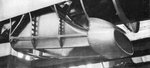
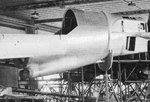
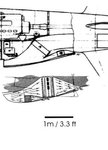
The coolant radiator flaps open about 100 mm during the climb up to 6500 m, which is halfway between what the nominal "Steigflugstellung" is (220mm exit flap area, "climb position") and "Schnellflugstellung" (50mm, "level flight") values are for the radiator.
The temperature remains below or close what is the coolant temperature defined as a maintainable without any time limits. That is, in June, with the radiator flaps being only ~100mm or about 1/4 open, or half as much than what Messerschmitt defined them to be required for climbing (220 mm).
Kokko, the Finnish test pilot, said nothing else that the flaps were opened fully first time at 2500m, but that doesn't mean that they were closed up to there.
Of course is it does, its how it is supposed to work in the first place, the external temperature was rather cold as you notice, plus it is difficult to miss the very high climb rate of tested MT 215 in the first 2500 meters, above which it is, however very similiar to other G-2 curves at 1.3ata.
The only reasonable explanation I can think of is that the drag was much less with the radiator flaps so closed in the initial climb.
On DB complains, the info is from Mankau's and Petrick's 110/210/410 book, p. 124, date 7 Sept 43, complains were made by Direktor Nallinger.
Again, it was a case when DB was fingerpointing at the airframe manufacturer when the DB 605 was not working properly in
any manufacturers installation - be it Heinkel or Messerschmitt.
Messerschmitt certainly did not change anything about the installation of the engine, the engine all the sudden become magically fixed when DB finally installed a proper oil de-aerator in the engine..so what validity was there in Nallinger's accusations in the first place, when he was blaming it on Mtt AG?
Don't be ridiculous claiming that the cooling capacity was not sufficient, after having seen a the actual curves showing that the coolant temperatures
steadily remain some 30 degrees below the maximum permissible...