That report is one of many which created the postwar legend of the P-40. The USAAF hated the P-40 as you say almost from the beginning of the war. As soon as they learned that enemy planes flew higher and faster, and even more so once the "Bomber Mafia" achieved ascendancy in the service, and Curtiss Aircraft screwed up again and again, they were no longer in favor and neither was the Hawk family of fighters any more. The legend that the P-40 was a 'dud' was firmly in place by 1943 and was heavily reinforced in the postwar Truman Commission hearings when Curtis Aircraft was being investigated.
But lets review the history of how this has evolved for a moment.
The Trope about the p-40 that it was "slow and unmaneuverable" but "rugged and cheap" was created in memos like that. I believed it too, the only exception to the rule in fact was the AVG legend which had it's own inertia. But the two stories dovetailed. The latter made the plane popular (along with it's looks and shark mouth paint) drawing a lot of interest in the fighter which "those in the know" cheerfully debunked. AVG had success, we were told, because the IJA only had Ki 27s to face them.
In 1990 Jeff Ethell reversed his previous opinion in
a now famous video in which he described the P-40 as "a pitts with an Allison" and noted that it was
much more maneuverable than a P-51 (which he compared to a block of cement in comparison). Up to that point, and for long after it was still conventional wisdom from "experts" that P-40's were sluggish and unmaneuverable.
I think the actual truth is somewhere between the two extremes.
For example I have never seen any evidence of the part of the trope that says the P-40 was
designed for low altitude and/or ground attack.
There is plenty of circumstantial evidence to the contrary. like the fact that the Army had switched to air cooled engines on all it's purpose built attack planes back in the early 30s and later the A-36 was the only Army plane with an Attack designation to see production (and that was a trick to get around a funding restriction).
Also the fact that armament of the initial P-40 prototype was rather unsuited to ground attack, standard army ground attack planes in the 1930s carried four .30 cal guns for strafing, two synchronized .50 cal guns with just 200rpg (on the prototype) is not very good for strafing. Bomb load is iffy, some sources (most) say none and some say up to six 20lb bombs which is laughable considering the bomb loads of the P-26 Peashooter and the P-35. Army went backwards in it's "ground attack" fighter?
3rd fact. The XP-40 (and all the long nose P-40s) were fitted with the highest altitude engine Allison had in production at the time, over 1000 P-40s being built before the 3rd YP-38 is built so there is no ready to go turbo installation (and early P-38s, B-17s and P-43s had plenty of trouble with the turbo installation).
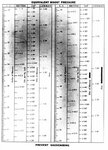
AS to maneuverability. The P-36 was noted as being very maneuverable with effective and well coordinated controls. There is no reason to believe that changing the engine should change that to any great degree. Increasing the wing loading will affect stall speed and thus turning ability to some extent but roll response, rudder authority (except what may be needed to counteract long nose) and elevator effectiveness should be pretty close. The is plenty of anecdotal evidence to suggest the P-40 was as manuravable as plane of it's size and wing loading could be. There are no reports of ineffective alleirons at speed ( at least not to the extent that some other planes have. ) See
http://www.wwiiaircraftperformance.org/naca868-rollchart.jpg
Which shows the P-40F (and there is no reason to believe the other P-40s were much different as there is little or no mention of changes to the Ailerons between models) was among the better rolling aircraft. The chart does have few flaws or lapses like the Spitfire as with the Spitfire to cover ALL models you would need at least 4 curves and not 2. I am guessing that the Spitfire "normal wing" is with the metal ailerons and not the earlier fabric covered ones.
However "maneuverability" or sluggishness can cover a range of altitudes or conditions, so pilots comments are both subjective and often not well detailed.
The P-40 was actually pretty sleek (as were the P-39 and Allison P-51s) and could go as fast or faster than some other aircraft (SPitfires and 109s ) on the same power while weighing hundreds if not over a thousand pounds more. The problem starts coming in once you are several thousand feet above the critical altitude of the engine (FTH). The American planes are still fast but any maneuver is going to bleed off speed ( it will bleed pretty much the same speed of any opponent doing the same thing.) ANd once speed has bled off it takes the heavier American planes longer to recover the speed, or in some cases due to lower power weight ratios the engine cannot enough extra energy to the plane to keep from losing speed faster than another plane in the same maneuver and winding up slower at the end of the maneuver even if starting at the same or similar speed.
Rate of climb is a good (but not perfect) indicator of the excess energy available for maneuvering at a given altitude.
A pilot trying to intercept Japanese bombers at over 20,000ft may complain that his P-40 was sluggish or didn't maneuver well, but what is he really saying? The plane may eventually reach a high level speed but an 8000lb plane with only 700-750hp available may not accelerate like a 6000lb plane with the same amount of power.
the lighter plane may be able to perform a gentile turn (under 2 Gs) without losing speed or altitude that the P-40 cannot follow. Or the lighter plane can turn and climb at the same time and the P-40 can either turn or climb at the same speed but not both.
Now please note the P-40 may be able to trade speed for a high turn rate for limited amount of time and get into a position to fire or break from a plane on his tail but at teh cost of having to either dive to regain speed or fly straight and level while he builds speed up again.
A P-40 at low altitude (lets say under 5000 where it can really use the over boost) may have a power to weight advantage over some other planes or opponents despite the extra weight and may be able to turn with them without losing speed as the engine at 1400-1500hp may be able to replace the energy used up in the turning maneuver. Our low altitude pilot may read the comment of the high altitude pilot and, having never tried to fight at 22-25,000ft in the P-40 may think the high altitude pilot has rocks in his head.
An F4F was slower than a P-40 but once you get several thousand feet above 20,000ft the F4F had more power despite similar weight and higher drag. It's relative performance to the P-40 changed from the lower altitudes.
This was the advantage of P-40F vs the E or the K. Hundreds more HP at 20,000ft and above in a similar weight/drag airplane allowed not only better speed but the ability to maneuver without losing as much speed, It allowed the P-40F to fight at the higher altitudes and stay there vs having to dive away to regain speed/energy.
As to the Bomber mafia this may be another trope. The Army had only ordered 38 B-17s in all of 1939 (when they ordered over 500 P-40s) and only ordered another 42 B-17Ds in early 1940 and ordered the B-17E in Aug of 1940. First B-17E flew in Sept of 1941 which is after the prototype P-40F with Merlin engine (Supplied by the British as Packard was not yet in production).
At this stage of aviation technology (100/100 fuel for one thing) there was no possibility of a single engine fighter being able to escort the B-17 to the reaches of it's range. These early B-17s being rated to carry 4000lbs of bombs over 2400 miles.
Disliking the P-40 because it could not escort the B-17 seems a bit much as nothing the army even had on the drawing boards (let alone in prototype form) could perform the escort mission.
Please remember that in 1940 there was only 1 YP-38 and while it could carry 400 gallons internal for it's two engines (no self sealing tanks) it wasn't planned or plumbed for drop tanks. Therefor no possibility of escorting B-17s even as escorting was understood in 1940.
yes there is plenty of misinformation about the P-40 in print and on the web.
I would say the Army didn't hate the P-40 in the beginning but rather viewed it as an interim fighter to bridge the gap while they developed the planes they really wanted (even if they didn't really know what they were yet) See , P-43--P-44--P47 saga and see P-47A vs P-47B. they were still holding out hope that they could power something with the Continental IV-1430