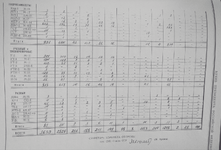
Soviet aircraft park c. 1 October 1940

Ad: This forum contains affiliate links to products on Amazon and eBay. More information in Terms and rules

FulmenTheFinn

Airman 1st Class
104
290
Dec 9, 2023
Finland
Recently I posted this. I made an updated, more detailed version of the table and figured it deserved a thread of its own, so here it is:


View: https://docs.google.com/spreadsheets/d/1EU9r54aq2ILdztUfU-ks5r0Zo99QIFloNR2GbyBQ_BA/edit?usp=sharing

EDIT: Best viewed directly through the link so that the frozen top bar drags down when scrolling as intended (it doesn't work when viewing the table through here).

Should I colour-code it like I did the previous table (see the initial hyperlink in the post)? Should I separate the Navy's aircraft into a separate spreadsheet? I'm open to feedback. The tables are based on these primary source documents:
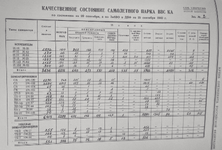
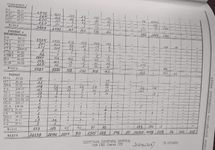
1768584052271.png1768584076562.png1768584103433.png1768584125356.png

They are from V. S. Mikhailov's & D. A. Morozov's 2003 Voyenno-vozdushnyye sily Rossii. Neizvestnyye dokumenty (1931-1967) g.g. [Russian Air Force: Unknown Documents (1931-1967)], which is a very interesting but rare book (only some 500 copies were printed, IIRC) that is full of photos of primary source documents on the Soviet Air Force.

The tables cover the Red Army and Navy, but evidently do not cover aircraft assigned to the Osoaviakhim, nor likely the NKVD, GvF, and I'm not sure if the PVO is included either. I am particularly interested in similar tables, or even just numbers, on aircraft assigned to these latter organs around the same time, or alternatively just before Barbarossa in June 1941. I invite particularly those capable of digging through Russian sources to provide any information on this topic, which I welcome with gratitude.

The idea is to eventually get a comprehensive look at all the aircraft in the USSR around this time, and then on the eve of Barbarossa as well. Eventually I'll also get rid of the "miscellaneous" category carried over from the primary source documents by moving the aircraft in it to the other categories.

Finally, if there are any mistranslations, particularly with the armament side of the tables, feel free to point them out.
 
Last edited:
Recently I posted this. I made an updated, more detailed version of the table and figured it deserved a thread of its own, so here it is:


View: https://docs.google.com/spreadsheets/d/1EU9r54aq2ILdztUfU-ks5r0Zo99QIFloNR2GbyBQ_BA/edit?usp=sharing

EDIT: Best viewed directly through the link so that the frozen top bar drags down when scrolling as intended (it doesn't work when viewing the table through here).

Should I colour-code it like I did the previous table (see the initial hyperlink in the post)? Should I separate the Navy's aircraft into a separate spreadsheet? I'm open to feedback. The tables are based on these primary source documents:
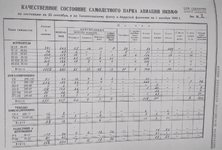
View attachment 864114View attachment 864115View attachment 864116View attachment 864117

They are from V. S. Mikhailov's & D. A. Morozov's 2003 Voyenno-vozdushnyye sily Rossii. Neizvestnyye dokumenty (1931-1967) g.g. [Russian Air Force: Unknown Documents (1931-1967)], which is a very interesting but rare book (only some 500 copies were printed, IIRC) that is full of photos of primary source documents on the Soviet Air Force.

The tables cover the Red Army and Navy, but evidently do not cover aircraft assigned to the Osoaviakhim, nor likely the NKVD, GvF, and I'm not sure if the PVO is included either. I am particularly interested in similar tables, or even just numbers, on aircraft assigned to these latter organs around the same time, or alternatively just before Barbarossa in June 1941. I invite particularly those capable of digging through Russian sources to provide any information on this topic, which I welcome with gratitude.

The idea is to eventually get a comprehensive look at all the aircraft in the USSR around this time, and then on the eve of Barbarossa as well. Eventually I'll also get rid of the "miscellaneous" category carried over from the primary source documents by moving the aircraft in it to the other categories.

Finally, if there are any mistranslations, particularly with the armament side of the tables, feel free to point them out.

Great source, thank you! The book is available through interlibrary loan, at least in some EU countries. I will definitely order it in the near future.
As I expected, the proportion of early I-16s with M-25 engines remained very high - well over 50%. The production rate of the I-153 is impressive. It is quite amusing to read Soviet sources where aircraft launched into production in 1939 and even in 1940 are referred to as "obsolete types". One more thing - I wanna point out again that neither SB-2 nor SB-2bis nor SB-2M designations existed, which is confirmed by this document.
 
Thanks a lot. Armament section is very interesting.
The number of cannon armed I-153s was always a mystery for me.

Some DB-3/3F are in the Dive bombers column. Torpedo bombers, probably?
 
It should be noted the documents cover aircraft located in Siberia and Far East, including naval units in the same areas, not in the European regions of the USSR.
Best regards,
Yavor
 
It should be noted the documents cover aircraft located in Siberia and Far East, including naval units in the same areas, not in the European regions of the USSR.
Best regards,
Yavor

The documents cover VVS KA and VMF aircraft in the entire USSR. You're confusing the titles about the dates being different for a few areas and units with something that they're not.
 
They are from V. S. Mikhailov's & D. A. Morozov's 2003 Voyenno-vozdushnyye sily Rossii. Neizvestnyye dokumenty (1931-1967) g.g. [Russian Air Force: Unknown Documents (1931-1967)], which is a very interesting but rare book (only some 500 copies were printed, IIRC) that is full of photos of primary source documents on the Soviet Air Force.
I would also like to note an interesting figure: according to this document, 71 SBs were equipped with RS launchers (more precisely, RS-132) - this figure was not even mentioned in the books by Mikhail Maslov, he only indicated that the total number of such aircraft was less than 100.
It is curious that one naval DB-3 is listed as the RS carrier - perhaps the one on which the first Soviet cruise missile ("804" based on the 203-mm RS) was tested in 1940.
 
Some DB-3/3F are in the Dive bombers column. Torpedo bombers, probably?
No, that's absolutely correct. Vladimir Kotelnikov wrote in detail about the use of DB-3s as dive bombers. A special air regiment (the 85th) was even created, but it was disbanded already in 1940. The use of DB-3s as dive bombers was considered ineffective, but a number of aircraft had already been equipped for dive bombing - they were to be used for training purposes.
 
No, that's absolutely correct. Vladimir Kotelnikov wrote in detail about the use of DB-3s as dive bombers. A special air regiment (the 85th) was even created, but it was disbanded already in 1940. The use of DB-3s as dive bombers was considered ineffective, but a number of aircraft had already been equipped for dive bombing - they were to be used for training purposes.

Did the SB and DB aircraft (some of both are marked as dive bombers) feature any dive breaks, or are we talking of shallower dive-bombing here?

Another question, do you know if the VVS tried out dive-bombing in the Winter War, particularly with twin-engine aircraft?
 
Did the SB and DB aircraft (some of both are marked as dive bombers) feature any dive breaks, or are we talking of shallower dive-bombing here?

Another question, do you know if the VVS tried out dive-bombing in the Winter War, particularly with twin-engine aircraft?
I can only refer to the books by Kotelnikov and Maslov.
Neither the DB-3 nor the SB were equipped with dive brakes; only external bomb racks were installed on them, and on the SB, a special "parallel-motion" bomb rack PB-3 was installed; the engine cowlings of the "diving" DB-3s were always equipped with moving shutters in winter; there were other minor modifications, but they were not directly related to the diving.
Strangely enough, the DB-3s dove at an angle of up to 85°(!), and the steeper the dive, the easier it was for the pilot to aim the aircraft at the target; at small dive angles, the target was practically invisible. In addition to the aiming problems, there were many others: propeller overspeeding, insufficient structural strength, gasoline spillage from drain pipes and filler necks, and many more minor issues. The situation was even worse with the DB-3F, which also had semi-rigid fuel tanks that flattened, and aiming was even more difficult.
Nevertheless, the DB-3 was used as a dive bomber in the Winter War - the crews of the 85th BAPON (special purpose bomber aviation regiment) made 19 combat sorties with dive bombing, and it is even claimed that the bridge in Savonlinna was blown up - at least, it received two direct hits - precisely from dive bombing (both DB-3s and SBs were used). The memoirs of the commander of the 85th BAPON B.V. Sterligov are the main source on the combat history of the DB-3 and SB dive bombers (published in 1970s).
The DB-3 as a dive bomber remained in service with the Pacific Fleet Air Force until 1943.
Sources:
1768981011831.png

1768981105428.png
 
I can only refer to the books by Kotelnikov and Maslov.
Neither the DB-3 nor the SB were equipped with dive brakes; only external bomb racks were installed on them, and on the SB, a special "parallel-motion" bomb rack PB-3 was installed; the engine cowlings of the "diving" DB-3s were always equipped with moving shutters in winter; there were other minor modifications, but they were not directly related to the diving.
Strangely enough, the DB-3s dove at an angle of up to 85°(!), and the steeper the dive, the easier it was for the pilot to aim the aircraft at the target; at small dive angles, the target was practically invisible. In addition to the aiming problems, there were many others: propeller overspeeding, insufficient structural strength, gasoline spillage from drain pipes and filler necks, and many more minor issues. The situation was even worse with the DB-3F, which also had semi-rigid fuel tanks that flattened, and aiming was even more difficult.
Nevertheless, the DB-3 was used as a dive bomber in the Winter War - the crews of the 85th BAPON (special purpose bomber aviation regiment) made 19 combat sorties with dive bombing, and it is even claimed that the bridge in Savonlinna was blown up - at least, it received two direct hits - precisely from dive bombing (both DB-3s and SBs were used). The memoirs of the commander of the 85th BAPON B.V. Sterligov are the main source on the combat history of the DB-3 and SB dive bombers (published in 1970s).
The DB-3 as a dive bomber remained in service with the Pacific Fleet Air Force until 1943.
Sources:
View attachment 864648
View attachment 864651

Very interesting information, thank you!
 

Users who are viewing this thread

Back