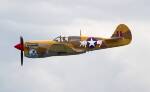
Circling back to the Spitfire for a moment, I would put it like this.
The original very broad Spitfire legend is that it dominated the Bf 109 and won the Battle of Britain. When we drill down a little deeper into the data we find that the early Spit (I and II) was pretty evenly matched with the 109E, but that the 109 suffered a bit more from the Tactical situation of having to fly escort (and sometimes ill conceived close escort) and often near the limits of their operational range, as well as going against an integrated air defense with radar. We also know that Hurricanes shot down most of the German bombers.
Then the Spit V and Bf 109F arrived, with the Fw 190 not long after, and once again the conventional wisdom was that the Spit V was inferior.
The Franz was a major improvement over the Emil. It was far better streamlined, had a significantly more powerful engine, had more ammunition and (arguably) more accurate guns. From what I understand they got the leading edge slats working properly in the F model.
The Spit V was also a big leap forward but it was initially plagued with a number of minor flaws and issues. The guns were prone to jamming and the cannons only had 60 rounds each, and they could sometimes freeze at high altitude. The carb would still flood with a negative G push-over. The Merlin 45 engine though more powerful than the Merlin II or III on the Spit Mk I, was not up to it's full potential. And in the Med they had a lot of problems with the Tropical filters.
When the British started trying to fly provocation raids over the Channel, they were reversing roles and were now the ones facing an integrated air defense. This was a big part of the problem. But initially it's clear the
early Spit V was inferior to the 190 and a bit so compared to the 109F-2
But the Bf 109F and the Spit were both around for a long time. The Franz came out in 1941 but it was still being used at least in the Med all through 1942 and even in 1943. The Spit V lasted even longer, still equipping some units in 1944.
The F went basically from the F-2 to the F-4, improving from a 15mm cannon to a much more deadly 20mm. They improved the engine power by about 100-150 hp.

But the Spit V improved even more. They got the 130 octane fuel and increased the allowed boost, and put in engines with more horsepower - it went from ~ 1,200 hp to routinely up to 1,585 at high boost. Rate of climb and acceleration improved. Dive was faster because there was no carb cutout with the Bendix carb. They fixed most of the problems with the air filter. They replaced the drum based cannon with belt fed cannon that gave twice as much ammunition and reduced the tendency to jam. They improved heating systems to keep the guns from freezing. They made specialized LF and HF versions. And they improved their tactics - it took a while to start using the finger four / pairs system in the MTO for whatever reason, even though it was already done in the BoB, but once they were doing that and a lot of other things in the Med, it made a difference. They got better and more reliable radios.


A Spitfire LF Mk Vc with a Merlin 50 or 50M, (let alone a 55M though those came later) was a pretty dangerous aircraft and definitely could hold it's own anything the Axis had in the MTO Theater. The IX was still better, but the late model Vc was clearly on par with an MC 202 or the 109F-4 and didn't seem too bothered going up against a 109G-2 or G-4 either.
I would argue that the P-40 history in the Med was kind of similar. The Tomahawk arrived and brought success to the DAF. It was dominant over the G.50, MC 200 and Bf 110, and could hold it's own with the 109E. It's arrival hurried the replacement of the 109E with the F. The F was superior to the early P-40s (both Tomahawk and Kittyhawk) and took a heavy toll from winter of 41/42 through the first few months of 42. The early Kittyhawk had a 1,050 hp engine and many of the same problems as the Spit - wing guns jamming, engine running below full potential, bad tactics and so on.

But the British, Australians, South Africans and Americans flying the P-40 got the new high octane gas and started increasing the boost. They adopted pairs and formation tactics. Curtiss made improvements to the guns which reduced jamming, and lengthened the fuselage to improve high speed stability. The newer V-1710-73 Allison Engines could go up to 1550+ HP down low, and the V-1650 Packard-Merlin engined variants were good for 1,350-1,400 hp and raised the performance ceiling by 8,000 ft. That is when the tide started to change with those units as well.