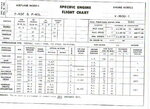
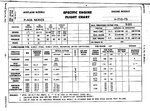
Problems with the P-40 are the large amount of weight they were trying to lift (when climbing) with 1150hp or less.
Standard US procedure was to use military power for the first 5 minutes of the climb (42-44in in the case of the P-40s and the full 3000rpm)
British and Australian testing may do the P-40 a disservice if they use the 2600rpm and lower boost for the entire climb.
Both countries used a 5 minute full power rating (or sometimes 3 for the British) but the British then dropped to a 30 minute rating (and used that for all climbing tests) while the Americans didn't use that time period at all, the Americans dropped to either a one hour rating or (same rating different name) max continuous which was good for as long as the fuel lasted or a temperature gauge went into the red. The British/Australian climb tests are using the max continuous rating which for the Allison In the P-40 was about 1000hp.
The P-40 would have climbed very well indeed had the supercharger been able to supply 60in (or even 56in) for more than a minute or two when climbing.
The 60 in limit on the P-40 K was all done at 2500ft no RAM or a bit over 3000ft when at climb speed. High speed level flight was good for a bit higher.
The 56in limit was good for for 4300ft NO RAM. there is little or no difference between the superchargers on an E or a K. When Climbing the the K could have had 60in at sea level (on a standard day) and held it to around 3000ft but then the pressure would decline until at something over 4300ft the pressure was down to 56in as the plane continued to climb (far into the 2nd minute or start of the 3rd?) the pressure in the manifold would continue to drop as the supercharger just cannot supply anymore air at an engine speed of 3000rpm, Until you hit the high 11s or low 12s ft at which point the supercharger, with wide open throttle is supplying 42in in the case of the K. again, sources are all over the place depending on exact manifold and backfire screens.
All true - and they wouldn't normally try to climb at high power anyway because it's very wasteful of fuel. But if for example they had to scramble to deal with an inbound attack, or if they were already flying, in combat, and needed to climb up to engage an enemy they would indeed use boost and in your scenario described above, they would still be for the first 3 minutes of a climb from sea level up to 10,000 ft at 60" down to 56" boost which is still way above what was recorded in any of those tests. After that it falls down to more or less the same as in the tests (not very good), but that is why a P-40E or K was basically a low to medium altitude aircraft. If the fight wasn't going well at 15,000 or 20,000 ft they could drop down to 8,000 or so in less than a minute.
The P-40F or L as you can see in my previous post was able to make 61" boost certainly up to 12,000 ft., and as you can see here on the P-40N ...
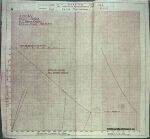
http://www.wwiiaircraftperformance.org/P-40/A29-412-climb-WEP.jpg
...climb at (57") WEP started at over 3,100 ft per minute, got up to about 3,370 (at 6,800 ft) and was still pretty decent at 15,000 ft (2300), up to about 18,000' where falls below 2,000 fpm.
Of course, that is at the maximum steepest climb rate at 150 mph, which is not going to happen around enemy aircraft, so realistically they would be zoom climbing or doing a high speed climb, but the extra power would help regardless.
For speed it gives a WEP full throttle height of 9200' for the P-40N and still some power all the way up to about 20 or 22,000
There was no real change in the radiator or oil cooler but the engine in the K used mixed water/glycol cooling instead of pure glycol like the engine in the E. This gave a better heat transfer and coped with the increase heat load.
That's interesting I wasn't aware of that.