
Starting a Hurricane (2 Viewers)

Zurger6

Recruit
4
1
Joined
Sep 7, 2013
I know, dash over to the kite, leap in and light the fires.
I understand during the Battle of Britain, at the beginning of a scramble, while pilots were running to the aircraft and pulling on parachutes, often ground crews were starting the fighters' engines. After an airman started the engine and it was running at idle, how would he and the pilot exchange places while maintaining control of the elevator? If the control column was allowed to move forward there seems to have been a risk of nose-over, 'not ideal' when the ground crew was all at work around the aircraft.
Can anyone suggest how this might have worked in practice?

Cheers.
[Photo from
View: https://www.facebook.com/groups/1752468978180537/posts/3962330593861020/%5D
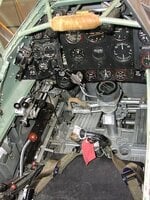
 

Attachments

  • Hurricane Cockpit.jpg
    Hurricane Cockpit.jpg
    63.5 KB · Views: 1
You are correct, the changing-over of anyone in a single seat cockpit with the engine running is fraught with possible risk. However, with care, it is not actually that risky and the procedure was done on both Allied and Axis fighters in WW2. The described "problem" with releasing the stick and nosing-over is overstated. At full-Idle, the engine was slowly ticking-over at less than 500rpm (prop about 250rpm) and there was little risk unless there was a strong tailwind and in which case, the aircraft should have been pointed into-wind for starting.
For many short notice Alert states, the units would be at Cockpit-readiness with the Pilots strapped-in. However, if scrambled from a lower Alert state, it was worthwhile for the groundcrew to start the engines as the Pilots made haste to their aircraft.
Of course, in a less than War scenario, such procedures were not usually used.

Cheers

Eng
 
Okay, I like the answer. There's no risk of nose-over at idle. But as you say still a little dodgy. For instance if someone hits the throttle with his knee in the rush to get off in two minutes it's an accident.
I can go with that. Many thanks Eng.
Z
 
Hurricane Pilot's notes allow engine to be started and rev'd up to 1000 RPM for warm up. Above that, 2 men are to sit on the tail for run up tests.

View attachment 898922

View attachment 898923

Interesting Hurricane info. I am interested about what the Hurricane notes say about the normal pre Take-off Magneto checks? The extract you show lists the "comprehensive" engine testing with "two men on the tail".
For comparison, the Spitfire Mk IX, XI and XVI Pilot's notes include normal Magneto checks at Zero Boost (about 900bhp) with no caveat about men on the tail. However, for checks at higher power above Zero Boost it lists the requirement for the tail to be "securely lashed down".

Cheers

Eng
 
Last edited:
Okay, I like the answer. There's no risk of nose-over at idle. But as you say still a little dodgy. For instance if someone hits the throttle with his knee in the rush to get off in two minutes it's an accident.
I can go with that. Many thanks Eng.
Z

Yes, there are many pitfalls with a rushed cockpit strap-in, even without the engine running. However, after some experience, professional Pilots become well practiced at being aware of their job and also the groundcrews, good crew take great care as the Pilot gets in, keeping straps and equipment in the right place and ensuring the process is done efficiently.
I think it is worth noting that I do not recall any incident of aircraft being tipped on their noses during scramble crew-in? However, there were no doubt many scramble crew-ins where
straps were miss-routed, mic-tel unconnected, oxygen unconnected or left off and cockpit switches miss-set etc ! Also, a few tales of groundcrew being taken flying on the tailplane!

Eng
 

Users who are viewing this thread

Back