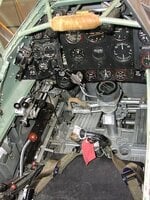
I know, dash over to the kite, leap in and light the fires.
I understand during the Battle of Britain, at the beginning of a scramble, while pilots were running to the aircraft and pulling on parachutes, often ground crews were starting the fighters' engines. After an airman started the engine and it was running at idle, how would he and the pilot exchange places while maintaining control of the elevator? If the control column was allowed to move forward there seems to have been a risk of nose-over, 'not ideal' when the ground crew was all at work around the aircraft.
Can anyone suggest how this might have worked in practice?
Cheers.
[Photo from
View: https://www.facebook.com/groups/1752468978180537/posts/3962330593861020/%5D
I understand during the Battle of Britain, at the beginning of a scramble, while pilots were running to the aircraft and pulling on parachutes, often ground crews were starting the fighters' engines. After an airman started the engine and it was running at idle, how would he and the pilot exchange places while maintaining control of the elevator? If the control column was allowed to move forward there seems to have been a risk of nose-over, 'not ideal' when the ground crew was all at work around the aircraft.
Can anyone suggest how this might have worked in practice?
Cheers.
[Photo from
View: https://www.facebook.com/groups/1752468978180537/posts/3962330593861020/%5D