Well, you are actually making my larger point - which I've been trying to illuminate in this and several other threads on here: namely that different fighters excelled in different Theaters, therefore the same set of traits did not universally make a fighter superior; and second that among those traits high altitude performance wasn't necessarily the most important thing in every Theater.
Thus Soviet fighters did not need two stage superchargers - it would be nice to have, but when most combat is below 15,000 ft and quite a bit below 5,000 ft, it's not the most important thing - and worth sacrificing when limits for weight and size were strict. This is probably one reason why the P-39 did so well there., P-40s also did quite well where the fighting was mostly down low. In the MTO it was a mix of high, medium and low altitude though the bulk of the fighting was at medium (10-20k) and low altitude (below 10K). Same in the PTO. In China and Burma it was more low altitude in most engagements.
Hello Schweik,
What I was saying was that the P-40 often wasn't facing first quality opposition which is one reason it might have done so well. There are many restrictive environments in which one set of performance qualities are favored. In a tight space even Romanian IAR 80 fighters were a match for first line US fighters, but that doesn't mean they were particularly good aircraft.
I could be wrong but my understanding is that the 7.7mm mg (only) armed Ki-43s only fought in China and in the earliest engagements in the Pacific (mostly against Brewster F2A and Hurricanes). The standard was quickly adjusted to add at least one 12.7mm HMG. Still quite light armament but the Ki-43 made up for that with other excellent characteristics of what you might call hyper-maneuverability, excellent climb, good diving traits and relatively high combat speed especially at lower altitudes. Anyway it made short work for example of very heavily armed Hurricane IIC.
There was a pretty good debate going on at J-Aircraft about what kinds of armament were actually installed in the Ki-43-II. The issue was really a choice of a very low rate of fire for a 12.7 mm gun or a decent rate of fire by replacing one of the 12.7 HMG with a 7.7 Vickers. Either way, it wasn't a lot of firepower.
Regarding killing Hurricanes, I suspect that might again be a bad tactics thing. Hurricane loses in an agility contest against Hayabusa.
The Spitfire through Mk VB, the Bf 109E series and quite a few other early cannon-armed fighters were also restricted to 60 rounds. Much better once they changed to belt-fed systems instead of drums but apparently with 60 rounds you could do damage.
I see that Shortround6 already addressed this, but here is another viewpoint:
The Spitfire Mk.VB still had 4 x .303 cal LMG even without the cannon. The 109E probably WAS too lightly armed but note that the successor replaced the two wing guns with a motor cannon with more ammunition and this was at about the same time as the introduction of the A6M2 and Ki-43-I.
Another factor to consider is that the "loiter time" of the A6M2 is much higher than either of the European fighters. Over the carriers at Midway for example, the description I had read was that after the first engagement, the combat air patrol was left to defend with just machine guns. Another book about the A6M made comments that for the first years of the war, the vast majority of kills were made with the machine guns.
Show me a video where a liquid cooled engine takes a hit from 2 or 3 HMG rounds and keeps running. I'm not saying it's impossible, but I don't think it was very common. In combat one round that holed a radiator or caused an oil leak could and usually did cause the rapid or gradual death of the engine.
Since when were we limiting this to liquid cooled engines? We already know about various R-2800 coming home with missing cylinders.
The specific video I was thinking of is of an automobile that was modified for radio control and shot at with a BMG. It eventually was destroyed of course, but took quite a few more hits all over than I would have expected. There is also a couple commercial videos (I believe one of them is by Dillon Precision) which shows similar things.
I don't remember dismissing them quite so categorically, but certainly the 12.7mm guns were considered the main armament by the pilots. Sometimes they removed wing guns in the field, sometimes they did not, you can see plenty of photos in Shores MAW showing the wing guns. It depended on the unit, the mission, and sometimes the individual pilot.
Keep in mind that the first factory equipped version of Folgore with wing guns did not get produced until May 1942.
Multiple sources have claimed that the majority of the operational C.202 did not carry wing guns for weight and handling reasons.
As to whether the MC.202 had too little firepower, it is essentially ridiculous. You can't simultaneously argue (as German pilots themselves did, as did their opponents) that the Bf109F-2 was a superb fighter and the MC.202 was inferior because it was underarmed. You might, by wiggling and twisting, make a case that the single MG-151-15 hit harder than two Breda 12.7mm, but it's certainly not a decisive or major difference, it was at best a slight difference, and at the same time the MC.202 had slightly better wing loading, climb and even speed than the 109F so it probably evened out. Both MC.202 and Bf 109F had a design philosophy that prioritized performance and agility over firepower. No one aircraft can be everything.
Schweik, We have been to the same point over and over again. You call it wiggling. I call it stating the facts.
Before going a whole lot further, I suggest you do a little background research on the Breda 12.7 x 81 mm HMG. In the field of HMGs, this is one of the weaker guns. It only has about 2/3 the muzzle energy of a Browning M2.
The German MG 151/15 is really borderline HMG / Light Cannon. Besides the faster and heavier shell, it is carrying (according to Shortround6 3.5X the explosive charge).
The Me 109F-2 is also carrying two additional 7.92 mm MG 17 are not matched by anything the typical C.202 was carrying.
Wing guns might have gotten things a little closer, but most of the C.202 did not fly with them.
Now when we get to the 109F-4, we are matching a MG 151/20 against the two Breda 12.7 mm and it isn't even close to even.
I am very curious as to how you came to the conclusion that the Folgore was faster, climbed faster, etc.
From what I have been able to find, the F-2 has on the low end, about the same level speed and on the high end is about 15 MPH faster than Folgore. The F-4 is from 15-20 MPH faster.
As for wing loading, Folgore without wing guns is 2930 KG, with wing guns we get 3069 KG. Wing Area is 16.80 M^2
For the Me 109F-4, loaded weight is 2980 KG and wing area is 16.20 M^2.
I don't have data for the Me 109F-2 handy, but for the Me 109F-1, weight is listed as 2750 KG loaded.
Thus there isn't any significant wing loading advantage for the Folgore. Where did you get this idea?
You have spoke before of a flying / fighting culture among the Japanese and the Soviets. The Italians had their own as well of course. They liked agility, performance and precision. They wanted to keep their significant altitude and climb advantages for the MC.202 which is why they didn't load it down with guns. They could have armed it like a Hawker Hurricane but then it would have been as slow and lumbering as a Hurricane. Italian pilots were trained in complex and nimble acrobatic techniques (commented on, sometimes with a hint of derision, quite a bit by the Germans and British) which required high agility, hence some pilots removed the wing guns, which in turn could depend on the mission. If they were sending them to shoot down B-24s more guns are better. To duel with Spitfires or Kittyhawk IIs, probably less is more.
You are quite imaginative here but not really in agreement with the historical development of Folgore and Veltro.
Very early on, there was recognition that armament was too light. Heck, they were carrying the same two 12.7 mm HMG that some of the old Fiat CR.32 biplanes were!
There were attempts to add MG 151/20 cannon (!) in underwing gondolas very early in the production of the Folgore. There were only a total of 5 aircraft built to this standard because poor performance and eventually they were converted to the Veltro standard.
The 2 x 7.7 Breda MG were also tried but didn't become a production standard until May 1942 which was almost a year after service introduction of the type. In service, pilots usually had the guns removed because they represented 300 pounds of extra weight for no great additional firepower, so they were back to CR.32 armament.
It took another year to get a proper cannon armed fighter in the Serie III Veltro.
As for Altitude and Climb advantage, the specifications don't really show any significant advantage for either aircraft.
I do believe that with added engine power and armament (beyond what the C.205 got) the Folgore / Veltro was probably the airframe with better development potential, but at the stage that it reached with C.202 versus Me 109F, my belief is that the 109F had the advantage.
As for tailoring the armament to the mission, how long do you think it would take to completely remove and install wing mounted MG and ammunition feeds and replace fairings to block off the openings? Keep in mind that you also need to harmonize the guns. Is this the kind of thing that you would ask your ground crew to do once you hear that there is an incoming bomber attack? Oops, there are escorting fighters, "Hurry, pull the guns back out!!!" Really??
Well I've shown you that is incorrect.
I don't think you are even reading your own post. I stated average of 30-70 Folgore in North Africa in 1942.
Your one data point that "didn't match" showed 55 Folgore by your count. Seems in agreement to me.
I don't think that is accurate because of the record of the fighter. It was not a generation behind, in some ways it was extremely sophisticated. It was excellent in combat, it's record was among the best in WW2, but it turned out to be not so great for attrition warfare.
In what way do you think Hayabusa was that sophisticated?
It certainly was agile and easy to fly and that was probably the best that could be said about it.
What characteristics do you believe made it "excellent in combat" but "not so good for attrition warfare"?
The ShVak was not normally used synchronized on the Yak series.
It was ALWAYS used synchronized in the Lavochkin radial engine fighters.
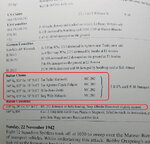
Claims
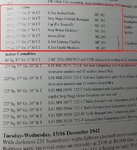
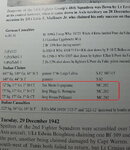
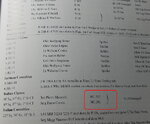
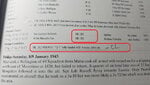
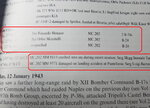
182 x MC.202 made claims (on roughly 45 out of 62 days)
5 x MC.200 made claims (mostly against Liberators... on 3 days)
4 x CR.42 made claims (on 3 days)
Losses
36 x MC.202 shot down or damaged
14 x CR.42 shot down or damaged
2 x MC.200 shot down or damaged
(no G.50)
By my count, that is 18 Folgore shot down over two months versus 16 other types shot down.
As you commented, Commando raids and bombing victims really don't count the same.
That doesn't sound like a great loss of aircraft over two months for the numbers involved.
Just out of curiosity, how do the Italian claims stack up against actual Allied aircraft losses during this time?
As recently discussed in the Burma thread, from what I gather Hurricane pilots were having trouble with Japanese Ki-43s right until the end. A well flown Ki-43 could also shoot down other more modern Allied fighters. The general trend though in 1944-45 was for poorly trained replacement pilots on the Axis side, vs. fairly well trained and well-led pilots on the Allied side. My opinion on the Ki-43 from reading a lot of operational history in the CBI and PTO, is that they were armed well enough against other fighters or early war light bombers (Blenheims, TBD Devastators, TBF Avenger), their problem was that when faced with more heavily armed bombers like A-20s, B-25s and especially any US 4 engine bombers, or against planes like Beaufighters. They did not have enough hitting power to take those down.
First of all, the Ki-43 that was being produced "at the end" wasn't really quite the same beast as it was earlier. It gained a bit more engine power than the A6M did even though it used basically the same engine.
It would have been faster that the Hurricane though it still wasn't particularly fast.
The interesting thing about the armament of Ki-43 is that its armament was almost exactly the same as that for a Folgore without wing guns.
The A6M3 had 100 rounds per 20mm, & by the time you get to the A6M5c they were quite well armed- two x 20mm plus three x 13mm. Of course they came out very late. Should have been standard by say early 1943.
A6M3 armament had a few variations with the later production Model 22s being the most advanced. Some probably got the 100 round magazines, but late Nakajima production A6M2 also got those.
As for the A6M5c, even the first model of the A6M5 had not yet been developed by early 1943.
Engine power did not increase, so with the extra guns, this model was definitely getting too heavy.
- Ivan.