Wingtip Tow

Ad: This forum contains affiliate links to products on Amazon and eBay. More information in Terms and rules

MIflyer

Captain
8,248
18,089
May 30, 2011
Cape Canaveral
I think that this experiment has already been mentioned here, but I found an article about the program that shows how it was began with a C-47 and a PQ-14. The PQ-14 was a wooden aircraft built by the Culver company as a radio controlled target drone that had the unique capability to be flown by a pilot on board. The article was written by none other than Col Bud Anderson and was published by Aerophile in 1980. I can post the entire article if anyone thinks it is appropriate.

WingtipTowCROP4.jpg
WingtipTowCROP5.jpg
WingtipTow_Crop2.jpg
 
The previous discussion

 
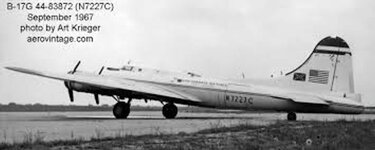
Only Culvers I have seen were painted red, but I think that was postwar. I recall an article where the USAF decided to test a modification of the PQ-14 designed to detect rounds that came near but missed. They brought it down to Eglin AFB from WPAFB together with its drone controller B-17. They had a F-80 make a firing pass at it so they could see what the data looked like. Unfortunately the pilot selected was VERY experienced at gunnery and despite the very short nature of the burst he fired, every round hit the PQ-14, which went down. The guys from Wright Patt just flew home without stopping.

I would have loved to have gotten a PQ-14 to restore but actually flying an 80 year old airplane that was designed not to last very long probably would have been a bad idea.

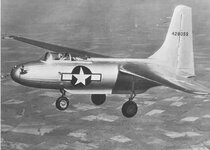
Picture below from USAF Museum. Sure looks like a real hot rod, huh?

Screenshot 2025-02-20 at 15-13-30 Culver PQ-14B National Museum of the United States Air Force...png
 
Last edited:
I would have loved to have gotten a PQ-14 to restore but actually flying an 80 year old airplane that was designed not to last very long probably would have been a bad idea.

Picture below from USAF Museum. Sure looks like a real hot rod, huh?

View attachment 818761
I've had similar thoughts about this plane. I'm thinking it was probably very well built.
 
The Culver line of low elliptical wing, two seat sport planes were designed by the energetic Al Mooney, before he formed the company under his name. It was a tail dragger, with a 130 mph cruise on 75-85hp, leaving Cubs and T-craft in its dust. With the war intervening, it was given more stable tri-gear and turned into a target drone.

The PQ-14s were available on the surplus market for a fraction of the liaison Cubs, Aeroncas, etc. mostly due to the single seat. A number of schools used them as post solo craft for students to build flight time in. I had a handful of time in them, often rented for $5-8/hr. wet!
OK ... True confessions. This was the first plane I crashed.
Being about 16 in the late '50s, with many hundreds of hours of glider, CAP lightplane and WWII PT/BT/AT time, I was convinced I was the equivalent of Smilin' Jack ... able to fly anything. A guy had bought a Culver drone, and spent months lavishing time rebuilding it in his San Antonio garage. It was beautiful, and he'd only flown a Tri-Champ, he was wary of it, and asked me to test hop it.
All was excellent, and it jumped up, and responded well to a good sequence of test maneuvers. I made a few sporty passes to show off before settling into the grass strip. It was a little rough, not a factor as I landed on the mains, keep the nose up until the speed bled off, and let the nose settle ... then it went all to hell!
The forged fork snapped right at the strut; the strut dug in, and the engine broke free along with the firewall, rolling under the plane. The harness and seat pulled out, and with the firewall and panel gone, I found myself skidding across the turf on my butt and back ... fortunately, I was wearing my treasured leather jacket.
The field paralleled a rural road, and some oil workers were passing in a jeep. Seeing the landing disappear into a cloud of dust, they drove through the barbed wire fence, right up to the wreck. I got to my feet, as they were tearing into the wreck, and I asked them what they were doing. "Trying to find the pilot," they answered, and didn't believe me when I said I was the pilot. Only when I pointed out I was missing a shoe, and it was there in the remains of the instrument panel, did they understand.
I've got a closeup pix taken about that moment, but buried with old log books.

I'm all but convinced that the fork had been stressed during wartime drone flights, but the owner felt I had landed on the nose gear. Feeling guilty, I took over the rebuilding project. Amazingly, the wing, and even the engine had little damage, only the very nose, and I knew of another orphan fuselage in some hangar rafters. Basically, it only took a few weeks to get it back into shape, and I urged him to get all the metal bits magnafluxed ... and did NOT offer to test fly it when done!

ANOTHER BIT ON FLYING WING TIP FUEL TANKS - The Air Force experimented with winged tip tanks for B-29s and B-50s, much like a tip to tip fighter with increased volume for fuel than just a tip tank, and extra wing area to support the load. They would use a droppable strut and wheel for takeoff, and the pairs would be jettisoned when empty.
 
Actually, I have the wheels to fit a Culver, if anyone needs them.

I read an article about the Mooney Mite, which resembled the Culver in many respects. The author said he loved it, but did not buy one, because it produced such exuberance that he'd likely spread it all over the sky one day. Efficient it is, but aerobatic it ain't.
 
I'd been told that the PQ-14 on display at the Dayton Air Force museum is the aircraft I wrecked and rebuilt. I can't verify as it doesn't have a N# in the records.

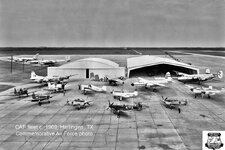
Back around '60, one of the guys at San Antonio's Stinson Field had a PQ-14 on which he reshaped the fin a bit, put on a spinner, painted in a sand and spinach scheme with rondels, and flew it in Confederate Air Force airshows as a 'mini-Spitfire.' I was working for Burt Wilcutt at San Antonio Aviation then, and he was producing the Midget Mustang. We had re-engineered it with an Ed Sweringen designed wing with outboard retractable gear and 150hp. One demo model had a bubble canopy, painted with stars and bars and invasion stripes. The Harlingen guys had a Me108 and a T-6 painted to resemble Messerschmitt and Focke Wulf fighters, and we'd do a Battle of Britain airshow act, often 'shooting down' a swastika/iron cross adorned Beech 18 'Heinkel.'

Though an active CAF member in the day, I never understood why, but at the time, the guys in Harlingen had adopted white paint jobs with red and black stripes on nose, wing and tail tips. As a result, a lot of the time airshow visitors would take pix standing by our little faux fighters in WWII markings while the real iron was just a few feet down the ramp. The old iron was cheap then, and the biggest group of CAF warbird owners were South Texas crop dusters, many employed by Lefty Gardner's service.

I felt the little Culver drone was quite responsive, except in roll. It would not snap roll well, though the Midget Mustang could very nicely. The Culver could do a decent barrel roll for 'victory display' but had a tendency to scoop out, so took planning and care.
 

Attachments

  • CAF_1.jpg
    CAF_1.jpg
    101.2 KB · Views: 29
  • CAF B17.jpg
    CAF B17.jpg
    29.8 KB · Views: 36
Last edited:
For anyone interested, I posted a couple Culver taildragger shots AvPix Unlimited Page 8, posts 146 & 147. Page nine begins with a Mooney Mite, post 148.
 
ANOTHER BIT ON FLYING WING TIP FUEL TANKS - The Air Force experimented with winged tip tanks for B-29s and B-50s, much like a tip to tip fighter with increased volume for fuel than just a tip tank, and extra wing area to support the load. They would use a droppable strut and wheel for takeoff, and the pairs would be jettisoned when empty.
Note that this wing tip 'flying fuel tank" is mentioned in the first paragraphs of the Bud Anderson article, based on some German WWII projects. I'd seen several planforms in the papers/articles I've read, and the hardware I saw had a constant chord wing on the bomber tip connection side, then the fuel tank, with a swept outboard wing. There were variations of stabilizing fins.
This "Tip-Tow" fuel tank experiment was being done around the time that development was underway with the Cornelius XFG-1, with a pilot-less version towed behind a B-29 bomber, disconnected and abandoned after fuel transfer was completed; the intent of the scheme being for the glider to act, essentially, as a winged drop tank for extending the range of the towing aircraft.
The manned version of the FG-1 was intended to deliver 677 gallons of fuel to advance airfields.
 

Attachments

  • cornelius-xfg-1.jpg
    cornelius-xfg-1.jpg
    28.5 KB · Views: 42
Last edited:
Thank you, Don.
There was also the wing tip units mentioned in the Anderson article, but I believe intended for German bombers.

Rigid tow bars had been used quite successfully with DFS230 troop gliders.

I'm adding a mention to the 262 thread about the US cargo glider rigid towbar tests.
 

Users who are viewing this thread

Back