The Yak-3 used a ~575 kg VK-105PF3 engine making about 1,200~1,300 horsepower nominally, the D.551 used a ~490 kg Hispano 12Y-51 making ~1,100 horsepower nominally, the former being a derivative of the base design of the latter, both of which are noted for relative unreliability.
What matters is the power at altitude. The H-S 12Y-51 rated at 1000hp at 3260 meters. The VK-105 engines were good for about 1050hp at 4000 meters and could hit a bit over 1200hp at a little over 2000 meters, this is the later versions. The -51's 1100hp was take off, it had a single speed supercharger.
The base Yak-3 used an armament layout of 1 x 20 mm cannon and 2 x 12.7 mm heavy machine guns, the D.551 used an armament layout of 1 x 20 mm cannon and 6 x 7.5 mm machine guns which are similar in terms of burst mass (1 12.7 machine gun was worth 3 rifle calibre machine guns according to US testing).
Americans were not testing Soviet or French machine guns. Different rates of fire and different bullet weights. The vast majority of Yak-3s carried about 75kg worth of guns ,the light 20mm weighed about the same as the 12.7mm gun, some carried less. A single 20mm H-S weighs about 60kg, not including either drum or belt feed unit.
Your apprehension towards the 12Z is understandable given that its life was cut short due to the circumstances around it, however I should note again that the VK-107 engine is highly similar to the 12Z engine, meaning it can be used for comparison.
Soviets didn't get the VK-107 to run properly until after the war. They also stopped production twice immediately after the war (Sept- Dec 1945 and April-Oct) 1946 to sort out problems. Some planes got the engines during the war, actual service use was limited. VK-107 also went about 765-770kg.
In fact, the Hispano 12B proved that in this very thread by being capable of 1,750 hp at 4,000 m/8,100 m. This is purely speculation on my part, but had France been allowed to continue developing its engines and aircraft, I could see the 12B or an engine like it seeing service in 1944~1945 as the war delayed France's engine development by about 4~5 years.
They probably still wouldn't be the most reliable engines out there, but every engine has its flaws.
Post war development is rather problematic. For everybody. Smaller budgets but more widespread knowledge of what others did and better access to raw materials.
There were several 12B engines. The one that offered 1750hp at 8,1000 meters was a rather complicated turbo charger set up. It not only was the 1st stage in the turbo supercharger set up it also used the exhaust gas energy to power fans that force air through the engine coolant radiators and then mixed the hot from the radiators, a bit of cool air (by pass?) into a duct surrounding the exhaust gases. The whole thing (including radiators?) went under 500kg over the weight of the bare engine. 1948-51 was a period of trying to get better fuel economy and Wright was working on Turbo compound engines (a little earlier than the French) and Napier went of the deep end ( or had failed to make shore after the Sabre) and disappeared into the Nomad depths.
Didn't get around to this last time, but that's not exactly a fair description of the D.55x series.
While yes, the D.550 was a speed-record plane, it was based on the airframe of the D.520 - a dedicated fighter aircraft. If anything, the D.55x series is a return to form and the D.550 is the odd-one-out.
Problem is that some of the performance estimates seem to based off the D.550 with it's 116ft sq ft wing, low canopy and few other "tweaks" that need to changed, (higher canopy?).
Quoted power used in the D.550 is all over the place. From 860hp to 1300hp depending on source. Sources can't even agree on which engine was used or what, if anything, was done to the engine. British were NOT using a "stock" Merlin in the "Speed Spitfire" and the Germans sure weren't using stock DB601s in the Heinkel 100 or Me 209 record setters.
Where did the D 551 wing wind up in size?
140 sq ft?
What was an actual service D. 551 actually going to weigh?
Were they really going to keep the retractable tail skid (not wheel).
Does anybody really know what the fuel capacity was?
Still trying to figure out how an engine that has an FTH of 3260 meters lets an airplane have a max speed at 6000 meters. Greatest use of RAM ever seen?
French had a real thing for small wings and small airplanes. Granted they had low powered engines, problem is it is harder to "grow". Field performance is also a problem.
Allisons and Merlins could grow with better fuel, they had the Strength to handle the higher loads. The Hispano V-12 wasn't strong enough to grow easily.


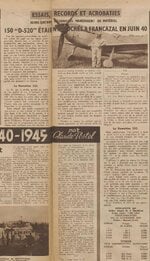
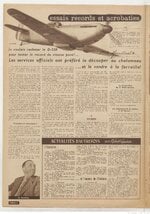


 Try to read original sources:


