I have read many books (dissertations and published books on many aspects of WW2) and think Germany could have done much better in some of the aircraft that became operational after September 1939. I think it is Kay (or Smith) who is very positive about the 187 having been a bomber interceptor (and it had to do better than the 110 and the 220) but I don't know if it was capable of development as a night fighter. However, my opinion (for what it is worth) is that Germany needed to focus all efforts on the development of the electric boats. If the resources need had been focused on the electric boat program so that Germany could deploy several hundred of the smaller subs and the maybe 50 to a 100 of the larger type then the war might have been lost (or at least temporarily) until a B-29 could fly over Berlin or perhaps do a demonstration on the alps. However, many historians think that the Soviets could have won the war against Germany even if the Western Allies had quit. We do know that German scientist made an error of about an order of 10 on how much enriched uranium would be necessary to build a fissionable device. (I am basing my statements on memory but read Rhodes "Making of the Atomic Bomb" and also the books that detail the deployment of the few electric boats at the very end of the war). However, we are rehashing history and unless there exist infinite parallel universes it is all imagination and fun. The only other point is based on the recent history I have read which includes both Arming the Luftwaffe and the Great Horsepower Race, then the more I realize how the Germans were inefficient in many ways. Also, they should have cashed in their chips much earlier in the game or Hitler could have focused is racism on the Soviets and Bolsheviks enlisting a lot of sympathy from the Great Britain, the U.S., and the Scandinavian West. But overall, I think that there was very little chance of the AXIS (an alliance that was very weak) could have won without a totally more seductive approach. Why invade Poland? Just my thoughts about the generic issues behind the "what ifs?".

Navigation
Install the app
How to install the app on iOS
Follow along with the video below to see how to install our site as a web app on your home screen.
Note: This feature may not be available in some browsers.
More options
You are using an out of date browser. It may not display this or other websites correctly.
You should upgrade or use an alternative browser.
You should upgrade or use an alternative browser.
After the BoB: rationalization of German/Axis aero engine development & production?
- Thread starter tomo pauk
- Start date
Ad: This forum contains affiliate links to products on Amazon and eBay. More information in Terms and rules
More options
Who Replied?
GrauGeist
Generalfeldmarschall zur Luftschiff Abteilung
My observation is that the Luftwaffe's greatest foe, was the RLM.
There were a great many aircraft that held potential, but the RLM's insistence that everything be able to carry bombs and/or be dive-bomb capable either delayed or killed projects.
Another stellar example is the political infighting within the RLM that hobbled many projects.
There were a great many aircraft that held potential, but the RLM's insistence that everything be able to carry bombs and/or be dive-bomb capable either delayed or killed projects.
Another stellar example is the political infighting within the RLM that hobbled many projects.
- Thread starter
- #43

My observation is that the Luftwaffe's greatest foe, was the RLM.
There were a great many aircraft that held potential, but the RLM's insistence that everything be able to carry bombs and/or be dive-bomb capable either delayed or killed projects.
Another stellar example is the political infighting within the RLM that hobbled many projects.
RLM was instrumental in making the Luftwaffe - from aircraft they used up to the men that crewed them and serviced them. The same Luftwaffe that was about as numerous as French AF and RAF combined in 1938-40. And more capable than those two airforces combined. They (RLM) were also a factor in LW having the pool of AA guns again as big as what France and UK had combined.
RLM certainly made it's fair share of mistakes. However, it was not RLMs fault that Hitler had bitten off much more than he could chew from 1941 on.
GrauGeist
Generalfeldmarschall zur Luftschiff Abteilung
All very solid points, Tomo, however the political infighting caused several projects to be terminated simply on predijuce and not merit.
There was also the afore-mentioned divebomber infatuation that condemned several projects: the He177 is a shining example.
There was also the afore-mentioned divebomber infatuation that condemned several projects: the He177 is a shining example.
- Thread starter
- #45
Dive bomber infatuation condemned only the He 177?
Decisions of Hitler's clique - 1st and foremost decision to attack Soviet Union - meant that Germany/RLM does not have enough of fuel to train it's aircrews, and that there is no cushion for mistakes. Those were not RLM's faults and even a working 4-engined bomber cannot help them now. Not having enough of chromium, nickel, copper and rubber was also not a fault of RLM.
Decisions of Hitler's clique - 1st and foremost decision to attack Soviet Union - meant that Germany/RLM does not have enough of fuel to train it's aircrews, and that there is no cushion for mistakes. Those were not RLM's faults and even a working 4-engined bomber cannot help them now. Not having enough of chromium, nickel, copper and rubber was also not a fault of RLM.
wiking85
Staff Sergeant
To be fair the invasion, had it worked, would have give them enough oil. Remember training hours were only cut in September of 1942, so Barbarossa, while long term causing some fuel issues, was not immediately limiting on training. The bigger problem was the mobilizing of training staff to fight instead of train, which if Barbarossa worked out (Moscow instead of Kiev) then it would have solved the material and oil problems.Dive bomber infatuation condemned only the He 177?
Decisions of Hitler's clique - 1st and foremost decision to attack Soviet Union - meant that Germany/RLM does not have enough of fuel to train it's aircrews, and that there is no cushion for mistakes. Those were not RLM's faults and even a working 4-engined bomber cannot help them now. Not having enough of chromium, nickel, copper and rubber was also not a fault of RLM.
GrauGeist
Generalfeldmarschall zur Luftschiff Abteilung
Amongst the brilliant ideas the RLM had for the Fw187 (instead of being the long range single seat fighter it was intended to be) was a dive-bomber.
The Me210 was required to be dive-bomb capable.
The Do217 was required to be dive-bomb capable.
The Ju88 was required to be dive-bomb capable (which it actually excelled at).
The Ju188 was required to be dive-bomb capable.
The list goes on, but it seems that Udet was the main force behind this, as he was a huge proponent of dive-bombers.
The Me210 was required to be dive-bomb capable.
The Do217 was required to be dive-bomb capable.
The Ju88 was required to be dive-bomb capable (which it actually excelled at).
The Ju188 was required to be dive-bomb capable.
The list goes on, but it seems that Udet was the main force behind this, as he was a huge proponent of dive-bombers.
wiking85
Staff Sergeant
In the case of the Fw187 they only added the dive requirement after it was abandoned as a single seat long range fighter and were trying to find other roles for it so the investment in design wasn't wasted and once the Bf110 proved vulnerable as an aircraft due to low performance.Amongst the brilliant ideas the RLM had for the Fw187 (instead of being the long range single seat fighter it was intended to be) was a dive-bomber.
The Me210 was required to be dive-bomb capable.
The Do217 was required to be dive-bomb capable.
The Ju88 was required to be dive-bomb capable (which it actually excelled at).
The Ju188 was required to be dive-bomb capable.
The list goes on, but it seems that Udet was the main force behind this, as he was a huge proponent of dive-bombers.
The Me210 was designed to be a tactical bomber and potential replacement for the Ju87, so that dive requirement (really a glide requirement of 60 degrees) makes sense.
The Do217 started out as a naval bomber, so the dive requirement was asked for by the navy since that method of bombing was found superior to level bombing.
The Ju88 never excelled at dive bombing and never had to really do it. It glide bombed, but that was about it.
The Ju188 was not dive required, especially since it only came after Udet had committed suicide.
GrauGeist
Generalfeldmarschall zur Luftschiff Abteilung
Ju88s were used as dive-bombers in France, Norway and more extensively in the Eastern Front with KG51 and KG54.
In anti-shipping along the Baltic, Ju88s accounted for quite a few Soviet ships with dive-bombing tactics.
In anti-shipping along the Baltic, Ju88s accounted for quite a few Soviet ships with dive-bombing tactics.
wiking85
Staff Sergeant
90 degree is a dive. 60 or less is a glide. A true dive stressed the airframe too much so they largely did steeper glides, but that even had to be changed to 45 degrees or less:Ju88s were used as dive-bombers in France, Norway and more extensively in the Eastern Front with KG51 and KG54.
In anti-shipping along the Baltic, Ju88s accounted for quite a few Soviet ships with dive-bombing tactics.
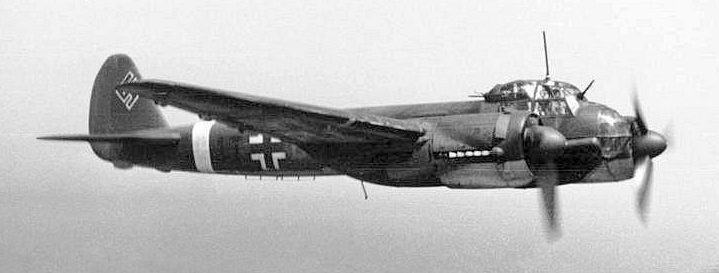
Junkers Ju 88 - Wikipedia
despite all the modifications, dive bombing still proved too stressful for the airframe, and in 1943, tactics were changed so that bombs were delivered from a shallower, 45° diving angle. Aircraft and bomb sights were accordingly modified and dive brakes were removed.
GrauGeist
Generalfeldmarschall zur Luftschiff Abteilung
So then the SBD, D3A, A-36, Skua and the rest were all glide bombers.90 degree is a dive. 60 or less is a glide. A true dive stressed the airframe too much so they largely did steeper glides, but that even had to be changed to 45 degrees or less:
Good to know

August Lichte, the Jumo chief engine designer responsible for the 213, regarded the 213 as the "Reinschrift dieser Bauart (Jumo 211)" - that is, the Fair Copy of the 211, so he saw the 213 clearly as a development and refinement of the 211. We can quibble about semantics, but the 213 was clearly not a completely new engine, not in the way that a DB 603 was compared to a 601, or a Merlin compared to a Kestrel. I wonder - would you also regard a C-Series R2800 as a completely new engine compared with the R2800 A?Nope - Jumo 213 was a whole new engine. New crankcase, crankshaft, head, ancillaries (including the cooling and lubricating system), reduction gear, pistons & piston pins, supercharger & it's drive... It weighted 950-1000 kg, vs. ~700 kg for the mid-war 211s.
Last edited:
Bramo developed the 323 from the Bristol Jupiter.
BMW licence built the Pratt & Whitney Hornet, from which the Mitsubishi Kinsei was also developed.
BMW developed the licence built Hornet into the two row 139.
The 801 was developed from both the Bramo 323 and the BMW 139.
Not sure how using a Japanese development of the Hornet would improve the situation with the Hornet development BMW 139, and its successor, the BMW 801.
Correct for the genesis of the Bramo 323 and the BMW 132, BUT the Kinsei was a 14-cylinder two-row engine from the start, which neither the Jupiter nor the Hornet were. Now the Kasei was a completely different beast from the itty-bitty Hornet. The A10 prototype ran in 1937, rated at 1500 HP. The Kasei entered series production in 1940 at the same rating and powered the Ki-21-II and the G4M1. So the timescale may be a shade too late for the BoB, but the Kasei was used operationally from early in 1941, way before the BMW 801 of a similar rating was considered safe to use. Now this is the Japanese development timescale, and Mitsubishi had lots of engine developments running at that time. So if, say, Bramo had got a license for the Kasei in 1938 when the engine was reasonably mature, and had concentrated on getting that engine in production, the timescale might have been shortened, perhaps even with fuel injection from the start. After all, they managed to put fuel injection on the Jupiter
wiking85
Staff Sergeant
All hail the one true dive bomberSo then the SBD, D3A, A-36, Skua and the rest were all glide bombers.
Good to know
I think Reinschrift in this context means 'engrossment' or ultimate version.August Lichte, the Jumo chief engine designer responsible for the 213, regarded the 213 as the "Reinschrift dieser Bauart (Jumo 211)" - that is, the Fair Copy of the 211, so he saw the 213 clearly as a development and refinement of the 211. We can quibble about semantics, but the 213 was clearly not a completely new engine, not in the way that a DB 603 was compared to a 601.
Part of the issue is the Kasei was only first run in 1938, a year earlier than the BMW 801. At that point the Germans didn't know how long the BMW would take given that it was supposed to be a rapidly finished and indeed it did enter production in 1940, same year as the Kasei. Their power output was virtually identical. The Kasei really offered no advantages.So if, say, Bramo had got a license for the Kasei in 1938 when the engine was reasonably mature, and had concentrated on getting that engine in production, the timescale might have been shortened, perhaps even with fuel injection from the start. After all, they managed to put fuel injection on the Jupiter
Now if the Japanese had shared/developed in conjunction with the Germans the Homare engine in 1940 instead of Germany trying to develop the BMW 802 that might have yielded something valuable, as despite the quality of the BMW 802, it was cancelled as basically irrelevant given the success of the BMW jet engines. Being lighter and higher powered as well as having a vastly better power to weight ratio the Homare could have replaced the BMW 801 in production if they could fix the engine's issues before 1943.
Last edited:

In the case of the Fw187 they only added the dive requirement after it was abandoned as a single seat long range fighter
The dive bombing ability wasn't intended on being added to the Fw 187 design. The Fw dive bomber was to be an entirely new airframe and engine combination, not an addition to the existing Fw 187 as it was at the time. In fact the only similarity was the fin shape, but the Fw 200 had the same shaped fin, so that was more an in-house design consideration.
Shortround6
Lieutenant General
I wonder - would you also regard a C-Series R2800 as a completely new engine compared with the R2800 A
Well, according to one story, the only things that were the same were bore, stoke and starter dog.
Probably a bunch of screws, washers and nuts but that ruins the story

At what point does development cross into new engine?
For consideration
engine....................start of design work.......................first run..............................5th engine accepted
R-2800B.....................May 1940......................................June 1940...............................Oct 1941
R-2800C.....................May 1940.....................................Sept 1940................................Aug 1943
R-4360........................Nov 1940......................................April 1941...............................Nov 1943
The R-4360 used R-2800 cylinders (pretty much, perhaps a bit of twisting to the ports in the head?).
Or consider the Wright R-2600, 3 basic models, 3 different crankcases and crankshafts and 3 different cylinders and cylinder heads.
Same engine?
The Kasei had no advantage in power or weight, but in availability, which is my point; it entered service in the Ki-21-II in December 1940, probably used in combat in China shortly afterwards, while the BMW 801, in December of 1941, a year later, was regarded as not combat worthy; experts expected half a year for the necessary modifications. Kasei-powered aircraft bombed the Prince of Wales and Repulse half a year before the BMW was regarded as safe to use over water for even short periods.Part of the issue is the Kasei was only first run in 1938, a year earlier than the BMW 801. At that point the Germans didn't know how long the BMW would take given that it was supposed to be a rapidly finished and indeed it did enter production in 1940, same year as the Kasei. Their power output was virtually identical. The Kasei really offered no advantages.
Now if the Japanese had shared/developed in conjunction with the Germans the Homare engine in 1940 instead of Germany trying to develop the BMW 802 that might have yielded something valuable, as despite the quality of the BMW 802, it was cancelled as basically irrelevant given the success of the BMW jet engines. Being lighter and higher powered as well as having a vastly better power to weight ratio the Homare could have replaced the BMW 801 in production if they could fix the engine's issues before 1943.
The Homare was essentially an over-ambitious Nakajima design that always had problems with lacking and inconsistent altitude performance and strong vibrations; it was used in many types because the Navy standardized on it. As a highly-tuned engine it needed high-strength materials and high-octane fuel, both in short supply. The first reliable version, the Homare 12, came out in the spring of 1944, and it took almost another year until problems with unreliable fuel flow were finally eradicated. Essentially, Germany would have been better served even with the Jumo 222, absent interference by Milch.
wiking85
Staff Sergeant
Not any different than the BMW801. Production commenced in 1940. The delay in front line service had to do with the aircraft rather than the engine. The choice of the Germans not to fit the BMW801 to other aircraft like the Japanese did with their bombers wasn't related to the engine AFAIK. After all the Do217E of 1940 used the BMW801 exclusively:The Kasei had no advantage in power or weight, but in availability, which is my point; it entered service in the Ki-21-II in December 1940, probably used in combat in China shortly afterwards, while the BMW 801, in December of 1941, a year later, was regarded as not combat worthy; experts expected half a year for the necessary modifications. Kasei-powered aircraft bombed the Prince of Wales and Repulse half a year before the BMW was regarded as safe to use over water for even short periods.
The Homare was essentially an over-ambitious Nakajima design that always had problems with lacking and inconsistent altitude performance and strong vibrations; it was used in many types because the Navy standardized on it. As a highly-tuned engine it needed high-strength materials and high-octane fuel, both in short supply. The first reliable version, the Homare 12, came out in the spring of 1944, and it took almost another year until problems with unreliable fuel flow were finally eradicated. Essentially, Germany would have been better served even with the Jumo 222, absent interference by Milch.
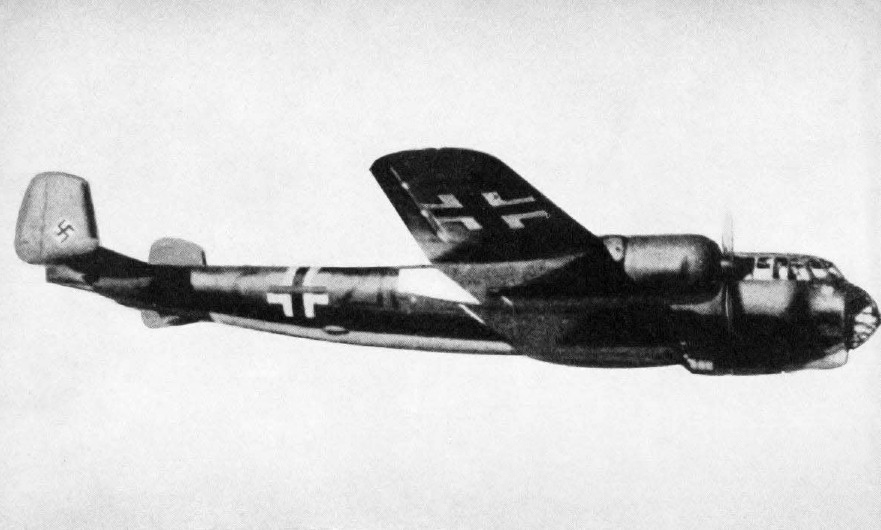
Dornier Do 217 - Wikipedia
The Homare's problem was tight tolerances and manufacturing methods as well as metallurgy, which Japan was behind the West with at that point in history. While I don't disagree on the 222, the Homare with German manufacturing tech could have been more viable early on rather than only with Japanese development.
- Thread starter
- #59
The Kasei had no advantage in power or weight, but in availability, which is my point;
Not any different than the BMW801. Production commenced in 1940. The delay in front line service had to do with the aircraft rather than the engine. The choice of the Germans not to fit the BMW801 to other aircraft like the Japanese did with their bombers wasn't related to the engine AFAIK.
BMW 801 weighted about 50% more than Kasei.
In 1940 to the late 1942, BMW 801C/D were as problematic as that was the case for Sabre in the UK in 1941-42, or R-3350 in it's 1st year in service. The BMW 801A used on Do 217 wasn't cleared for the 3 min rating (bar for take off), just the 30 min one and less 'aggressive' ones - probably a reason why their reliability record seem to was decent.
wiking85
Staff Sergeant
The D-series engines did yes, but they also had a boost up to 2000hp. The boosted Kasei engine's HP was only 1530. Later higher powered Kasei engines increased in weight, such as the 23 series, which was 860kg and a max boost of 1820hp. Regular HP was 1600hp max vs. the D-series 1700hp. Don't forget the German engine also had the Kommandogerät integrated into the engine, which the Japanese one lacked. The Japanese 23 series engine also apparently had some propellor resonance issues as well. Information is lacking on the Japanese engine, so the limited figures might make it seem better than it really was, while with the BMW 801 we have so much info about it we can see all the warts.BMW 801 weighted about 50% more than Kasei.
In 1940 to the late 1942, BMW 801C/D were as problematic as that was the case for Sabre in the UK in 1941-42, or R-3350 in it's 1st year in service. The BMW 801A used on Do 217 wasn't cleared for the 3 min rating (bar for take off), just the 30 min one and less 'aggressive' ones - probably a reason why their reliability record seem to was decent.
Users who are viewing this thread
Total: 1 (members: 0, guests: 1)


