Anti-aircraft artillery & firepower alternatives, 1930-1950 (1 Viewer)

Ad: This forum contains affiliate links to products on Amazon and eBay. More information in Terms and rules

tomo pauk

Creator of Interesting Threads
15,383
5,404
Apr 3, 2008
Similar to the other threads deling with guns & whatnot - what types of anti-aircraft alternatives would've represent a boon in the countries opting of doing so? Under the 'alternatives', it is not just the guns, but also the projectiles, rockets & their launchers, and what to favor - weight of fire or perhaps the range, for the same/similar weight & price of a device?
If a gun can get another way of use, say an airborne gun to fight either the aircraft or something else, like a tank, all the better (but not crucial; obviously, a heavy gun will make a bad fit here).

To start the ball rolling - Japanese make the 37mm version of the 2pdr pom pom, that in the ideal case - at least for them - might've netted them a gun in the league of the US 37mm AA gun.
 
For the U.S.A., railguns. The honking big electromechanical kind. We're on the other side of an ocean. Adolf might be working on a death ray (see invention of radar). It may have already been discussed in some of the popular periodicals of the day.
 
There were Schneider studies called 75mm S.A.A. 750 or 800 throughout the 30s (after 1929) which make me think that the company may have had 750 or 800 m/s designs with superior ballistics to the service French AA 75mm gun (715 m/s).
 
There were Schneider studies called 75mm S.A.A. 750 or 800 throughout the 30s (after 1929) which make me think that the company may have had 750 or 800 m/s designs with superior ballistics to the service French AA 75mm gun (715 m/s).
French Army making a piggy-back on the Navy's 75mm guns (like this one here) would've saved them both the time and the coin.
Going on further, an early move towards an automatic 37mm would've upped their AA abilities significantly.

On the very light note:
The Oerlikon FF(F) was a reasonably popular gun. It will not do well as an anti-aircraft cannon, though, since even in the MG FFM version, the MV was sedate, touching 700 m/s. One remedy for this might've been the introduction of an even lighter Mine shell (obviously for the Germans), talk ~70g instead of 92g, or the introduction of a light 'normal' HE shell, again of perhaps ~70g? A bit hotter loaded, but not too much, 10% extra; a muzzle barrel? Might've pushed the MV to 800 m/s.
Armor-piercing abilities will still be bad, unless a sort of a cored projectile is used (here the hardened steel will still do, no need for tungsten carbide on these MVs).
Usage - on the places a "proper" 20mm gun cannot easily fit, like on the self-propelled artillery pieces, tanks, light cars like the Kubelwagen. Also tripod-mounted for the mountain units and paratroopers. Having different magazines ( 15, 30, 60, 75, even 90 rd drum) might be a good thing to have, too.

A more ambitious gun would've been that gun, but brought down to ~15mm. With a light HE shell (German 15mm was at 57g), this is ought to push the MV comfortably above 800 m/s, and should loose the velocity at the slower rate than the light 20mm shell. The full-bore AP shot here might've been actually worth it.
 
I am going to be Captain Contrary here ;)
To start the ball rolling - Japanese make the 37mm version of the 2pdr pom pom, that in the ideal case - at least for them - might've netted them a gun in the league of the US 37mm AA gun.
Not sure were this is going. Or how to get to where you want to be. The WW I 1 1/2pounder pom pom (37mm) used a smaller diameter and shorter case than the WW I 2pdr pom-pom gun. It had a lot less power. The American 37mm Army AA gun used a 63mm longer cartridge case than the 2pdr and the case body was fatter. The American 37mm was around 1/2 way between the British 2pdr of WW I vintage (and the 1920s/early 30s) and the WW II high velocity version. High being relative and they dropped the shell weight from 900g to 760g to help get the extra 120ms of velocity.
Under the 'alternatives', it is not just the guns, but also the projectiles, rockets & their launchers, and what to favor - weight of fire or perhaps the range, for the same/similar weight & price of a device?
We do have the advantage of 20/20 hindsight and we know that the rockets did not work, aside perhaps for morale. Spray and pray was also not really a good option so better sights/aiming systems and ease of control (training and elevation rates) are more important than many people give credit to. French and Japanese fell victim to this with the 13mm and 25mm Hotchkiss guns.
AA use needed longer range guns than airborne guns. In general this means both higher velocities and better shaped projectiles.
The Oerlikon FF(F) was a reasonably popular gun. It will not do well as an anti-aircraft cannon, though, since even in the MG FFM version, the MV was sedate, touching 700 m/s. One remedy for this might've been the introduction of an even lighter Mine shell (obviously for the Germans), talk ~70g instead of 92g, or the introduction of a light 'normal' HE shell, again of perhaps ~70g? A bit hotter loaded, but not too much, 10% extra; a muzzle barrel? Might've pushed the MV to 800 m/s.
Now we are getting into both interior ballistics and external ballistics.
Longer barrels really don't buy you much unless you are using a really short barrel to begin with. They are also somewhat dependent on the cartridge capacity. A small cartridge case does not show the same improvement for a given added length of barrel as a larger case driving the same projectile.
Light weight projectiles can show a very large fall off in velocity over distance compared to heavier but slower projectiles. AA guns are operating at low altitudes (unless working in the Alps) in high density air.
A 20mm MG-FFM firing a 92 gram Mine shell saw the velocity drop from about 695m/s at the muzzle to about 281m/s at 600 meters or a loss of about 60%. Using lighter projectiles was probably not going to work well.
The 117 G projectile fired out of an MG 151 at 720ms was still doing 422ms at 600 meters or had only lost 41%. The 92g shell took over 0.3 seconds longer to get to 600 meters.

For an automatic AA gun in a ground mount (or ship) weight is not usually an issue, either for the gun or the ammo. Design should focus on rate of fire, feed and the highest practical velocity with a worthwhile shell. HE content is not proportional to shell weight. You need the same rear end and front end (fuse) on the short light shells so all the reduction has to come out of the parallel section of the shell body and the filler.
Burning out barrels in short periods of time should be frowned on. But there are also limits. Quick change barrels on 20mm guns may be preferable to liquid cooled barrels. Most 20mm guns were traversed/elevated by muscle power and here weight was an issue for following fast moving aircraft. Switching to liquid cooled barrel guns for power mounts may be ideal for shooting but needing different barrel manufacturing set ups may not be.
 
Not sure were this is going. Or how to get to where you want to be. The WW I 1 1/2pounder pom pom (37mm) used a smaller diameter and shorter case than the WW I 2pdr pom-pom gun. It had a lot less power. The American 37mm Army AA gun used a 63mm longer cartridge case than the 2pdr and the case body was fatter. The American 37mm was around 1/2 way between the British 2pdr of WW I vintage (and the 1920s/early 30s) and the WW II high velocity version. High being relative and they dropped the shell weight from 900g to 760g to help get the extra 120ms of velocity.
It is going towards the 2pdr pom pom being necked down to 37mm, firing a lighter shell in a barrel that Japanese are making in, for them, good numbers, so they MV is up to snuff, and so is the availability of the reasonably powerful gun.
It is okay if you disagree.

For an automatic AA gun in a ground mount (or ship) weight is not usually an issue, either for the gun or the ammo. Design should focus on rate of fire, feed and the highest practical velocity with a worthwhile shell. HE content is not proportional to shell weight. You need the same rear end and front end (fuse) on the short light shells so all the reduction has to come out of the parallel section of the shell body and the filler.
Missing the point here.
Idea is to provide the people on the ground an AA gun that is much more powerful than a 7.5-8 mm LMG, that can fit on the places where the usual high-power 20mm + a worthwhile ammo count cannot fit, all while being early enough. Not being a HMG and firing a shell that can self-destruct means there is a much smaller chance that the fired bullets will kill it's own people on the ground.
If you don't like the 20mm version, pick the 15mm one.
 
Some Soviet stuff.
The VYa-23 would've been an excellent AA gun (similar to the ZU-23 of the Cold war vintage), and same goes for the N-37. Both guns fired the heavy shells at great MV and at excellent RoF. For the ground use, they will probably need a heavier barrel.

For the places these guns will not fit: the 20mm Shvak necked-down to 14.5mm - it will be a bit slower than the future KPV, probably closer to 950 than to 900 m/s? Both HE and AP ammo will do well here. Or course, the full-blown 14.5mm would've been even better, if the barrel wear can be kept in check with 1000+ m/s and the metallurgy of the Soviet Union in ww2. Either of these will still be one hefty gun, requiring a proper tripod, or a turret.
 
Some Soviet stuff.
The VYa-23 would've been an excellent AA gun (similar to the ZU-23 of the Cold war vintage)
It will not be excellent; moreover, I am not sure that it will be suitable for use in the ground forces due to its higher sensitivity to dust contamination, but for the navy, it is likely to be quite acceptable or even better than the 72-K. Moreover, anti-aircraft systems based on the VYa were produced in small series - the 2-U-23 and 4-U-23 were installed on motor boats.
and same goes for the N-37.
In 1938-1940, the Soviets had a much more interesting option in the form of the 45 mm 49-K. With a rate of fire close to that of 37 mm guns, the 45 mm shell had much greater power.
Both guns fired the heavy shells at great MV and at excellent RoF. For the ground use, they will probably need a heavier barrel.
Aviation guns are generally unsuitable for use as anti-aircraft weapons due to their high sensitivity to dust.
For the places these guns will not fit: the 20mm Shvak necked-down to 14.5mm - it will be a bit slower than the future KPV, probably closer to 950 than to 900 m/s? Both HE and AP ammo will do well here. Or course, the full-blown 14.5mm would've been even better, if the barrel wear can be kept in check with 1000+ m/s and the metallurgy of the Soviet Union in ww2. Either of these will still be one hefty gun, requiring a proper tripod, or a turret.
The ShVAK originally had a caliber of 12.7 mm - the difference from 14.5 mm is minimal. In this caliber, the Berezin's machine gun was superior. And for the ground forces, the Soviets had the DShK—a perfectly decent weapon.
 
It is going towards the 2pdr pom pom being necked down to 37mm, firing a lighter shell in a barrel that Japanese are making in, for them, good numbers, so they MV is up to snuff, and so is the availability of the reasonably powerful gun.
It is okay if you disagree.
The problem with the 2pdr pom pom is that it used a short cartridge with little taper or bottleneck and the gun body (receiver) was sized to suit.
q=tbn:ANd9GcSZ3-PNM1u_b_OcSxgXuJPCUbX2FiMFwHhXVQ&s.jpg

The projectile is large (length) and perhaps necking down and using a shorter projectile will allow for a bit more case length. If you try to make the complete cartridge much longer you need a new gun body (receiver) and a longer bolt travel. If you make the rear of the case much bigger you need a larger bolt and possibly a wider/taller receiver.
Trying to save on barrel costs but having to spend time/effort redesigning the the body and guts of the gun seems to be false economy to get a low powered 37mm gun.
Just buy a French or Italian 37mm AA gun design.
Missing the point here.
Idea is to provide the people on the ground an AA gun that is much more powerful than a 7.5-8 mm LMG, that can fit on the places where the usual high-power 20mm + a worthwhile ammo count cannot fit, all while being early enough. Not being a HMG and firing a shell that can self-destruct means there is a much smaller chance that the fired bullets will kill it's own people on the ground.
If you don't like the 20mm version, pick the 15mm one.
The need for a compact gun is much less for ground/naval AA work than for aircraft work.
q=tbn:ANd9GcTEveBp5K_Cl1dMFNTg0uGbYc1reytGDldJ8Q&s.jpg

A big 20mm will fit in the same field ;)
The small 20mm will not be man portable and the worthwhile ammo is going to need a cart to haul it around.
Granted the 7.9mm gun is not very effective. which is why they tried to use twins.
C8QENcakXZzmD4vouL4NmaPTuI8Em2bTWuFgnCeOU&usqp=CAU.jpg

But now you are into at least a small trailer or small motor vehicle the difference between a short Oerlikon and a long Oerlikon to the small truck in terms of weight or size is going to be minimal.
British gave up on using mgs for AA from tanks. They just closed the hatches and opened up the hatches when the German aircraft went away. Maybe the Germans killed one or two vehicles out of the unit. Playing with Bren guns against aircraft lead to a lot of dead or wounded commanders and/or loaders from bullets/shell fragments while trying to man the guns.
crusader-AA.jpg

This may be under gunned for it's weight/cost. The need for smaller AA guns to fit small tanks or small trucks is a niche market. The army wants lager more powerful guns so that the same number of units (guns or gun batteries) can cover a wider area.
crusader_iii_aa_mk_i_137.jpg

The Americans loved their .50 cal guns but I am not sure how many Enemy aircraft were shot down by them despite the tens (hundreds) of thousands of rounds fired.
 
Something for the British: the 6pdr with Molins loader turned into an AA gun. Develop it further, might've be close to the Soviet 57mm come 1950?
 
The need for a compact gun is much less for ground/naval AA work than for aircraft work.

A big 20mm will fit in the same field ;)
The small 20mm will not be man portable and the worthwhile ammo is going to need a cart to haul it around.

A big 20mm will not be useful with just two people and a mule available to lug it around - having a fully motorized and manned army was an exception in ww2, not a rule. The small 20mm will be as portable as the .50 BMG.

Granted the 7.9mm gun is not very effective. which is why they tried to use twins.

But now you are into at least a small trailer or small motor vehicle the difference between a short Oerlikon and a long Oerlikon to the small truck in terms of weight or size is going to be minimal.
A small 20mm will handily out-range a LMG (unless the small 20mm is firing the heavy, 120-140g shells, that we don't want to happen here), and the effect on the target will be much greater. If a trailer or a cart is worthwhile for two LMGs, it is even more worthwhile for the small 20mm. Use Kubelwagen or a similar vehicle, even a mule will do just fine - not every Army was American or British.

British gave up on using mgs for AA from tanks. They just closed the hatches and opened up the hatches when the German aircraft went away. Maybe the Germans killed one or two vehicles out of the unit. Playing with Bren guns against aircraft lead to a lot of dead or wounded commanders and/or loaders from bullets/shell fragments while trying to man the guns.
Americans insisted on the HMGs on the tanks, OTOH. Supposedly Rudel was downed more than once with these.
Seems like we agree that LMGs as AA weapons on the tanks are not that a good idea.

This may be under gunned for it's weight/cost. The need for smaller AA guns to fit small tanks or small trucks is a niche market. The army wants lager more powerful guns so that the same number of units (guns or gun batteries) can cover a wider area.

We are in misunderstanding here. I'm not trying to sell the small 20mm as being as good as the big 20mm, but to offer an alternative to a HMG or a LMG pressed into the AA role.

The Americans loved their .50 cal guns but I am not sure how many Enemy aircraft were shot down by them despite the tens (hundreds) of thousands of rounds fired.

Americans seem to have been using the HMGs a lot as the ground support weapon, from their tanks or otherwise.
 
German 37+mm conundrum and the possible remedies.
Navy was using the very powerful rimless ammo type, then they used the rimmed ammo similar to what the 37mm AT and tank guns used (but with the thicker rim) on a new, M42 automatic gun, then they used the LW's rimless 37mm (power-wise in the ballpark of the pak 36 and M42). So 4 ammo types in total, plus the war booty (mostly the Czech stuff). The Heer's 37mm ammo and weapons were the prolific ones, possibly to the tune of 15000 weapons just as he anti-tank weapon. The obsolete M30 Flak was still being delivered by mid-war to the navy.
They were also trying with the 5cm Flak.
(granted, Japanese were also using a number of 37mm cartridges)

While the rimless ammo types are preferred in the automatic weapons, we know that the rimmed cartridges also work well, and here is the 40mm Bofors of interest as a role model. My idea is that a Bofors-like gun is made (the M42 was like that, but tad too late for the German war effort, and not a numerous piece despite being tailored towards the mass production) instead of the 37mm automatic Flak, that can use the ammo type from the Army. Seems like there was a lot of potential for loading the 37mm ammo hotter, beyond 185g of propellant - the BK 37 used 260g for the cored ammo, while the Mine shell was propelled by 220g - so perhaps take advantage of that a bit earlier, say 200-210g as standard?
 
A big 20mm will not be useful with just two people and a mule available to lug it around - having a fully motorized and manned army was an exception in ww2, not a rule. The small 20mm will be as portable as the .50 BMG.
Even the German 7.9mm was going to need 5-7 men for a "crew" if there is no transport, either motor or hooved. The US .50 was probably closer to 9-12 men although that is just a guess as the US never moved it that way. You need at least 2 men to carry the .50 itself. You need 3-4 men to carry the mount and you need ??? men to carry the ammo, You also need one NCO to supervise ;)
197309344-4.jpg

This may be a post war mount, the M63, but it weighed about 65kg.
Not all the earlier mounts were really satisfactory.
016-1.jpg

Yes you could shoot the big .50 at an airplane, if the air plane co-operated by flying slow and steady. Sitting on an ammo box while trying to aim at a fast moving aircraft was not going to work. Which means a larger, heavier, mounting system. At which point the exact size/weight of the gun itself starts to become a much smaller part of the entire system.
British Motley mounting for Brens.
large_FIR_011583_A.jpg

Gs1EEJbNYU9GxoMYveD_vYKDyiPTrGQgjbusb3dQQ5k1e2YKsQ.jpg

usually mounted in a truck bed, single guns in France in May-June 1940.

A small 20mm will handily out-range a LMG (unless the small 20mm is firing the heavy, 120-140g shells, that we don't want to happen here), and the effect on the target will be much greater. If a trailer or a cart is worthwhile for two LMGs, it is even more worthwhile for the small 20mm. Use Kubelwagen or a similar vehicle, even a mule will do just fine - not every Army was American or British.
A lot depends on the desired range and traverse. The German 7.9mm had very close to the same time of flight to 600 meters as the German 13mm MG 131 and both were about 0.2 seconds quicker than the MGF-MM using mine shells. Using shorter/lighter shells that loose velocity quicker may not get you much unless the range is really short.
Americans insisted on the HMGs on the tanks, OTOH. Supposedly Rudel was downed more than once with these.
Seems like we agree that LMGs as AA weapons on the tanks are not that a good idea.
A big problem with tank mounted machine guns is the rather limited amount of elevation and traverse the gun actually has as opposed to the physical limits of the mount.
this website has a number of pictures that emphasis the rather optimistic expectations of several nations.

We are in misunderstanding here. I'm not trying to sell the small 20mm as being as good as the big 20mm, but to offer an alternative to a HMG or a LMG pressed into the AA role.
A lot of the problem is not the gun or ammo itself, it is just being able to hit the aircraft (or even put tracers close) given primitive sighting systems and poor elevation and traverse arrangements. It is one thing to heave around a 10-15kg gun and ammo supply, when you are dealing with even a small 20mm you are dealing with 40kg plus (drum and ammo on top of the weapon). You have to be able to use legs and the whole body.
Americans seem to have been using the HMGs a lot as the ground support weapon, from their tanks or otherwise.
Yes and the US went to the M45 quad mount
5f8483058d9b5c4fd079a8542ca519e77e237af5eb1e7.jpg

which used 4 guns to make up for the low rate of fire and used electric motors for traverse and elevation to try to keep up with fast moving aircraft.
US did put the whole mount on trailers, using batteries and generators but they did not use mules/horses to tow them ;)
The tombstone ammo boxes hold 200 rounds each and sometimes the gunners fired the guns in pairs to both extend the firing time and to help keep the barrels cool.
The US .50 did not use HE ammo and it's incendiary was on weak side but it did have the shortest time of flight to 600-1000 meters aside from the Soviet 12.7 and the German 15mm so aiming was less of problem (not actually solved)
 
The US .50 did not use HE ammo and it's incendiary was on weak side but it did have the shortest time of flight to 600-1000 meters aside from the Soviet 12.7 and the German 15mm so aiming was less of problem (not actually solved)
IMO, insisting on the HE shell for the HMGs is kinda throwing the money - the API shots will work, and in any case you need to land many hits on an aircraft (baring the (un)lucky shot that takes out a pilot) to bring it down.

Some other alternatives are on the way. Like - Americans make the 1930s Gatling gun for their AA needs. I know that the 1.1in AA gun is unloved, but the cartridge it used was very powerful (ballpark with the German MK 101/103), and, if fired from an externally-powered 4-5-6 barreled gun, would've been a sight to behold.
In the same vein, the Gast gun for the Continentals ;) As an aircraft gun, it has a shortcoming or two, being limited by the physical properties of the small aircraft, but as an AA gun, it should've been just okay. As-is, only the GSh-23 went into the service during the Cold war, being a very light gun and with the high RoF. Granted, in this time frame and as an AA gun, it will weight more, and will certainly been in another calibre.

Another alternative German AA gun: the automatic and toned-down C/30 37mm. By 'toned down', I mean that propellant charge is reduced from the hefty 365 grams to perhaps 300 (40mm Bofors was about there), or even 250 (Soviet 37mm was at just 210g). Cut the barrel a bit. The MV will go down inevitably - talk still useful 900-850 m/s - but the RoF would've been like on the other 'proper' AA guns of 37-40mm, and with that the actual usability of the AA fire. The denger of barrel burn will also be lower with this 'surgery'.

The automatic siblings of the French naval 37mm, Czech 40mm, and Soviet 45mm would've also been interesting.
 
Last edited:
Similar to the other threads deling with guns & whatnot - what types of anti-aircraft alternatives would've represent a boon in the countries opting of doing so? Under the 'alternatives', it is not just the guns, but also the projectiles, rockets & their launchers, and what to favor - weight of fire or perhaps the range, for the same/similar weight & price of a device?
Radar proximity fuses. That's where Germany needed to focus rather than on V1/V2 rockets, jet interceptors, etc. If Germany had possessed radar proximity fuses in quantity early or mid-war, the strategic bomber campaign would have been significantly more costly for the 8 AAF and RAF Bomber Command.
 
Radar proximity fuses. That's where Germany needed to focus rather than on V1/V2 rockets, jet interceptors, etc. If Germany had possessed radar proximity fuses in quantity early or mid-war, the strategic bomber campaign would have been significantly more costly for the 8 AAF and RAF Bomber Command.
Depending on which article you read or who's list the Proximity fuse was one of the 3 biggest projects of the war. Nobody puts it ahead of the atomic bomb but it sometimes ties the B-29 project.
It was not the basic Idea. It was the ability to turn the basic idea into working hardware. One goal post was that once they got a 50% success rate (fuses actually functioned) on the test range they tooled up for production while they worked to improve things. Tooling up meant they wanted to build thousands of fuses per month and work up to tens of thousands per month which called for a huge effort on the part of the electronics industry.
Once they had a working fuse that would fit in a 5 in shell they worked to reduce the size in progressive steps.
Somebody remind me how many 12.8cm AA guns the Germans had in 1942/43?
Getting the fuse to fit the British 4.5in shell was not to hard. A few more months and they could start production on the 4in fuse (10.5cm size).
Fuses for the US 90mm and the British 3.7 took longer.
So when do the Germans come up with a fuse that fits in an 88mm size shell? And how effective is a prox-fused 88mm shell?
German 88mm shell weighed 9.4kg, British 3.7in shell was 12.7kg. British shells in 1944 were made with a removable 127 gram pellet of explosive to make room for the proximity fuse vs the standard fuses.
The allies did get the Proximity fuse down to fitting in a 3 in shell but that took new battery technology. Every proximity fuse before that used a dry cell battery (carbon zinc?) and WW II carbon zinc batteries were not that good. A year 2000 carbon zinc battery had about 4 times the power of a 1910 battery. The idea behind the Allied proximity fuse was that the round (Fuse) could manufacture, shipped, stored and fired up to 6 months later without any inspection by an ordnance man. Perhaps the Germans could be less stringent.

You still have to get the shells close to the target.
 
Depending on which article you read or who's list the Proximity fuse was one of the 3 biggest projects of the war. Nobody puts it ahead of the atomic bomb but it sometimes ties the B-29 project.
It was not the basic Idea. It was the ability to turn the basic idea into working hardware. One goal post was that once they got a 50% success rate (fuses actually functioned) on the test range they tooled up for production while they worked to improve things.

Good post. However...
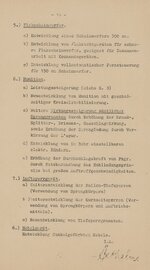
Having a timely idea matters. I've sifted through a lot of LW minutes, dealing with the current and likely future Flak developments. These dated 22th June 1942 make a mention the 240mm AA gun (to be made with coop with KM), smooth-barreled AA guns, squeeze bore AA guns, multiple barreled 37mm guns, lightweight 37mm gun, guided and unguided rockets, in-barrel setting of the fuses, fin-stabilized ammo, intention to squeeze more MV from the existing guns, and whatnot.
The proximity fused Flak shells are not mentioned in these minutes.
Here are the ammo improvements they mention:

flak1.jpg

Translated online, with my editing:

14

5.) Anti-aircraft searchlights.
a) Development of a searchlight 300 cm.
b) Development of flak straightening devices for welding-
re anti-aircraft headlights, designed for Together-
work with command devices.
c) Development of fully automatic remote control
for 150cm searchlights.

6.) Ammunition.
a) Performance improvement (see p. 3)
b) New development of ammunition with a projectile with lateral gyro stabilization.
c) Further increase in the effectiveness of all explosive grenades by increasing the fire-,
Splinter, explosive, gas impact effect, as well as increasing the explosive charge by
shortening of the tracer element.
d) Development of adjustable in-barrel electr. fuse.
e) increasing the penetrating power of AP ammo by making the hollow charge principle usable at high impact speeds.

7.) Air barrier device.
a) Further development of the balloon deep barriers(Use of explosive devices)
b )development of pus of short-term barraiers (the use of explosive devices and buoyancy~
means possible)
c) New development of low-explosive grenades.

8.) Fogging device.
Development of dark colored fog.
I.A.
 
The 'baby 37mm' guns might've been interesting. Or even the 40mm.

British: A souped-up 1.5pdr COW; the original was very light, under 100 kg just for the ordnance, firing a 680g shell at 610 ms (basically a bit better than the P-39's gun). I'd suggest a bit lighter shell (600g is a nice, round number), and a bit more powerful propellant charge + a longer barrel, so it can come close to ~750 m/s, coming close to the US 37mm AA gun. Add some fat to it, 120-130 kg will not be too much just for the ordnance? Nice thing about is that it can be manufactured basically ASAP, like the early 1930s - the original CoW was from 1918 - without waiting for the different 20mm to became workable and available. An easy fit on light vehicles, unlike the 40mm Bofors. By the late 1930s, improve the RoF, maybe add the muzzle brake? Should've made the LW people looking funny come 1940.
A more serious gun might've been the Class S gun firing a 1.5-2 pdr HE shell. Still a light and compact gun.
Either of these guns would've also been interesting with an APDS shot.

Germans: The MK 101 and later 103, adopted to fire a shorter and lighter 37mm ammo than it was the 'normal' Flak ammo. Here the 540g Mine shell would've helped a lot, keeping the stress and recoil in check, and making ~750 m/s possible. For AP work, use the APCR shots; yes, the performance will not be great.
Copying the captured Soviet N-37 gun might've also gave the Germans an idea or two. That gun should've been great for them if modified to fire the German 37mm ammo, that was weaker than what the N-37 was using.

Americans: The bigger sibling to the M4 gun, having a barrel with the muzzle brake, and weighting about 120-130 kg? With a ~550g HE shell this one would've also do good MV.

Soviets: They have the best toys. The NS-37 was very powerful and with an excellent RoF for it's weight. The land-lubber version might've used the heavier barrel, and tone down the RoF a bit? The lighter and less powerful N-37 just missed the ww2, but, fit the shell nicked from the M4 gun or the German one, it should've went to 800 m/s.
 
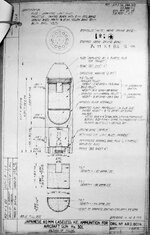
People are generally scoffing when the (unguided) rockets are mentioned in the role of AA defense, and indeed the low initial velocity does make them less desirable in that role. So - let's rocketize the 'normal' shells. Something like the Japanese Ho 301 shells, applied to the usual AA guns. The Ho 301 was supposed to do 220-245 m/s, depending what one reads. All of the propellant burned when the shell was still in the barrel.

ho 301 ammo.jpg

Probably the small AA guns are not worthy of this complication, but the bigger could've benefited. For the British - a boost to the MV of the 2pdr LVpom pom, even if it is only some 150 m/s (for ~730 m/s)? Vs. the historical thing - need to make the new 2pdr HV guns, that were also much heavier - the legacy guns can stay and still be very useful in it's original role.
For the Germans - removes a good deal of the perceived need to have the 5cm AA gun developed, with the 3.7cm automatic going to close to 1000 m/s.

Also for the bigger guns. The 75-76mm guns might've gotten another lease of life, with MVs going to 900-1000 m/s. Also the 85-94 mm guns, those would've now be able to cover the high altitudes much better.
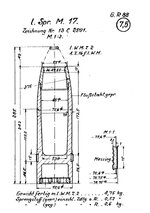
Here is the ww1 German 75mm mortar shell, all-in-one. Construction is very similar to the Ho 310 shell:

75mm mort.jpg

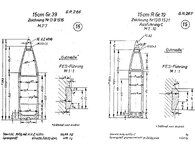
Their ww2 rocketized 15cm shells (as depicted to the right) devoted a lot of the cavity for the rocket engine, not a thing that I'm favoring for either the AA shells of normal calibers, nor for the field artillery. That shell was also rather long, compared to the 'normal' shells, as the one to the left might look like:

15cm rak.jpg
 

Users who are viewing this thread

Back