Bomb shortages,
There certainly was in 1944, with the RAF having to use American SAP and GP bombs, as well as expending its own stocks of GP bombs, to make up for a shortage of MC bombs.
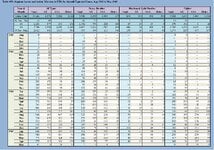
The UK Statistical Digest repots British bomb production generally went up in 1942 from 39,959 tons in Q1 to 64,562 in Q4, but Q1/43 was 50,610 tons, Q2 was 38,511 tons then things began to climb again. The War Production Board report as expected shows the expansion of US production in 1942, 34,000 tons in January to 109,000 tons in December. 132,000 tons in January 1943, but down to 81,000 tons in March before returning to the 120,000 or so tons mark in April, further expansion from September. So there was a slowdown in early 1943. The US increased bomb production by almost 2.5 times 1942 to 1943, the British 6% more, the lift 1943 to 1944 was 26% for the US and 38% for the British, not sure why there are such large monthly fluctuations.
Did we get up on the wrong side of the bed? Perhaps actual discourse is indicated. I'm willing if you are. Sounds like we both have a lot of data.
I learnt a while ago not to let the online spill over into day to day, except for a laugh. Reactions like the above tell so much. As noted before I do not do public release of personal data, a long standing policy started by how "passionate" some people become over issues and reinforced after watching what happens when someone is hit by identity theft and finally as I want the data to stand alone.
The logic I see being deployed is
fighters smaller number of chances times greater lethality = X (the number of bombers lost) = flak greater number of chances times smaller lethality => fighters lethality = flak lethality since X is the same. If this is true then there should be examples of flak causing high losses to a raid like fighters did.
A big data set of the Allied strategic bombers, US 4 engine, RAF 205 Group and Bomber Command are the Richard Davis spreadsheets.
The USAAF was very aware of the B-24's issues, after all it was only seen as an interim design until the definitive single tail version with more powerful engines hit the road.
This, other than the B-24K in 1943, that proved the excellence of the modifications, was the B-24N that was ordered to the tune of over 5,000 and was intended to become the primary USAAF medium bomber from 1945.
Except as mentioned the last time this claim was the USAAF production reports contradict the claim. As of March 1945 of the 8,852 heavy bombers, 4 engine, medium range, which is not the same as a medium bomber, 3,847 were B-17 and 3,976 were B-24N, the rest being B-24M, the B-17 and B-24N programs to end in June 1946. The medium bombers were the twin engine types, with the B-26 about to end production.