Best tank engines of WWII (1 Viewer)

Ad: This forum contains affiliate links to products on Amazon and eBay. More information in Terms and rules

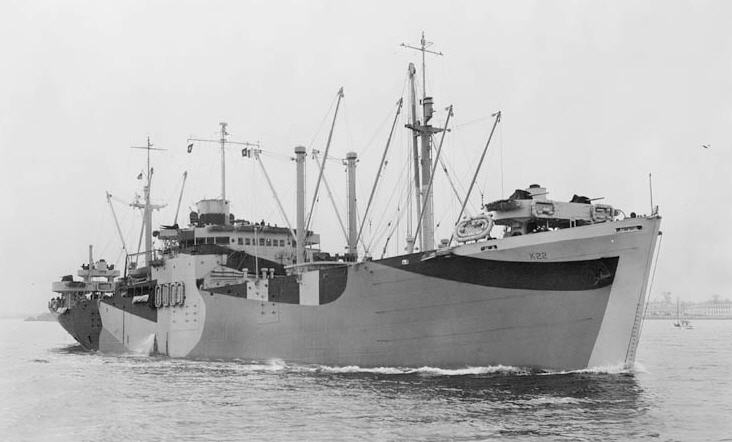
They were faster (16-17 kn, at least) which made them almost immune to Atlantic U-boats. None were sunk by U-boats and only 3 were sunk in the Pacific by kamikazes.
By the time victory ships entered service U boats were irrelevant. If the victory ships had entered service in 1942 a more than a few would have been sunk.
 
The Victory ships were really the successors to the US Maritime Commission C1, C2 & C3 designs of the pre-WW2 era that had not been designed for mass production. The Liberty came about because these could not be built in large enough quantities and were also required for various specialised naval purposes (escort carriers, seaplane tendrs, attack transports etc).

 
Sorry. Didn't explain that very well. The electric winches, cranes etc were more efficient as torque was available all the way through any movement.

The part I missed was the Liberty ships had 5 ton boom cranes with upgrades to 10 tons being made I think in 1944. The Victory ships had 14 5 ton
cranes but also had one 30 ton and one 50 ton crane as well. These allowed the self unloading as any item carried could be self lifted. The Victory
ships had the masts built into the hull which was what allowed the heavier cranes to be used.
steam engines can produce maximum torque at zero rpm. Electric motors do not have any advantage in that regard. In fact with the technology of the 1940s electric motors are more complicated to control. Where electric systems shine is the lack of steam pipes which are more difficult to install and require more maintenance
 
By the time victory ships entered service U boats were irrelevant. If the victory ships had entered service in 1942 a more than a few would have been sunk.
I doubt that many would have been sunk. The maximum surface speed of a type VII U-boat was 16-17 kn, approximately the same speed as the 6000shp Victory ships. (Some were built with 8500shp turbines and they could make 18-19 kn.) Unless you have a 4-5 kn advantage it is nearly impossible to "end around" a ship to get into a torpedo firing position, even if the ship is zig-zagging. There is a one in a thousand chance (or my guess thereabouts) that a U-boat will be in an exact position to fire right away without maneuvering to get ahead for a shot. (The most spectacular time this actually occurred was with the HMS Barham in the Mediterranean, but the odds of this was the golf equivalent of a hole-in-one.) This type of lucky occurrence could have happened a few times, but with an entire convoy moving 16-17kn and zig-zagging the Type VII U-boats would not be able to get into position to "shoot" in the vast majority of cases. This why the ocean liners carrying troops to Europe (with 10,000 or more troops on board) were allowed to sail alone across the Atlantic. They traveled at 28-30kn or better and were immune to U-boat attack. Even the type IX U-boats with a top surface speed of 18kn would not be able to get into a firing position on a 16-17kn Victory ship in almost all cases. Liberty ships had a max speed of 11 kn and often traveled much slower to not outrun slower ships in the convoy. This is why convoys were labeled "slow" or "fast", as this determined the threat they faced and protection they required.
 
Last edited:
I doubt that many would have been sunk. The maximum surface speed of a type VII U-boat was 16-17 kn, approximately the same speed as the 6000shp Victory ships. (Some were built with 8500shp turbines and they could make 18-19 kn.) Unless you have a 4-5 kn advantage it is nearly impossible to "end around" a ship to get into a torpedo firing position, even if the ship is zig-zagging. There is a one in a thousand chance (or my guess thereabouts) that a U-boat will be in an exact position to fire right away without maneuvering to get ahead for a shot. (The most spectacular time this actually occurred was with the HMS Barham in the Mediterranean, but the odds of this was the golf equivalent of a hole-in-one.) This type of lucky occurrence could have happened a few times, but with an entire convoy moving 16-17kn and zig-zagging the Type VII U-boats would not be able to get into position to "shoot" in the vast majority of cases. This why the ocean liners carrying troops to Europe (with 10,000 or more troops on board) were allowed to sail alone across the Atlantic. They traveled at 28-30kn or better and were immune to U-boat attack. Even the type IX U-boats with a top surface speed of 18kn would not be able to get into a firing position on a 16-17kn Victory ship in almost all cases. Liberty ships had a max speed of 11 kn and often traveled much slower to not outrun slower ships in the convoy. This is why convoys were labeled "slow" or "fast", as this determined the threat they faced and protection they required.
While it is true that U-Boats (and WWII subs in general) were not fast, stating that fast ships were immune to attack is really not correct.

Subs rarely chased their quarry, they typically roamed known shipping lanes and attacked out of ambush. A good many warships were lost during war, who's speed was typically double that of a submarine.

If a sub has a optimal firing solution, it's not the sub's speed that plays a role in the "kill", it's the speed of the torpedo.

Example:
The IJN's Type 93 (Long Lance) travelled at 53 knots.

The Kreigsmarine's G7 family of torpedoes ranged from 25 knots to 48 knots.

The USN's Mark 14, faults aside, travelled at 46 knots.
 
While it is true that U-Boats (and WWII subs in general) were not fast, stating that fast ships were immune to attack is really not correct.

Subs rarely chased their quarry, they typically roamed known shipping lanes and attacked out of ambush. A good many warships were lost during war, who's speed was typically double that of a submarine.

If a sub has a optimal firing solution, it's not the sub's speed that plays a role in the "kill", it's the speed of the torpedo.

Example:
The IJN's Type 93 (Long Lance) travelled at 53 knots.

The Kreigsmarine's G7 family of torpedoes ranged from 25 knots to 48 knots.

The USN's Mark 14, faults aside, travelled at 46 knots.
Well, we're talking about convoys of merchant ships here. Three things have to be known exactly for a torpedo shot to intersect the target: target course (=angle on the bow), target speed, target range. To obtain these the sub has to make an "approach." (The target can be at any range at any angle on the horizon, when first contacted.) Here's an excerpt from Ch9 of "OEG Report 51 - ASW in WWII" at Ibilio, page 95. (Underlined passage by me.)

1773894219349.png

FIGURE 3. Ships sunk per million miles of track in a U-boat density of 1 per million square miles, as a function of ship speed.

9.2.1 The Effect of Ship Speed on Submarine Approach

In order to study the effect of speed, it is necessary to assign the ships to speed classes and then determine the number of ships sunk in each class and the overall exposure of each class to submarines. This overall exposure must take into account both the total distance traveled by ships of each class and the density of U-boats along the ships' courses, as indicated by equation (1).

In order to do this a study was made in which the Atlantic was separated into areas. In each area the mileage traveled by independents of different speed classes and the average density of U-boats were taken month by month. A ship which sails 2000 miles in waters with one U-boat per million sq miles is exposed to about the same risk as one traveling 1000 miles in waters with two U-boats per million sq miles. Hence, the exposure for each speed class is given by the product of the mileage and the U-boat density. This was done for seven speed classes, covering a period of 4 months and four areas.

The number of casualties per unit of exposure is a measure of the safety of the speed class in question, and this is plotted in Figure 3 as a function of speed. The sharp decrease in sinkings at speeds between 10 and 15 knots is very obvious. In order to explain this result the following analysis of submarine approach methods is required.

If a ship is sighted in a favorable position, the U-boat may approach either surfaced or submerged and attack directly. If the U-boat is not in a favorable position, it has to estimate course and speed and follow the ship until it can close the range or get into position ahead for a submerged approach. The direct attack may be called Method A, the attack following a chase, Method B. Since Method B provides a good opportunity for tracking and obtaining torpedo-firing data, it is frequently used, a typical procedure being to track until dark and then attack.

Method B requires that the U-boat be able to overtake the ship, namely, that the ship speed be not greater than about 15 knots (14 knots appears to be the critical speed in Figure 3). Method A, on the other hand, may be used against ships of any speed, though the number of times the U-boat is in favorable position will decrease as the speed of the ship increases. This decrease certainly does not account for the sharp rise in the curve of Figure 3, which is due to the advent of attacks made by Method B. A diagram is helpful in making clear the significance of these two methods.

Also, the Japanese Type 93 torpedo, while fast, was only used on cruisers and destroyers. It was 24-inch diameter and way to long and heavy for submarines.

The entire document (linked above) is worth the read. While a faster torpedo should, in theory, be somewhat more accurate than a slower one, the other errors (listed above) override this by an order of magnitude. The U.S. sucessfully used an electric torpedeo in the Pacific in 1944 (the best year for tonnage sunk) and it had a speed of only 29 knots! Because it left no wake the subariners liked it a lot (once the bugs were worked out of it.)

Edit: Added this summary at end of section in document:

To summarize, then, there are three important speed classes.
  1. High-speed ships - sufficiently fast that the submarine cannot track or overtake them. The sinkings are low and not greatly dependent upon speed, though the additional speed of the ship clearly makes the submarine's problem increasingly difficult.
  2. Low-speed ships - so slow that the submarine can track and overtake without difficulty. Sinkings are approximately ten times as great as in the high speed case and are not critically dependent on speed.
  3. Intermediate-speed ships - for which there is an abrupt transition from the conditions of class 2 to class 1 and whose losses depend strongly on speed.

Edit 2: The Germans were worried about the speed of the Victory ships, as recorded in this video. Youtube link is Drachinifel - Walter and Electro-Boots. Go to 42:50 in the video where he's talking about a proposed Type 26W U-boat (Walter-Propulsion) that would be able to use the standard "follow and end-around" approach method because of its greater speed.

 
Last edited:
My Uncle's boat, Cavalla, struck Shokaku while she was recovering aircraft from a strike.
While the carrier was moving along a predictable course, she was at speed and the Cavalla was submerged and barely pulling any knots.

Shokaku was capable of 34 knots, though her speed would have been slightly reduced in this situation, it illustrates the fact that a fast ship is most certainly not immune from being sunk by a much slower submarine.
 
My Uncle's boat, Cavalla, struck Shokaku while she was recovering aircraft from a strike.
While the carrier was moving along a predictable course, she was at speed and the Cavalla was submerged and barely pulling any knots.

Shokaku was capable of 34 knots, though her speed would have been slightly reduced in this situation, it illustrates the fact that a fast ship is most certainly not immune from being sunk by a much slower submarine.
The IJN carriers of CarDiv 1 were running at 25-26 knots on 19th June. Taiho was doing 26 knots when torpedoed by Albacore & Shokaku at 25 knots when torpedoed by Cavalla a few hours later.

You might enjoy this analysis of Shokaku's loss. I'm sure I've posted it before but no harm in doing so again.
 
The IJN carriers of CarDiv 1 were running at 25-26 knots on 19th June. Taiho was doing 26 knots when torpedoed by Albacore & Shokaku at 25 knots when torpedoed by Cavalla a few hours later.

You might enjoy this analysis of Shokaku's loss. I'm sure I've posted it before but no harm in doing so again.
Great link, thanks!

They did some solid research.
 
steam engines can produce maximum torque at zero rpm. Electric motors do not have any advantage in that regard. In fact with the technology of the 1940s electric motors are more complicated to control. Where electric systems shine is the lack of steam pipes which are more difficult to install and require more maintenance
Not saying you're wrong, but please explain to me how an engine makes its maximum torque (or any, for that matter) when it isn't running? :-k
 
Not saying you're wrong, but please explain to me how an engine makes its maximum torque (or any, for that matter) when it isn't running? :-k
It's producing no power at zero rpm, but the steam pressure still pushes the piston down (pressure is force divided by area), and the connecting rod transmits force to the crank. Torque is force times moment arm. In a motor, the electric current produces magnetic fields in the stator and rotor.

Internal combustion engines can't, except through some sort of transmission, like a torque converter.
 
Not saying you're wrong, but please explain to me how an engine makes its maximum torque (or any, for that matter) when it isn't running? :-k

Hi. Torque is an angular turning force. Think of Torquing a large nut, you are applying the force with a wrench, and the torque is still applied even when the nut stops turning, you can still apply the force, but it doesn't move. However, the force (torque) can still be applied when the nut stops turning due to resistance from nut turning against the clamping load. Torque on a turning shaft depends upon whatever resistance is trying to stop the shaft turning, usually the resistance is the shaft doing some work and the torque has to be applied as the shaft turns, so doing work.
A steam piston engine generates force on the piston by the action of the pressurised steam being allowed to flow into the cylinder, the push force on the piston and conrod is converted into rotational turning torque by the crankshaft. If the resistance to the crankshaft is too large, the piston will stop, say at half travel, even though the full steam pressure is still applied to the piston. In this condition the maximum torque is being applied to the stopped crankshaft, but no work is being done.
Most steam piston engines are double acting with pressurised steam used on both strokes of the piston, many steam piston engines have multiple cylinders to avoid problems of stalling at TDC or BDC and are often configured as multi-expansion engines with the cylinders having High, Medium and Low pressure working cylinders, to ensure the full expansion of the steam from the first intake, to the last exhaust, often with condensation and recycling to the boiler on ships and high efficiency installations.

Cheers

Eng
 
Not saying you're wrong, but please explain to me how an engine makes its maximum torque (or any, for that matter) when it isn't running? :-k
Other people answered about the steam engines.
In the electric engines, that are siblings to the electric magnets, the highest torque is indeed at zero RPM (so is the current needed to provide that torque). If the engine is prevented from turning - we, future electricians, did that in high school - the current the engine consumes rises sharply, and so is the torque. That, maximal current required was referred as the 'current of the short circuit' back in the day, and I guess today, too. We were doing the experiments and measuring on the AC motors.
Obviously, the electric engine that is on and cannot turn will start burning, due to the great current flowing - short circuits are no fun.

When the engine starts to turn, then it makes the power and torque.
 
Other people answered about the steam engines.
In the electric engines, that are siblings to the electric magnets, the highest torque is indeed at zero RPM (so is the current needed to provide that torque). If the engine is prevented from turning - we, future electricians, did that in high school - the current the engine consumes rises sharply, and so is the torque. That, maximal current required was referred as the 'current of the short circuit' back in the day, and I guess today, too. We were doing the experiments and measuring on the AC motors.
Obviously, the electric engine that is on and cannot turn will start burning, due to the great current flowing - short circuits are no fun.

When the engine starts to turn, then it makes the power and torque.
Today, known as "locked rotor torque".
 
Well, we're talking about convoys of merchant ships here. Three things have to be known exactly for a torpedo shot to intersect the target: target course (=angle on the bow), target speed, target range. To obtain these the sub has to make an "approach." (The target can be at any range at any angle on the horizon, when first contacted.) Here's an excerpt from Ch9 of "OEG Report 51 - ASW in WWII" at Ibilio, page 95. (Underlined passage by me.)

View attachment 872197
FIGURE 3. Ships sunk per million miles of track in a U-boat density of 1 per million square miles, as a function of ship speed.


Also, the Japanese Type 93 torpedo, while fast, was only used on cruisers and destroyers. It was 24-inch diameter and way to long and heavy for submarines.

The entire document (linked above) is worth the read. While a faster torpedo should, in theory, be somewhat more accurate than a slower one, the other errors (listed above) override this by an order of magnitude. The U.S. sucessfully used an electric torpedeo in the Pacific in 1944 (the best year for tonnage sunk) and it had a speed of only 29 knots! Because it left no wake the subariners liked it a lot (once the bugs were worked out of it.)

Edit: Added this summary at end of section in document:


Edit 2: The Germans were worried about the speed of the Victory ships, as recorded in this video. Youtube link is Drachinifel - Walter and Electro-Boots. Go to 42:50 in the video where he's talking about a proposed Type 26W U-boat (Walter-Propulsion) that would be able to use the standard "follow and end-around" approach method because of its greater speed.
You have deliberately or otherwise misapplied the graph. Here is the section you took it from:

1774522653745.png


The key sentence is : "an analysis of the effect of merchant vessel speed on the safety of independent ships". You have ignored the benefits of convoys which had a lower loss rate than independently routed ships even ones as fast as the Victories. The cut off speed was 15 knots with ships below that speed required to travel in convoy. Obviously they were areas of the oceans were conveys were not a regular feature but by the tine the Victory ships appeared in mid 1944 the convoy system was well established.

1774523391393.png


Ships in convey were in fact safer than even fast independent ships. As a consequence fast troopships with speed of 15 knots or greater and oil tankers with minimum speed of 14.5 knots were conveyed in their own fast convoys. From the same page as the graph:

1774524152695.png

Clearly stating the most successful measure was escorted convoys.

The 15 knot limit was established in by the British early in the war as compromise between the loss rates verses the much faster turnaround time of independently routed ships. It proved to be a good number but in no way does it mean that fast independently routed ships were invulnerable. Interestingly the Cabinet ordered a reduction in minimum speed for 15 to 13 knots with unfortunate results. After some moths the 15 knot limit was reinstated.
From Roskill The War At Sea 1939 - 1945 Volume 1 : the Defensive:

1774525178552.png


The real reason that no Victory ships were sunk by U Boats is simply opportunity . By the time Victory ship appeared the U boat war had changed dramatically due to the Normandy invasion. Atlantic shipping was no longer under serious threat. At the time of D Day there only 31 Victories had been delivered and they were on the west coast of the US. Only 104 of them were delivered in 1944 along with 112 Haskell Class Attack Transports. The vast majority of these Victories stayed in the Pacific although some did serve as troopships in the Atlantic. There was virtually no opportunity for a U-boat to actually encounter a Victory in the open ocean.

The radically different nature of the U-boat war after D-Day is discussed in a different chapter of the same document you reference
HyperWar: Antisubmarine Warfare in World War II [Chapter 7]
The entire document is well worth a read.
 
well obviously it was the s100
 

Attachments

  • KESR_22_Maunsell_(Southern_62).jpeg
    KESR_22_Maunsell_(Southern_62).jpeg
    1.5 MB · Views: 8

Users who are viewing this thread

Back