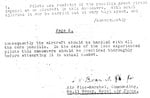
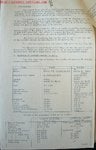
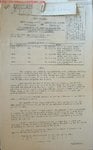
Hop - From the Dive tests at Wright Pat - I'll try to find the Boscomb Down report but it is similar. The Spit had a slightly higher M for recommended maximum but your P-51 figures are understated and out of context from the actual USAAF and RAF dive test results and reports.
Additionally the 51 did not have much of a 'tuck effect' in dive, or high stick forces, with test noting that the biggest danger was over controlling the stick in a dive or entering a tuve from a roll or steep turn at high altitude and airspeed.
Summary
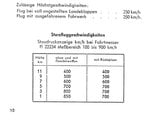
Manual - limit Dive = .75M recommended
Test - limit Dive = .8 M recommended as maximum
Test Summary
Compressibility effects noted at .76
Ultimate Dive = .81 to .83 (attain at high risk)
.84 to .85 actual achieved and with significant damage and very high risk - maximum dive attained in the Tests
Porpoising effects believed to be initated by 'ballooning' of fabric elevators (true - and fixed with metal elevator modifications in production P-51D-10 and retro fit kits for all prior models.
Actual Report
TSCHEP 5R/RLB/MEM/2-6258
Wright Field, Dayton, Ohio
Date:- 9th October, 1944
url
Note on Dive Tests on 'Mustang IV'
Details/summary
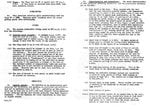
1. Reference is made to Inter-Office Memorandum, P.W. Nosker:ffc: 51 dated 27 June, 1944 and Lt. D. B. Parker

C:51 dated 10 July, 1944 from Chief, Aircraft Laboratory to Chief, Flight Section requesting that compressibility dive tests be conducted on the P-51D airplane.
2. A series of thirty-one dives was conducted by the Flight Research Branch between 3 August, 1944 and 16 September, 1944. These dives included high and low altitude tests and limited stability tests at high Mach numbers. A complete report of these tests is in the process of preparation at the present: however, the necessary information is forwarded so that it may be made available immediately for operating instructions.
3. The results indicate that the airplane should be restricted to a Mach number of 0.80 due to compressibility difficulties which become increasingly dangerous beyond that point. It is recommended that the airplane be placarded with the following limit diving speeds:-
Pressure Altitude (Ft.) Pilot's IAS (m.p.h.)
40,000 275
35,000 310
30,000 345
25,000 385
20,000 425
15,000 470
10,000 505
5,000 505
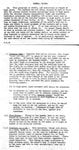
4. Porpoising.- The P-51D airplane, at high speeds, is subject to the longitudinal instability commonly referred to as porpoising. The results to date indicate that the condition may be induced at a Mach number of 0.70 and above, but may be encountered at somewhat lower Mach numbers at low altitude. It is known that the fabric bulge in the elevator surfaces is more critical at low altitudes and may be related to the airplane's increased tendency to porpoise at lower Mach numbers in that range.
The porpoising is not a severe condition and can be controlled. In the first place, the condition is usually induced by the pilot, since any ununiform elevator stick force will result in the porpoising at high Mach numbers. Any effort on the part of the pilot to counteract this effect will result in increasing amplitude. It may actually be stopped by holding the stick firmly in one position or, in fact, eliminated by trimming forward gradually to near zero stick forces as the dive is entered, thus reducing the amount of forward stick forces necessary to maintain the dive angle.
5. Rolling.- As a Mach number of 0.75 is approached , a slight amount of rolling may become apparent with a simultaneous reduction in aileron sensitivity. This rolling does not become severe, and may be easily controlled.
6. Vibration.- At a Mach number of 0.76 a true effect of compressibility becomes evident in the form of a complete vibration of the airplane. This vibration is caused by a combination of compressibility effects on the wing and the horizontal stabilizer. The condition becomes increasingly severe as the Mach number increases and could eventually cause a primary structural failure.
7. Maximum Limit of Combat.- The airplane has been dived to a maximum Mach number of 0.85 and on several occasions to 0.84. In each case the pilots reported that the vibration became extremely heavy beyond 0.80. In each dive to 0.84 or above the vibration became so severe that the airplane was damaged. The leading edge skin of the wing flap was buckled between rivets, a coolant radiator cracked and hydraulic line broken due to vibration on various dives to 0.84 and above. In extreme war emergency the airplane can be dived to a Mach number of 0.83 (400 m.p.h. Indicated Airspeed at 25,000 ft.), if a very gradual pull-out is made.
From the P-51D Manual ( same as P-51-B)
P-51 Mustang Pilot's Flight Manual - Google Books