I forgot to mention - in the pic I posted above, the complete "passenger" section of the loading doors is open (visible on the outside of the aircraft, through the door opening).
When used for para dropping, this door was closed and locked into position, but the main panel was unlatched and removed, leaving just the door frame surround in place (see the photos in Wurger's post, with the the inner face of the panel visible, along with the latches, and the outside view of the closed door frame).
All protrusions aft of the door were covered (locking latches, hinges etc), using either a canvas cover, but more often just heavily taped over with fabric "Gaffer" tape (stronger, cloth-fabric version of what we now know as duct tape).
This was to prevent any loose items from snagging or chaffing, such as harness straps, clothing/equipment, static lines etc, and possibly causing serious, or fatal, problems, as the jumpers exited the aircraft.
These precautions were particularly important when American parachutes were used, as this type deployed canopy first, making it possible, although probably unlikely, that the canopy could possibly snag on any protrusion. (The British " X Type" parachute used a static line and bag system, where the rigging lines deployed first, followed by the canopy smoothly sliding from the bag attached to the static line. Although full deployment took very slightly longer than the US type (about one to one and a half seconds longer), this system allowed a smoother deployment, with much reduced opening shock, and greatly reduced the possibilities of twists in the rigging lines and/or canopy malfunctions or deployment delay).

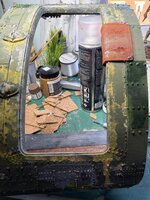

 I think I have similar images of the C-53 'Skytrooper' interior also, maybe even in colour, but am not sure. I will try to find them. IIRC the C-53 jump lights were arranged differently than in the C-47, but still with only 1 red and 1 green.


