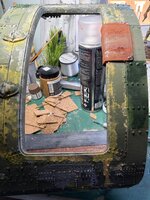
C47 interior

Ad: This forum contains affiliate links to products on Amazon and eBay. More information in Terms and rules

grubber

Recruit
2
1
Jul 19, 2026
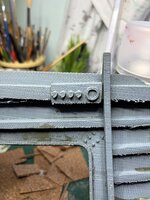
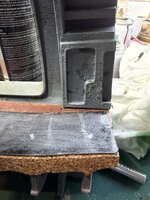
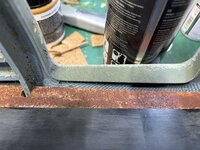
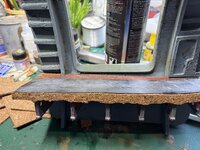
Good morning to all I need some help please with a large model doorway that I am building this doorway is in 6th scale and being large shows a lot of detail. Can someone let me know if the floor runs parallel with the door or does it slope towards the rear. What colour is the floor and the box on show is for what purpose? And I have ordered lights for the jump what order would they be in please? Lastly I need to build a fire extinguisher are there any pictures please thanks in advance. Des

 

Attachments

  • IMG_0618.jpeg
    IMG_0618.jpeg
    2.2 MB · Views: 22
  • IMG_0617.jpeg
    IMG_0617.jpeg
    1.6 MB · Views: 27
  • IMG_0616.jpeg
    IMG_0616.jpeg
    2.4 MB · Views: 24
  • IMG_0615.jpeg
    IMG_0615.jpeg
    2.7 MB · Views: 24
  • IMG_0614.jpeg
    IMG_0614.jpeg
    2.6 MB · Views: 20
The floor at the area of the door was slanted and its edge was paraller to the bottom sloped edge of the door. All that caused that the rear part of the floor was running almost horizontally in relation to the ground/airfield level when aircraft was parked. Judging by your pics the shape of the scale doorway is incorrect and fits more to the civilian variant. It looks like the DC-3 could have the door of different shape. But the top of the door was more rounded than the one you try to model. In the most bottom image and diagram you may notice that the civilian kites could have the smaller doorway of the different shape. The bottom edge of this was paraller to the floor that wasn't slanted at the area.

c47.jpg

ok-erection-maintenance-cargo-loading-weights_-jpg.jpg

door-jpg.jpg

Dakdoor2.jpg

Dakdoor3.jpg

DC-3_North_American_Airlines_(5437544751).jpg


dcd3.jpg

DC-3_door.jpg

the pic source: the net.
 
What Wurger said, plus there were several military variants of the DC-3 airframe.

C-47 series - 'Skytrain' combination cargo & troop transport
C-53 series - 'Skytrooper' primary troop transport & paratroop platform
R4D series - 'Skytrain', USN versions of the C-47 series
Dakota series
Dakota Mk I - basically the same as the C-47
Dakota Mk II - basically the same as the C-53
Dakota Mk III - basically the same as the C-47A
Dakota Mk IV - basically the same as the C-47B

The C-53 'Skytrooper' was the primary carrier for paratroopers during the second half of the war.

The image below is from the C-47 & C-47A manual dated Nov'44, and shows the jump lights. There were only 2 lights for the paratroops - 1 red and 1 green - unfortunately I do not know which is which in the image.

C-47:-47A Skytrain 1944.jpg

:study: I think I have similar images of the C-53 'Skytrooper' interior also, maybe even in colour, but am not sure. I will try to find them. IIRC the C-53 jump lights were arranged differently than in the C-47, but still with only 1 red and 1 green.
 
Last edited:
I forgot to mention - in the pic I posted above, the complete "passenger" section of the loading doors is open (visible on the outside of the aircraft, through the door opening).
When used for para dropping, this door was closed and locked into position, but the main panel was unlatched and removed, leaving just the door frame surround in place (see the photos in Wurger's post, with the the inner face of the panel visible, along with the latches, and the outside view of the closed door frame).
All protrusions aft of the door were covered (locking latches, hinges etc), using either a canvas cover, but more often just heavily taped over with fabric "Gaffer" tape (stronger, cloth-fabric version of what we now know as duct tape).
This was to prevent any loose items from snagging or chaffing, such as harness straps, clothing/equipment, static lines etc, and possibly causing serious, or fatal, problems, as the jumpers exited the aircraft.
These precautions were particularly important when American parachutes were used, as this type deployed canopy first, making it possible, although probably unlikely, that the canopy could possibly snag on any protrusion. (The British " X Type" parachute used a static line and bag system, where the rigging lines deployed first, followed by the canopy smoothly sliding from the bag attached to the static line. Although full deployment took very slightly longer than the US type (about one to one and a half seconds longer), this system allowed a smoother deployment, with much reduced opening shock, and greatly reduced the possibilities of twists in the rigging lines and/or canopy malfunctions or deployment delay).
 

Users who are viewing this thread

Back