
You weren't flippant. But anyway, thanks. Overall, I guess I'm saying, it was the nature of the upcoming conflict, most of all, that shifted the utilization of these respective aircraft. If you can swallow that, too, lol.There we go! That makes sense. It wasn't so much that you had used the sentence multiple times, it's just that it lacked the framing around it that you just added. No, that makes a lot more sense now, thank you for clarifying. I certainly see your point, and to be honest hasn't considered the reserves, so I guess they didn't wholly switch over to the F4U, just with the active, front line units.
EDIT: And I hope I didn't come across as flippant at all when I mentioned how many times you had used the sentence, I just didn't know how else to phrase it to illustrate what my issue with understanding you was.

Navigation
Install the app
How to install the app on iOS
Follow along with the video below to see how to install our site as a web app on your home screen.
Note: This feature may not be available in some browsers.
More options
You are using an out of date browser. It may not display this or other websites correctly.
You should upgrade or use an alternative browser.
You should upgrade or use an alternative browser.
Corsair and Hellcat in Europe (1 Viewer)
- Thread starter GregP
- Start date
More options
Who Replied?That's right, Greg. I know you boys don't like it too much when I relate to you what I head from my Dad and his buddies in his club (I mean, unless it's verified in Wikipedia by some 15-year-old or some darn thing, lol), but nobody who flew the F6F didn't represent it as a dream machine. And, that's the honest truth. I mean it, I mean it, I mean it, I mean it.The F6F was a seriously good figher over land or water, and would have done just fine. Of course, that'smy take on it, and it is shared by a LOT of former Navy pilots.
wuzak
Captain
The carrier war was all but over. The need for the perfect carrier-based bomber-fighter was all but over. Who by the Summer of 1945 didn't understand that?
Clearly not the USN, since they still have carrier based fighter bombers to this day, and they are in the process of acquiring a new one.
By carrier war I assume you mean carrier vs carrier. Carriers still had to protect the battle group from ground based aircraft.
They were training for their emerging role over land. The F4U unlike the F6F had serious track over land. They were the perfect fit for what was coming down the road.
Are you saying that the F6F was unsuitable for the role?
Yes, carrier vs. carrier; a sea war. A hangar-deck has its constraints. Another reason the F6F got the nod I believe resided in its simplicity.Clearly not the USN, since they still have carrier based fighter bombers to this day, and they are in the process of acquiring a new one.
By carrier war I assume you mean carrier vs carrier. Carriers still had to protect the battle group from ground based aircraft.
No. The F4U was already in the role. By default, really. But due to its having been stiffed on the carriers (for the most part, anyway; go with me, here), it had a good year in the role under its belt.Are you saying that the F6F was unsuitable for the role?
- Thread starter
- #65

GregP
Major
They could have picked the P-47, the P-51, the F6F, the F8F (too few made really) the P-38, or the F4U.
The P-47's were pretty tired from a LOT of sorties in WWII. The P-51 stayed on for awhile, but was intended for higher altitude work mostly. The F8F was probably right in there as one of the best performers ... but the end of the war saw the end of the orders and they didn't make many ... so it's pretty much out. The P-38 wasn't really a first class fighter-bomber ... it was a pretty good fighter, but not a great bomber.
That leave the F6F and the F4U.
We KNOW they picked the F4U but nobody in here knows why the F4U was picked ... unless they were in on the decision. If so, please chime in here. I certainly wasn't. I think the Hellcat would have been a better choice for ease of maintenance, toughness, far better manners at slow speeds (much nicer around a carrier or getting into or out of a short strip, better controlability right at liftoff) and in bad weather, decent bomb truck if not quite as good as the Corsair, and better visibility over the nose. Great accuracy in practice and in the war.
We KNOW they chose the hose- nose. I just wish I knew why ... speed wasn't an issue since jets were obviously on the way. 20 - 40 mph was nothing when carrying bombs ... the jets were 150+ mph faster. The Hellcat could turn tighter but the Corsair rolled better. Climb rate about a wash with equivalent engines and, if they HAD decided on the Hellcat, I'm pretty sure a more powerful R-2800 and a 4-blade prop would have shortly been in the works, possibly even as a field retrofit with a QEC package.
In the real world, the Corsair did pretty good work so it's hard to argue they made the wrong choice, but it is also hard to say the F6F would not have done as well given its many advantages. Another "what if" that can be sidestepped by just saying that the Corsair was picked and did OK in the early jet era when called upon to deliver the goods.
Go Hose Nose. Sorry faithful Hellcat ... but you got aced out after the war.
The P-47's were pretty tired from a LOT of sorties in WWII. The P-51 stayed on for awhile, but was intended for higher altitude work mostly. The F8F was probably right in there as one of the best performers ... but the end of the war saw the end of the orders and they didn't make many ... so it's pretty much out. The P-38 wasn't really a first class fighter-bomber ... it was a pretty good fighter, but not a great bomber.
That leave the F6F and the F4U.
We KNOW they picked the F4U but nobody in here knows why the F4U was picked ... unless they were in on the decision. If so, please chime in here. I certainly wasn't. I think the Hellcat would have been a better choice for ease of maintenance, toughness, far better manners at slow speeds (much nicer around a carrier or getting into or out of a short strip, better controlability right at liftoff) and in bad weather, decent bomb truck if not quite as good as the Corsair, and better visibility over the nose. Great accuracy in practice and in the war.
We KNOW they chose the hose- nose. I just wish I knew why ... speed wasn't an issue since jets were obviously on the way. 20 - 40 mph was nothing when carrying bombs ... the jets were 150+ mph faster. The Hellcat could turn tighter but the Corsair rolled better. Climb rate about a wash with equivalent engines and, if they HAD decided on the Hellcat, I'm pretty sure a more powerful R-2800 and a 4-blade prop would have shortly been in the works, possibly even as a field retrofit with a QEC package.
In the real world, the Corsair did pretty good work so it's hard to argue they made the wrong choice, but it is also hard to say the F6F would not have done as well given its many advantages. Another "what if" that can be sidestepped by just saying that the Corsair was picked and did OK in the early jet era when called upon to deliver the goods.
Go Hose Nose. Sorry faithful Hellcat ... but you got aced out after the war.

MikeGazdik
Senior Airman
First to answer the question at hand, they would have performed well, but not war-changers. The Pacific theatre, in the air as on the ground, was a world apart from the war in Europe. The Marines and Soldiers fought jungle warfare in the Pacific, while in Europe a lot was war within cities. (not all!) In the air war over the Pacific theatre I think a few major things are different: The Japanese did not have aircraft anywhere near the capabilities of the Luftwaffe, and the anti-aircraft weapons were only formidable on the continent of Japan. I say this as obviously not looking down the barrel of a Japanese gun emplacement on the island of "whatever" in the Pacific, but hopefully my point is understood. I am not certain, but I think a major reason the air war in the Pacific was not fought at the higher altitudes of Europe was the fact that there was not as a formidable of an anti-aircraft weaponry in the Pacific.
As great as the F6f stats are in the Pacific, I think they would have been a fraction of that if the Hellcat was used in large amounts in Europe. It was a great plane, perhaps the best, we had in the Pacific but i don't think it would have been as great against the Focke Wulf or the Messerschmitt. The Corsair I think would have been better in Europe than the Hellcat but not the equal to either the P-51 or the P-47.
Whereas I think the Mustang could have performed the roles of the land based Corsair and Hellcat in the Pacific with equal effectiveness.
As great as the F6f stats are in the Pacific, I think they would have been a fraction of that if the Hellcat was used in large amounts in Europe. It was a great plane, perhaps the best, we had in the Pacific but i don't think it would have been as great against the Focke Wulf or the Messerschmitt. The Corsair I think would have been better in Europe than the Hellcat but not the equal to either the P-51 or the P-47.
Whereas I think the Mustang could have performed the roles of the land based Corsair and Hellcat in the Pacific with equal effectiveness.
Last edited:
Glider
Major
This might be of interest, its the US paper comparing the FW190A-4 to the Hellcat and Corsair
http://www.wwiiaircraftperformance.org/fw190/ptr-1107.pdf
http://www.wwiiaircraftperformance.org/fw190/ptr-1107.pdf
CobberKane
Banned
- 706
- Apr 4, 2012
The F6F was a seriously good figher over land or water, and would have done just fine. Of course, that's my take on it, and it is shared by a LOT of former Navy pilots.
6Since it didn;t make it to Europe in numbers, who can say? But ... I find it very interesting that the F6F fought on after VE Day in the Pacific VERY EFFECTIVELY and yet is seen as obsolescent despite having a superior actual combat record to the very planes that people seem to think are better than the Hellcat. From one point of view, that is almost unexplainably strange.
But it IS a "what if," so there are no right or wrong answers.
The Hellcat continued to excel in the PTO after the war in Europe ended because - amongst other things - the great majority of fighters which it faced were modestly updated versions of the same aircraft with which Japan started the war. The performance advantages it enjoyed over A6M5s and Ki43s in 1944 - 45 simply would not have applied against Bf109G-6s or Fw190Ds. In fact all the data I can see suggest these aircraft would have held a sisgnificant advantage.
The Hellcat was a terrific fighter in the PTO, but the fighters it would have been facing over Europe at the same time would have had its measure. When the opposition can outclimb you and outrun you, you are in trouble.

drgondog
Major
They could have picked the P-47, the P-51, the F6F, the F8F (too few made really) the P-38, or the F4U.
The P-38 wasn't really a first class fighter-bomber ... it was a pretty good fighter, but not a great bomber.
.
The 5th, 9th and 15th AF loved it as a CAS fighter Bomber. Heavy firepower, great load and range mix.
Why is your opinion different?
Let's not miss the forest for the trees. Any of the single-engine Ps could have taken off from carriers and stick a hook in their ass and they're landing on carriers. Both the Navy and the Marines had squadrons of carrier-based F4Us by the time the war was winding down. But, by then, what were those carriers? Were they carriers in the heat of combat that needed aircraft that worked below the deck as well as it worked above the deck and in the sky? No, they weren't. Not hardly. They were rather floating islands we could move around to wherever we needed to deploy whatever aircraft-load they could hangar. Not one of the single-engine Ps nor the F4Us fit as well as the F6Fs on those carriers facing those earlier combat exigencies. They were good aircraft, but the F6Fs were better.They could have picked the P-47, the P-51, the F6F, the F8F (too few made really) the P-38, or the F4U.
The P-47's were pretty tired from a LOT of sorties in WWII. The P-51 stayed on for awhile, but was intended for higher altitude work mostly. The F8F was probably right in there as one of the best performers ... but the end of the war saw the end of the orders and they didn't make many ... so it's pretty much out. The P-38 wasn't really a first class fighter-bomber ... it was a pretty good fighter, but not a great bomber.
That leave the F6F and the F4U.
We KNOW they picked the F4U but nobody in here knows why the F4U was picked ... unless they were in on the decision. If so, please chime in here. I certainly wasn't. I think the Hellcat would have been a better choice for ease of maintenance, toughness, far better manners at slow speeds (much nicer around a carrier or getting into or out of a short strip, better controlability right at liftoff) and in bad weather, decent bomb truck if not quite as good as the Corsair, and better visibility over the nose. Great accuracy in practice and in the war.
We KNOW they chose the hose- nose. I just wish I knew why ... speed wasn't an issue since jets were obviously on the way. 20 - 40 mph was nothing when carrying bombs ... the jets were 150+ mph faster. The Hellcat could turn tighter but the Corsair rolled better. Climb rate about a wash with equivalent engines and, if they HAD decided on the Hellcat, I'm pretty sure a more powerful R-2800 and a 4-blade prop would have shortly been in the works, possibly even as a field retrofit with a QEC package.
In the real world, the Corsair did pretty good work so it's hard to argue they made the wrong choice, but it is also hard to say the F6F would not have done as well given its many advantages. Another "what if" that can be sidestepped by just saying that the Corsair was picked and did OK in the early jet era when called upon to deliver the goods.
Go Hose Nose. Sorry faithful Hellcat ... but you got aced out after the war.
That's over. It's history. The F6Fs proved themselves. The carriers are now moving islands, in a ground war, not a sea war, and the F4Us, from the outset, by default, had gone that distance of ground, and proved themselves over it, time and time, again. Put enemy carriers back into the fight and the F6Fs are right back there on those carriers and those F4U squadrons are gone for the same reasons the F6Fs got the nod over the F4Us on the carriers, in the first place. But, it was a different type of war, going forward, and, yes, credit that to those rotund, F6Fs, that didn't even look like they could get up into the sky, to some people, and, we move on. The F4Us were no slackers. Everybody knew that. They were the fit for going forward. Grumman's later F8F would have given anything at that time a good run for its money, but we simply had enough, and it was already on the ground, and we didn't need it. And, that's the big picture. If it isn't, it's a good piece of it.
Last edited:
- Thread starter
- #71
GregP
Major
Hi Drgondog,
Just from talking with about 30 P-38 pilots. Sure, it could handle ground attack, but in most cases, was the only aircraft available to handle the task in the Pacific, so it was used as such effectively. It could handle a decent amount of ordnance, but wasn't really designed for the task, being designed as a higher-altitude fighter from the outset. I suppose it could have been picked but, by the time the war finished, enough money had been spent winning that the cost of two engines versus one plus the added complexity of P-38 maintenance (it ain't easy to work on, believe me) would probably tip the balance even if it were equivalent or even superior in all capabilities.
In more modern times, the F-14 was retired when the cost of maintenance was found to be 6 times the cost of the F/A-18 in fleet service, The plane wasn't worn out or obsolete ... it was too expensive to continue with. When retired, the F-14 was running 125 hours of maintenace per flight hour while the F/A-18 was running 18 hours of maintenance per flight hour. Though I really liked the F-14 and the F-18 only carried half the bomb load half as far, the cost per flight hour for the F-14 was just too high. Same thing retired the SR-71, too.
The P-38 probably reached the point of being too expensive to operate in quantity after WWII when these decisions were made. I really think the only two viable candidates for a ground-support plane at the time that were avialable in large numbers were the F4U and F6F. I don't think the Skyraiders were in service in large numbers yet when the decision was made. Though they supported heavily in Korea, the decision to contuinue with the Corsair was made pretty quickly after WWII ended, so the Skyraider wasn't a huge factor at the time, though it certainly would have been a great choice, too ... as time proved beyond any shadow of a doubt.
Post war the Hellcat was used for second-line duty by the USA and was used by the French in Viet Nam (French Indochina at the time). It soldiered on until about 1960 in first line duty with other air arms. If I'm not mistaken, the last air arm that used the F6F in first line duty was Honduras.
Just from talking with about 30 P-38 pilots. Sure, it could handle ground attack, but in most cases, was the only aircraft available to handle the task in the Pacific, so it was used as such effectively. It could handle a decent amount of ordnance, but wasn't really designed for the task, being designed as a higher-altitude fighter from the outset. I suppose it could have been picked but, by the time the war finished, enough money had been spent winning that the cost of two engines versus one plus the added complexity of P-38 maintenance (it ain't easy to work on, believe me) would probably tip the balance even if it were equivalent or even superior in all capabilities.
In more modern times, the F-14 was retired when the cost of maintenance was found to be 6 times the cost of the F/A-18 in fleet service, The plane wasn't worn out or obsolete ... it was too expensive to continue with. When retired, the F-14 was running 125 hours of maintenace per flight hour while the F/A-18 was running 18 hours of maintenance per flight hour. Though I really liked the F-14 and the F-18 only carried half the bomb load half as far, the cost per flight hour for the F-14 was just too high. Same thing retired the SR-71, too.
The P-38 probably reached the point of being too expensive to operate in quantity after WWII when these decisions were made. I really think the only two viable candidates for a ground-support plane at the time that were avialable in large numbers were the F4U and F6F. I don't think the Skyraiders were in service in large numbers yet when the decision was made. Though they supported heavily in Korea, the decision to contuinue with the Corsair was made pretty quickly after WWII ended, so the Skyraider wasn't a huge factor at the time, though it certainly would have been a great choice, too ... as time proved beyond any shadow of a doubt.
Post war the Hellcat was used for second-line duty by the USA and was used by the French in Viet Nam (French Indochina at the time). It soldiered on until about 1960 in first line duty with other air arms. If I'm not mistaken, the last air arm that used the F6F in first line duty was Honduras.
Last edited:
FlakDancer
Airman
- 23
- Mar 22, 2013
GregP
As one who lives not too far from one of the Navy's Master Jet Bases, your post reminded me of how I miss -- well somewhat miss -- the ole A-6 Intruder's flying over. They were just plain old fasioned loud even by modern jet standards. They were an earlier victim of the oncoming F-18 / F-14 wranglings. Though older than the F-14's, they were still incredible planes with a great attack range. Still no mistaking that plane overhead!
Though I would not claim to be an expert, everything I've ever read about the demobilization seems to show it was not as clearly thought out as it should have. I think the military and political leaders knew this in many ways. But, it should be remembered that one of thing that guided them early on was that all over the place was huge fields of aircraft that were no longer needed. That, and poorly realizing what would come next in terms of a military conflict probably lead to many, many poor choices. It was also a transistional time for avaiton also. Thank goodness the F-86 came along when it did!
As one who lives not too far from one of the Navy's Master Jet Bases, your post reminded me of how I miss -- well somewhat miss -- the ole A-6 Intruder's flying over. They were just plain old fasioned loud even by modern jet standards. They were an earlier victim of the oncoming F-18 / F-14 wranglings. Though older than the F-14's, they were still incredible planes with a great attack range. Still no mistaking that plane overhead!
Though I would not claim to be an expert, everything I've ever read about the demobilization seems to show it was not as clearly thought out as it should have. I think the military and political leaders knew this in many ways. But, it should be remembered that one of thing that guided them early on was that all over the place was huge fields of aircraft that were no longer needed. That, and poorly realizing what would come next in terms of a military conflict probably lead to many, many poor choices. It was also a transistional time for avaiton also. Thank goodness the F-86 came along when it did!
- Thread starter
- #73
GregP
Major
Yeah, the old A-6 was a very good aircraft. Basically all it lacked in my mind was some forward firing weapon(s), maybe two pylons for AAM's and that's about it. A bit more power would have been nice, but it could cary some serious weapon loadouts a long way, especially when compared with the F/A-18. Some guys I knew at the time said they should have retired the Hornets and stayed with the A-6 ... they were, of course, A-6 drivers. I got to hear them awhile when in Seattle area since they still had EA-6B Prowlers at NAS Whidby Island and they still flew the pattern close to me at the time.
Both the F-14 and A-6 were clearly superior to the F/A-18 in bomb load and range and, when it was loaded with bombs ... the F/A-18 isn't exactly a speed demon ... the A-6 might even keep up with it until weapon release. I KNOW the A-6 would apss it when the F/A-18 is on its way home and the A-6 is still ingressing a LONG way past the F/A-18 turnaround point. If they load the F-35 down with eternal weapons, it'll have essentially the same flight performance as the F/A-18 and teh same stealth ... it's only much better at both when carrying the internal loadout with a clean exterior. I hope they remember that and use appropriate tactics ... if it ever needs to be used. We can hope not, but history says otherwise, doesn't it?
Both the F-14 and A-6 were clearly superior to the F/A-18 in bomb load and range and, when it was loaded with bombs ... the F/A-18 isn't exactly a speed demon ... the A-6 might even keep up with it until weapon release. I KNOW the A-6 would apss it when the F/A-18 is on its way home and the A-6 is still ingressing a LONG way past the F/A-18 turnaround point. If they load the F-35 down with eternal weapons, it'll have essentially the same flight performance as the F/A-18 and teh same stealth ... it's only much better at both when carrying the internal loadout with a clean exterior. I hope they remember that and use appropriate tactics ... if it ever needs to be used. We can hope not, but history says otherwise, doesn't it?
Last edited:
Shortround6
Lieutenant General
At some point the F4U was picked over the F6F and it appears that point was sometime in 1944. It often takes a year or more for production decisions to show up in the front lines. I was wrong earlier, there were TWO prototype F6Fs with the R-2800-18 engine built. The engine was in short supply and the F4U-4 got it. NO production F6F-6s. Grumman studied putting a R-4360 in the F6F airframe but decided too many changes were needed. F6F production was over with and Grumman was working other aircraft when the R-2800-32 engine (the sidewinder) became available and was put in the F4U-5.
I don't know why but it seems like either the F6F didn't have the potential to be easily re-engined/upgraded or Grumman had enough other GOOD designs (F7F, F8F, F9F) in hand to keep redesigning the F6F from being a high priority. Vought on the other hand had no real piston engine successor to the F4U and may have tried a bit harder to upgrade it (or it was more adaptable?) and Vought's first jet was a turkey, leaving Vought no choice but upgrade the F4U?
The post war era was certainly a time of confusion with many aircraft (even jets) becoming obsolete before they could go from prototype to production. Jet engine capability increased in a dramatic fashion in just a few short years but some aspects of jet performance were lacking in 1945-46-47. A piston plane intended to cover some of the jets shortcomings in 1946 was totally obsolete in 1949 because the goal had moved, teh jets were that much better, not that the piston engine plane had failed to achieve it's performace goals.
I don't know why but it seems like either the F6F didn't have the potential to be easily re-engined/upgraded or Grumman had enough other GOOD designs (F7F, F8F, F9F) in hand to keep redesigning the F6F from being a high priority. Vought on the other hand had no real piston engine successor to the F4U and may have tried a bit harder to upgrade it (or it was more adaptable?) and Vought's first jet was a turkey, leaving Vought no choice but upgrade the F4U?
The post war era was certainly a time of confusion with many aircraft (even jets) becoming obsolete before they could go from prototype to production. Jet engine capability increased in a dramatic fashion in just a few short years but some aspects of jet performance were lacking in 1945-46-47. A piston plane intended to cover some of the jets shortcomings in 1946 was totally obsolete in 1949 because the goal had moved, teh jets were that much better, not that the piston engine plane had failed to achieve it's performace goals.
- Thread starter
- #75
GregP
Major
Good points SHortround. I think Grumman was just too busy with the planes you mentioned. They were turning the F7F into a 2-seat, radar equipped night fighter, the Bearcat was setting world records (kept doing so, and still has it), and the Hellcat was probably bottom of the priority heap, just as you said. You are spot on with Vought, too. If your new jet fails, might as well fix up the "war hearo" and soldier on until a new jet design can be made ready. Unfortumately the F7U Gutlass din't fare much better than the F6U Pirate, although it DID get purchased and made it into fleet service ... but everyone hated it ... so te Cirsair was again in a position to save some company revenue.
Grumman kept up an unbroken streak of good planes and the Hellcat, while fondly rmembered by all who flew it, was quickly just a Naval Reserve aircraft on its way out. It COULD have been upgraded, but there werer just too many good irons in the fire at Grumman to save them all, and speed was becomming more of a darling number in those days as the jets kept going faster and faster, even the unproduced prototypes.
Grumman kept up an unbroken streak of good planes and the Hellcat, while fondly rmembered by all who flew it, was quickly just a Naval Reserve aircraft on its way out. It COULD have been upgraded, but there werer just too many good irons in the fire at Grumman to save them all, and speed was becomming more of a darling number in those days as the jets kept going faster and faster, even the unproduced prototypes.
CobberKane
Banned
- 706
- Apr 4, 2012
Let's not miss the forest for the trees. Any of the single-engine Ps could have taken off from carriers and stick a hook in their ass and they're landing on carriers.[/. QUOTE]
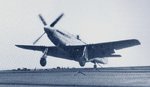
The P-51 or P-47 as carrier fighters? Really? The Thundebolt needed half of England to take off and land and it was huge - major drawbacks for a carrier fighter. I read an account from Grummans chief test pilot who said the factory was concerned that North American were looking at making a carrier version of the Mustang, but once he flew it he knew it was never going to happen; the take off and landing characteristics were so far out of the ball park that it would have required a major redesign.
Objection, assumes facts not in evidence. I never said they'd make good carrier fighters. I said they could easily have been configured as such.The P-51 or P-47 as carrier fighters? Really? The Thundebolt needed half of England to take off and land and it was huge - major drawbacks for a carrier fighter. I read an account from Grummans chief test pilot who said the factory was concerned that North American were looking at making a carrier version of the Mustang, but once he flew it he knew it was never going to happen; the take off and landing characteristics were so far out of the ball park that it would have required a major redesign.
Last edited:
Glider
Major
I read an account from Grummans chief test pilot who said the factory was concerned that North American were looking at making a carrier version of the Mustang, but once he flew it he knew it was never going to happen; the take off and landing characteristics were so far out of the ball park that it would have required a major redesign.
I am pretty sure that I have seen a photo of the P51 being tested for use as a carrier aircraft. It was strengthed for take offs and landings but have no idea as to how well the tests went. Clearly they didn't get a contract.
If anyone can anyone confirm or not this memory as it was from a long time ago, it would be appreciated.

Catch22
Major
Users who are viewing this thread
Total: 2 (members: 0, guests: 2)


