f6f-5 vs 109

who would win

  • f6fs ripp most the 109s in two

    Votes: 38 43.2%
  • 109s kill most off

    Votes: 42 47.7%
  • nothing

    Votes: 3 3.4%
  • other

    Votes: 5 5.7%

  • Total voters
    88

Ad: This forum contains affiliate links to products on Amazon and eBay. More information in Terms and rules

Soren - all those are weight dependent - what are you using for weight assumptions (I assume landing flaps)..

I absolutely agree. The figures are all for normal combat weight, and with landing flaps yes. So it naturally also depends upon how effective the flaps are. (The P-47 for one had VERY large flap surfaces)
 
At normal Combat weight?
Now normal take off weight for K-4 was 3362 kg incl 296kg fuel, which means only internal fuel, 89kg ammo and 77kg MW50 fluid. Landing speed was 150kmh at 3000kg, so if all ammo was still onboard and all MW50 used there would have been only 11kg fuel left, IMHO at that fuel level the plane wasn't combat capable, at least not for long , more probably the landing situation was ¼ fuel (74kg) still on board plus 15 kg ammo+MW50.
Source: Bf 109G-14/ASM, G-14/U-4 and K-4 performance chart provided by BUTCH2K, dating so faded that all I can figure out is 3. .44

And from Finnish 109G-2 test flown by Kokko: "Suitable glide speed on approach all down 200-220kmh, minimum at threshold 180kmh. If one must turn, speed must be increased…The plane sits on three-points at 155kmh" But no info on weight.
Source: Raunio's Lentäjän näkökulma II

Juha
 
Soren
in Your message #98 you claimed
Quote:" is way too high for the Bf-109G, the true stall speed being around 85 mph flaps gear up" You source for that, please! Because Dave Southwood, who you have cited, says in a article in Luftwaffe Eagles - the Messerschmitt Fighters p. 62 (on Flying 109G-2 Black 6) "Stall speeds are 96mph (155km/h) clean and 87 mph (140km/h) with undercarriage and flap down." And I bet he didn't have ammo on board.

And on landing "The threshold is crossed at 109 mph (175km/h)."

Juha
 
Hello Delcyros
G-5 was pressurized and its T/o weight was 3300kg but G-6 wasn't, T/o weight is given as 3,2 metric tons, now normal G-6Trop weighted 3154kg so more or less the same, if given as x,y metric tons the figure would be 3,2. And the object of latest part of this discussion is was the 109G-6 which E. Brown tested defective as Soren claims, the plane had when it landed in England in error gun gondolas and as such its t/o would have been 3369kg so IMHO in fact the chart is good for this discussion. In fact all planes are a bit too light and didn't have underwing loads as the plane Brown tested probably had in form of gun gondolas. And all are G-series planes re Soren's landing speed list.

Juha
 
Anybody have any information on those encounters of F6f vs. Bf 109?
There was only one, May 8 1944 between 800 Sdn FAA Hellcat I's (ie. F6F-3's) off HMS Emperor v. Bf109's of 8 and 10./JG5, off Norway. The Hellcats were initially surprised but 2 Hellcats and 3 Bf109's (a G6 and 2 G2's) were lost per each side's loss accounts.

All USN F6F victories in Europe were against German bomber and transport types in the invasion of Southern France, flying from CVE's Tulagi and Kasaan Bay. They spotted German fighters at long range once, but the enemy declined to give combat. Those were F6F-5's. If more German fighters had been around in Southern France those F6F-5's would probably have aquitted themselves well in combat against them, IMO.

USN F6F units in 44-45 (F6F-5's weren't widely used till second half of '44) were at least as effective as USAAF fighter units v the Japanese, some evidence would say more so (the Japanese thought so). And USAAF fighter units generally had the better of LW fighter units in the same period. I don't see any special relative disadvantage to the F6F in Pacific v Europe that would have reversed that situation. USN fighter would probably have done at least as well v the Germans too in the same period, assuming their a/c were used appropriately.

The big limitation of the F6F for late ETO missions was shorter range than the P-51. Most key USAAF air combat missions by then were P-51 missions, and the F6F couldn't have reached all those places. And being slower is more of a disadvantage when your at the edge of your range, because then the ability to disengage at will is more important. In the P-47's main mission of that period (mostly 9th/12th AF units by then), fighter-bomber, the F6F would have been a credible substitute, as capable or more of defending itself against German fighters in the typical (though less common) air combat situations of 9th and 12th AF P-47 units.

Joe
 
USN fighter would probably have done at least as well v the Germans too in the same period, assuming their a/c were used appropriately.


The big limitation of the F6F for late ETO missions was shorter range than the P-51. Most key USAAF air combat missions by then were P-51 missions, and the F6F couldn't have reached all those places. And being slower is more of a disadvantage when your at the edge of your range, because then the ability to disengage at will is more important. In the P-47's main mission of that period (mostly 9th/12th AF units by then), fighter-bomber, the F6F would have been a credible substitute, as capable or more of defending itself against German fighters in the typical (though less common) air combat situations of 9th and 12th AF P-47 units.

Joe

Joe - the operative deficiencies of the F6F in ETO is that a.) it was less capable at high altitude (bomber escort altitudes) for the range comparisons between the two, and b.) the P-51 was a better performer And had the longer range for ETO/MTO target escort.

For 1944 forward it is hard to see where the Hellcat would have been a better choice than P-47/P-51 for 8th AF/15th AF Strategic role, whereas they would have been superb for 9th AF.
 
I have to side with the Hellcat in this fight. It's score in the Pacific was unmatched and if fitted to escort bombers with the proper high altitude equipment it would have been just as deadly vs the 109. I believe it had more kills in the Pacific than the Mustang had in Europe. If it had been substituted for the P-47 in Europe in 1943 it would have swept the Luftwaffe from the skies like the Jug did. It was more rugged, had a better engine, and was more maneuverable. The F model 109 would have been the biggest challenge for it. The underpowered overloaded G series 109s would have been easy targets especially with declining pilot skills and training after 1943.
 
I have to side with the Hellcat in this fight. It's score in the Pacific was unmatched and if fitted to escort bombers with the proper high altitude equipment it would have been just as deadly vs the 109. I believe it had more kills in the Pacific than the Mustang had in Europe. If it had been substituted for the P-47 in Europe in 1943 it would have swept the Luftwaffe from the skies like the Jug did. It was more rugged, had a better engine, and was more maneuverable. The F model 109 would have been the biggest challenge for it. The underpowered overloaded G series 109s would have been easy targets especially with declining pilot skills and training after 1943.

What 'high altitude" equipment did you have in mind - that was actually installed in the F6F-5? It had water/meth boost for MP only

The -6 (experimental) had the 2stage 2speed turbo R2800-18 and 21 but never made production. So this bird maxed out at 23k critical altitude at 390mph at Military Power - about 50mph slower than a 51 and about 20 below an Fw 190 at that altitude and 30 below a G6 A/S.

It did have more kills than the 51 by about 200. The competition?

It would have substituted OK for the 47 in extending the range maybe another 100 miles in escort mode but still far short of Berlin, Schweinfurt, Brunswick, Munich, Posnan so it would have been a penetration/withdrawal support from Hannover back to England - leaving half of Germany uncovered.

And it could not possibly have replaced the Jug in 1943 as it barely made it o the fleet by June, 1944. Its first flight test was April, 1944 when the big air battles over Germany were being settled by Mustangs, Fw 190s and Me 109s

Unless you have something in mind to make it 'go faster' at 25-30,000 feet it will not do well against the 109G-6 up there - at least not as well as the P-47D-25 and beyond and mid altitude performance would have been similar - bringing it to pilot skills. IIRC the G-6 A/S was faster, climber much faster had about the same roll and maybe turned better than the F6F-5. Usually a couple of those will work for you, particularly when you have an altitude advantage coming into the fight... as escorting B-17s would keep a somewhat sluggish F6F at 25-28K enabling the 109 to come in with an advantage. The F6F truly was in its element from SL to say 20K but at the higher altitudes in high blower the climb rate was pretty low.

I think the F6F was a very fine airplane but I do not think it would have performed better against 109s and 190s than the Jug and nowhere close to a 51 in the ETO.
 
what about if the dogfight was over a US fleet i know the hellcats with a carrier in the area have a advantage but i still wonder?
 
Hi Dragon,

>I have to side with the Hellcat in this fight. It's score in the Pacific was unmatched and if fitted to escort bombers with the proper high altitude equipment it would have been just as deadly vs the 109.

>The underpowered overloaded G series 109s would have been easy targets especially with declining pilot skills and training after 1943.

Hm ... in fact, the F6F was probably more of a match for the Me 109G-6 at low altitude than up high.

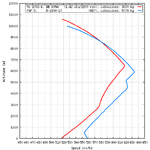
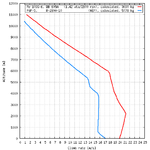
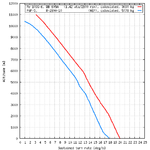
Here is a performance comparison of the two types.

The Me 109G-6 is "status of the current series production" (in January 1944) less the gondola weapons. It has a fixed tailwheel, MG 131 blisters, main wheel blisters and standard camouflage paint. It does not have MW50, GM-1 or the AS engine for improved performance. Since the F6F-5 is a 1944 aircraft, I have calculated the Me 109G-6 performance for 1.42 ata/2800 rpm. As far as I can tell it is a typical "overloaded underpowered G series 109", and it's lighter loaded and better powered than the F6F :)

(The one problem this Me 109G-6 really has is drag, not weight or power. It was possible to increase sea level speed on the same engine by 45 km/h through drag reduction measures alone - this was only implemented in series production with the Me 109K-4.)

Regards,

Henning (HoHun)

 

Attachments

  • Me 109G_vs_F6F_speed_comparison.png
    Me 109G_vs_F6F_speed_comparison.png
    4.9 KB · Views: 129
  • Me 109G_vs_F6F_climb_comparison.png
    Me 109G_vs_F6F_climb_comparison.png
    5 KB · Views: 136
  • Me 109G_vs_F6F_turn_comparison.png
    Me 109G_vs_F6F_turn_comparison.png
    5 KB · Views: 126
Those goes well with my educated guesses.

Btw, the landing speeds of the Bf-109 F series are(From Kennblatt):
F-1/2: 130 km/h
F-4: 135 km/h

And these are at full weight.

The K-4 has a landing speed of 150 km/h at 3,000 kg, so it would be around 155 km/h at full weight (3,364 kg).
 
Hi Dragon,

>I have to side with the Hellcat in this fight. It's score in the Pacific was unmatched and if fitted to escort bombers with the proper high altitude equipment it would have been just as deadly vs the 109.

>The underpowered overloaded G series 109s would have been easy targets especially with declining pilot skills and training after 1943.

Hm ... in fact, the F6F was probably more of a match for the Me 109G-6 at low altitude than up high.

Here is a performance comparison of the two types.

The Me 109G-6 is "status of the current series production" (in January 1944) less the gondola weapons. It has a fixed tailwheel, MG 131 blisters, main wheel blisters and standard camouflage paint. It does not have MW50, GM-1 or the AS engine for improved performance. Since the F6F-5 is a 1944 aircraft, I have calculated the Me 109G-6 performance for 1.42 ata/2800 rpm. As far as I can tell it is a typical "overloaded underpowered G series 109", and it's lighter loaded and better powered than the F6F :)

(The one problem this Me 109G-6 really has is drag, not weight or power. It was possible to increase sea level speed on the same engine by 45 km/h through drag reduction measures alone - this was only implemented in series production with the Me 109K-4.)

Regards,

Henning (HoHun)

I'm curious about your math.

What did you use for Cd0 values and where did you get them

What did you use for trim drag for large control surface deflections at Clmax in High G/High bank angle turns? The Induced Drag contribution of the tail surfaces varies with CL (and AoA) and becomes significant at Clmax.

Still, nice work - particularly if you used a simplified approach that assumes boundary conditions which don't vary much between the ships you are comparing in turn performance.
 
Hi Bill,

I'm pretty sure he used the true Cd0, Clmax power figures for the a/c, which in the case of the 109F/G K are:

Clmax: 1.70
Cd0: 0.0023

And for the F6F:

Clmax: 1.51
Cd0: N/A (But I remember reading that it was very low, despite the clunky appearance of the a/c, around 0.0019 IIRC)
 
Hi Bill,

I'm pretty sure he used the true Cd0, Clmax power figures for the a/c, which in the case of the 109F/G K are:

Clmax: 1.70
Cd0: 0.0023

And for the F6F:

Clmax: 1.51
Cd0: N/A (But I remember reading that it was very low, despite the clunky appearance of the a/c, around 0.0019 IIRC)

This has always been the root of our arguments and debates about turn performance - no verifiable reference to two of the most important factors in calculation of rate of turn in equilibrium at Clmax.

Trim drag is also important at low medium speeds with high control surface deflections required to maintain altitude in comparisons.

I saw two references to .0163 for Cd0 of the 51 but have yet to see the original source (NAA or NACA) reference.

Good to have you back bonehead,

Respectfully

the other bonehead
 
Hehe, thanks for the welcome, it's good to be back :D

Well we have the Clmax of both a/c and the Cd0 of the 109G, and those three things are atleast established facts from original documents. All we're missing is the Cd0 of the F6F.

So it very much looks like the 109 has the advantage in the horizontal regime to me. But I'm definately willing to debate it with you Bill and I'm not going to make any full conclusion until the end. I want us to agree and I am sorry that I have been so blunt, aggressive biased in the past. I just want us all to get along with each other.
 

Users who are viewing this thread

Back